Korea Breaks $80 Billion in Monthly Exports — Even With a Middle East War. The Real Story Behind the Semiconductor Supercycle
Record-Breaking Exports Despite a War — How Is This Possible?
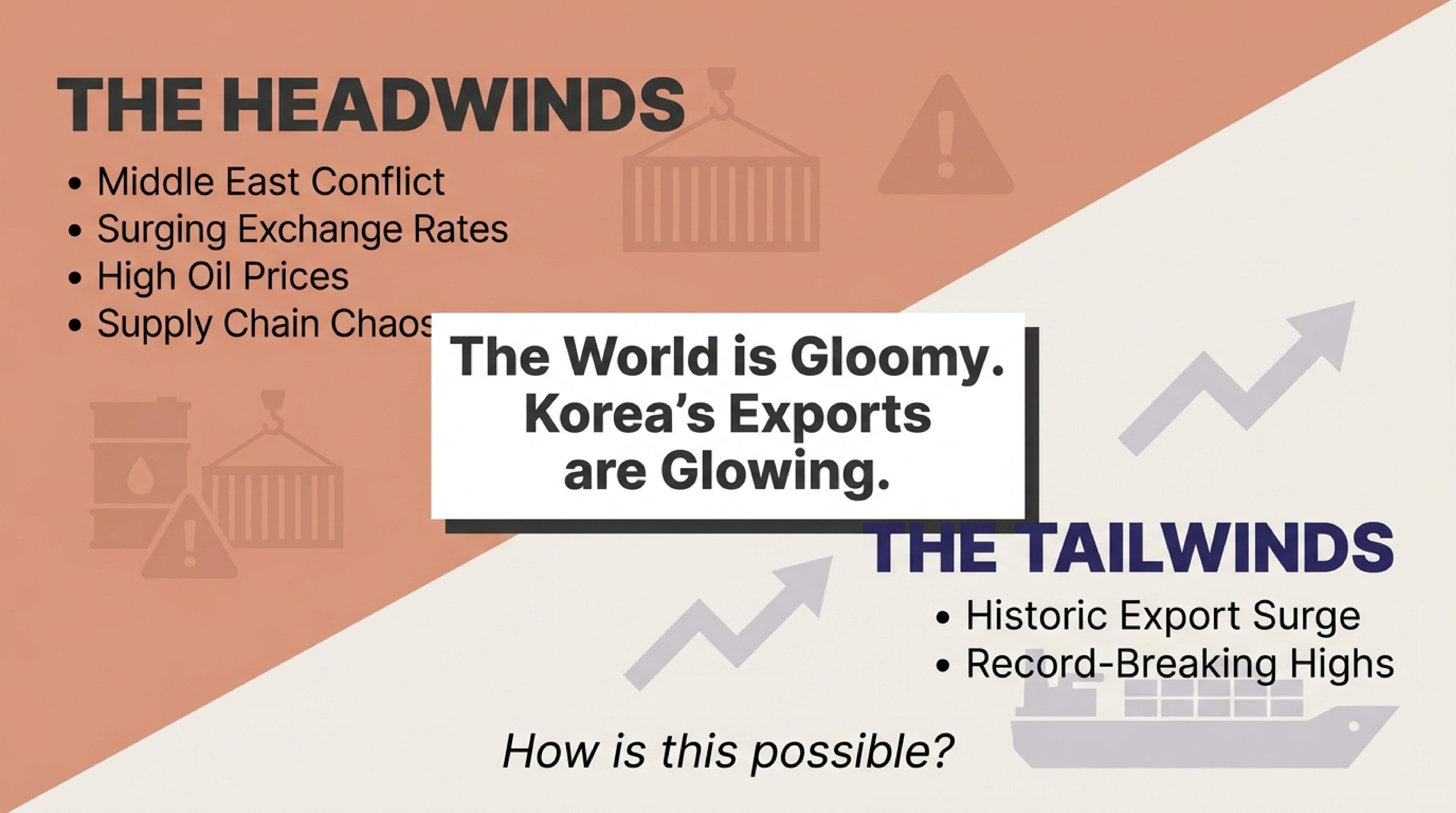
An ongoing Middle East conflict. A surging exchange rate. High oil prices. Global logistics disruptions and raw material supply emergencies — the economic headlines have been relentlessly gloomy. Thick clouds of concern have gathered over the broader Korean economy. And yet, against this punishing external backdrop, Korea's export figures are delivering a stunning run of record highs, cutting through the gloom like a ray of light.
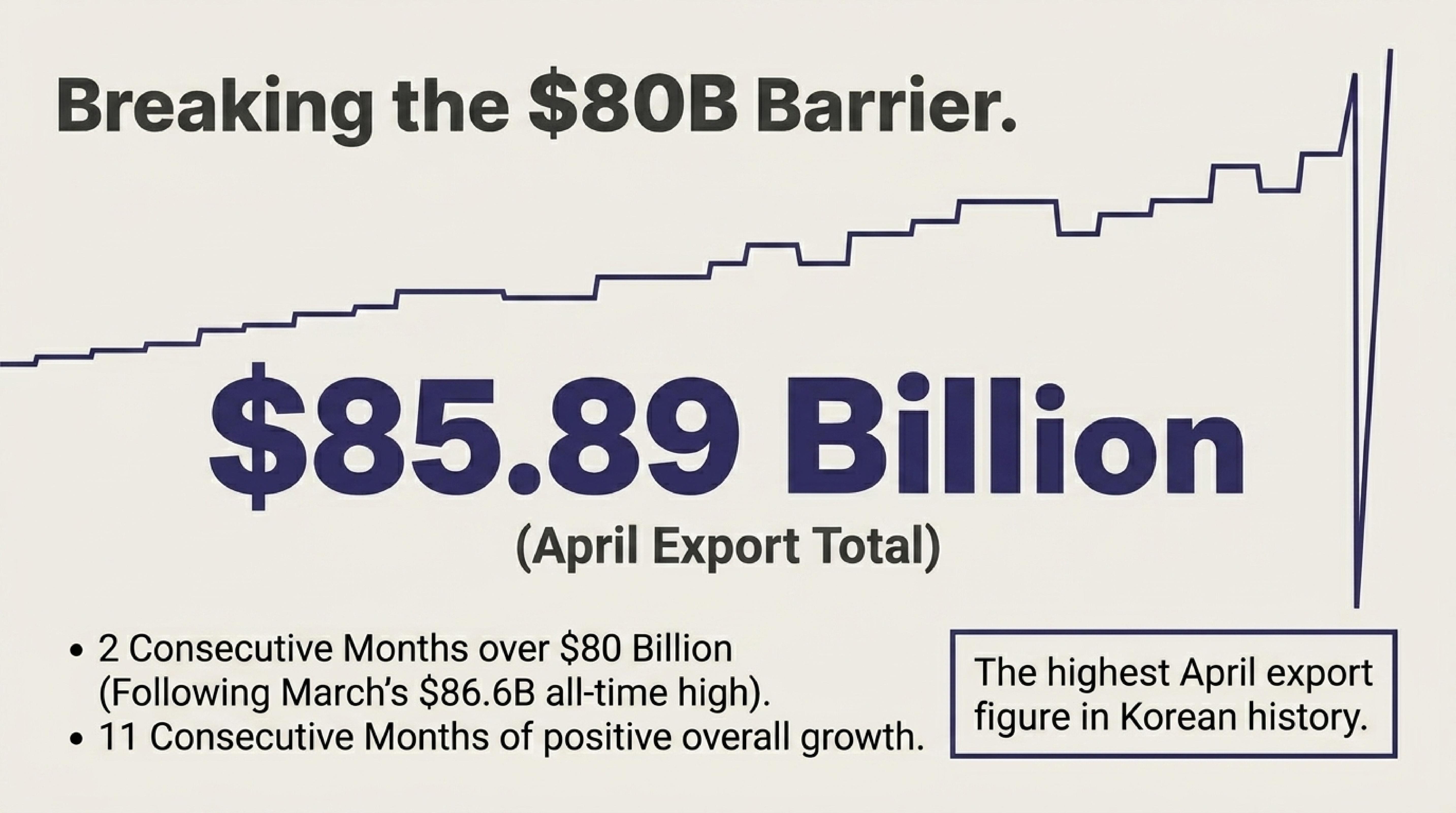
The recently released April trade data contains numbers that make you look twice. Korea has now posted two consecutive months of exports topping $80 billion — an extraordinary achievement. After setting an all-time monthly record of $86.6 billion in March, April came in at $85.89 billion, making it two months in a row above the $80 billion mark. This surge — sustained since early in the year — is more than a rebound: it represents eleven consecutive months of positive growth and the highest April export figure ever recorded in Korean history.
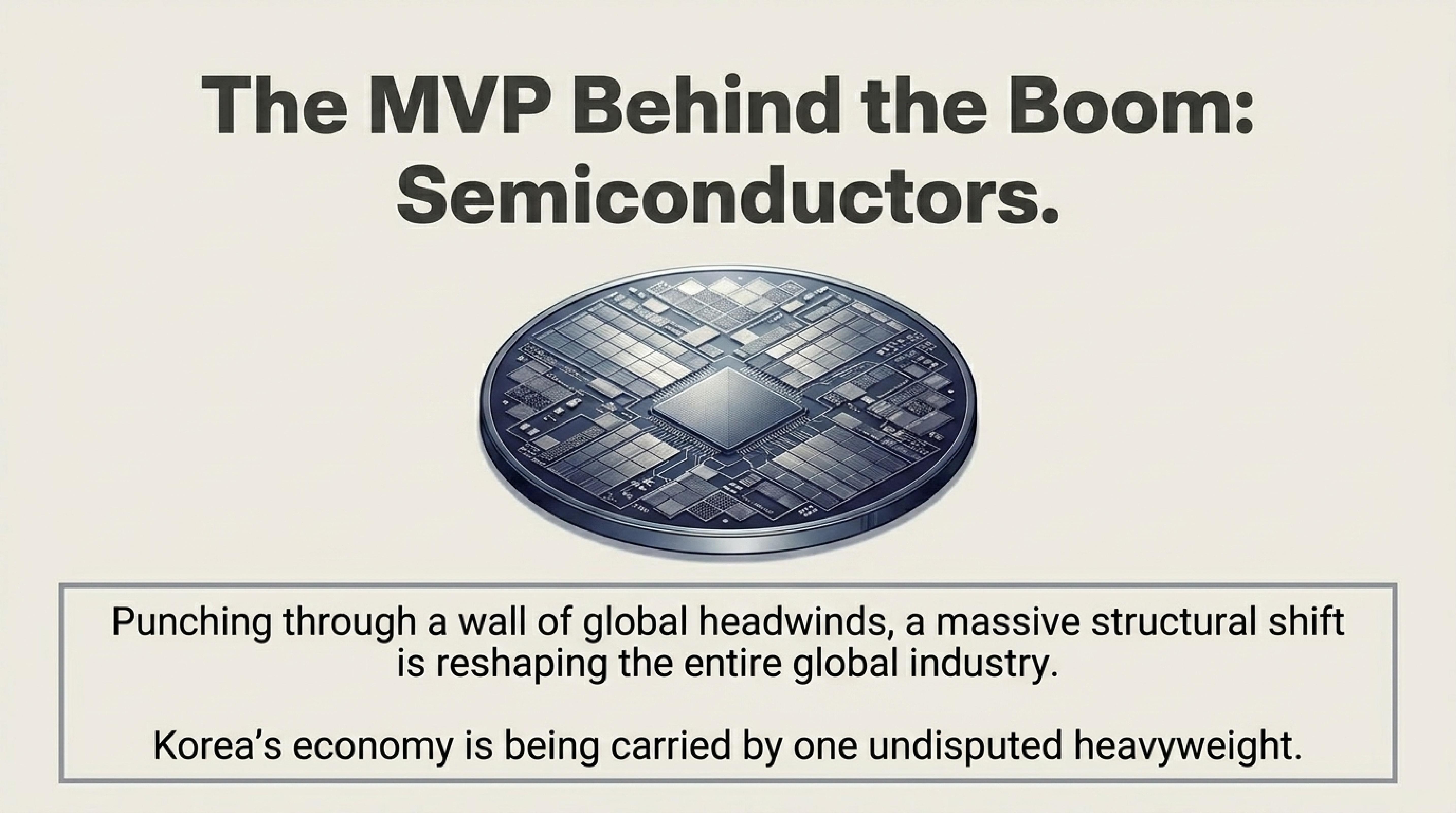
On the surface, it's puzzling. Gunfire hasn't stopped in the Middle East, and global economic uncertainty is near historic highs. How is Korean export performance blazing to new records through all of it? Behind this once-in-a-generation export boom — punching through a wall of headwinds — lies a massive structural shift reshaping the entire global industry. What is the single biggest driver lifting Korea's economy through this crisis?
The MVP Behind the Export Boom? Turns Out It's This One Thing
At the center of Korea's record-breaking performance, the undisputed MVP carrying the entire export economy is semiconductors. One glance at the data and the numbers are simply staggering.
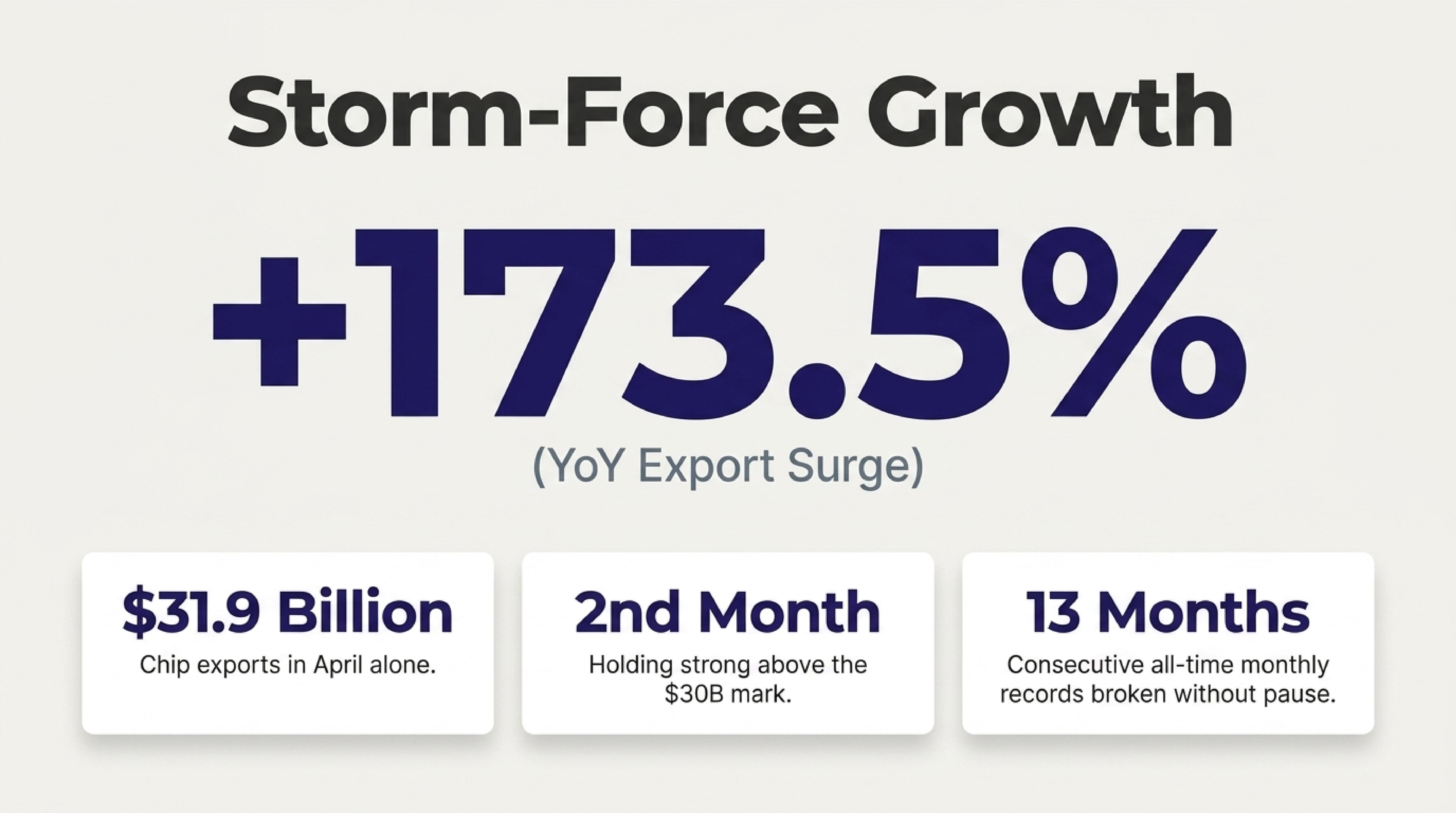
The first thing that stands out is the explosive growth in export value. Semiconductor exports in April alone reached $31.9 billion — a surge of 173.5% compared to the same month a year earlier. The phrase 'storm-force growth' has never been more apt. While that fell just short of the all-time monthly record set in March, it marked a second consecutive month above the $30 billion mark — a powerful demonstration of sustained momentum.
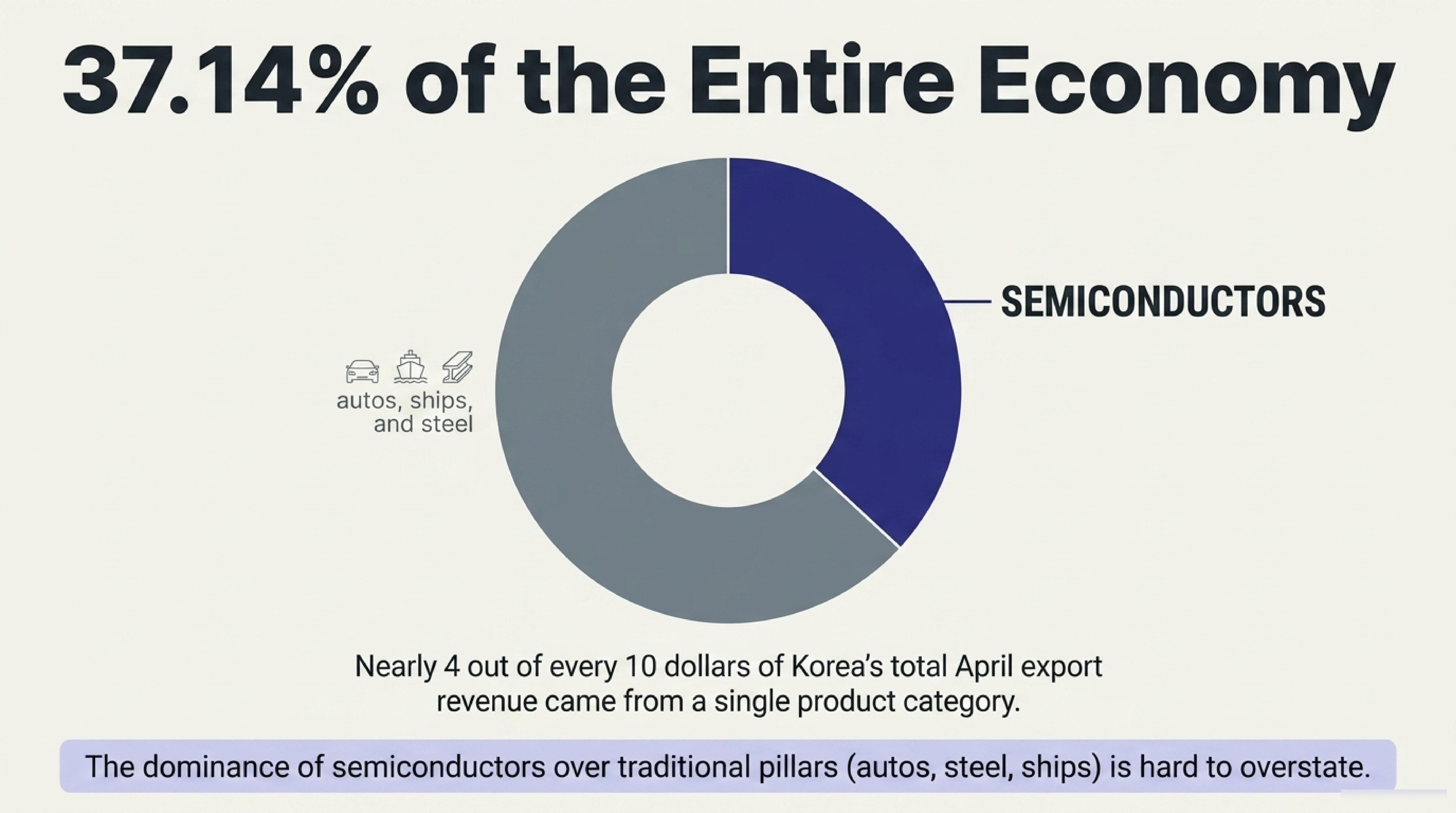
Semiconductors' weight within the Korean economy has also become extraordinary. Semiconductors alone accounted for 37.14% of Korea's total April export value — a single product category. With autos, ships, and steel all in the lineup of Korea's traditional export pillars, nearly four out of every ten dollars of export revenue in April was generated by semiconductors. The dominance is hard to overstate.
Most encouraging of all: this performance isn't a one-off spike. Semiconductor exports have now set 13 consecutive monthly all-time records — writing new history every single month without pause.
So what is happening in the semiconductor market to drive demand this furious? Behind these numbers lies a shift in global demand that has driven both volumes and prices to dizzying heights. It's time to dig into the fundamental reason chips are selling like this.
Prices Up 870%? The AI-Powered Semiconductor Supercycle
The heat in the semiconductor market is no passing fad. The market has entered a major structural shift — a 'supercycle' of prolonged boom conditions. Nothing illustrates this more vividly than what has happened to prices.
The price chart for DDR (Double Data Rate) memory — Korea's flagship export chip — is jaw-dropping. The DDR4 8Gb chip, which was priced at just $1.65 in April last year, has recently surged to $16.00. That's a rise of 869.7% in a single year. Something that cost $1.65 now costs $16 — giving you an immediate sense of just how overheated the market has become.
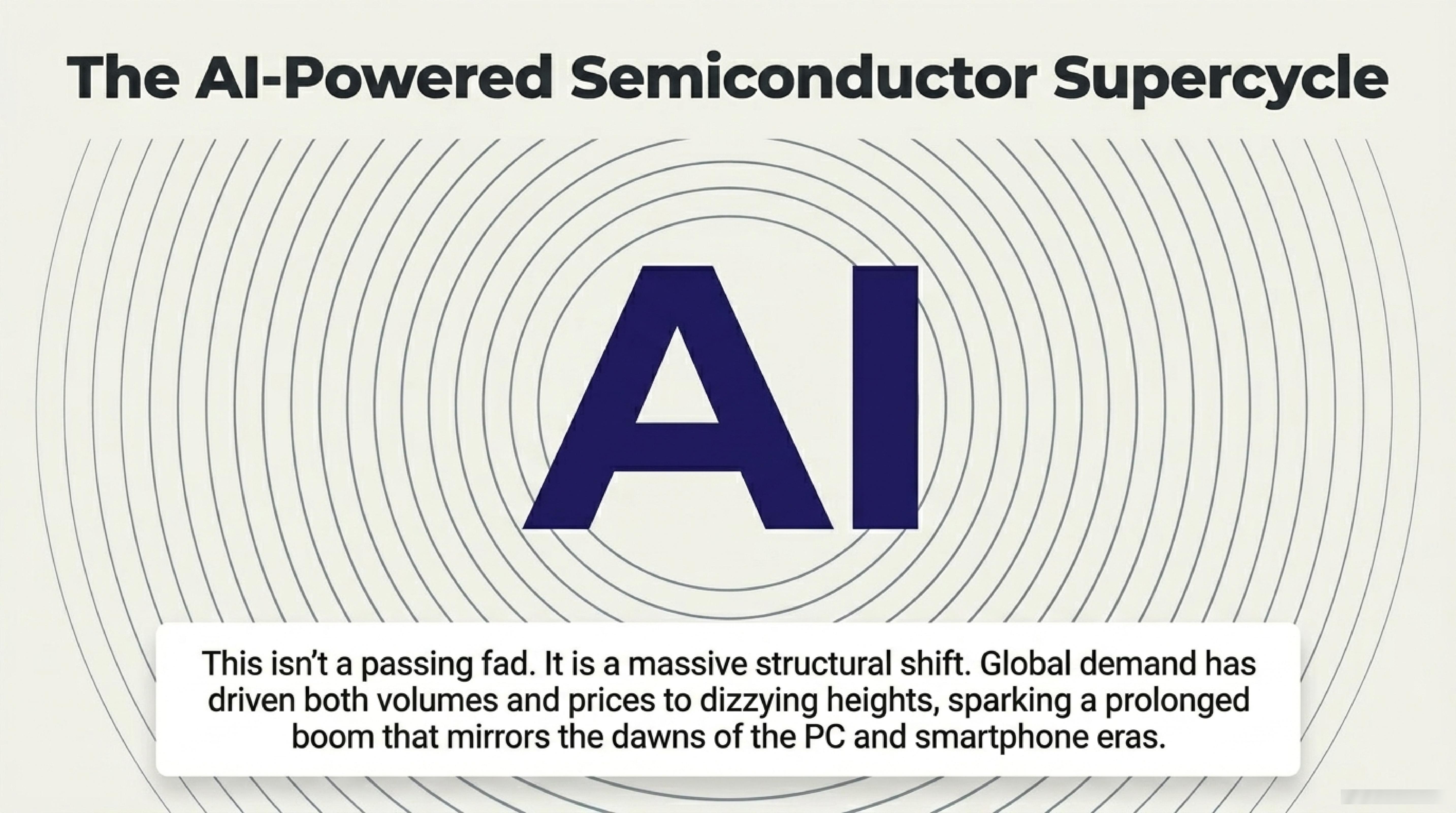
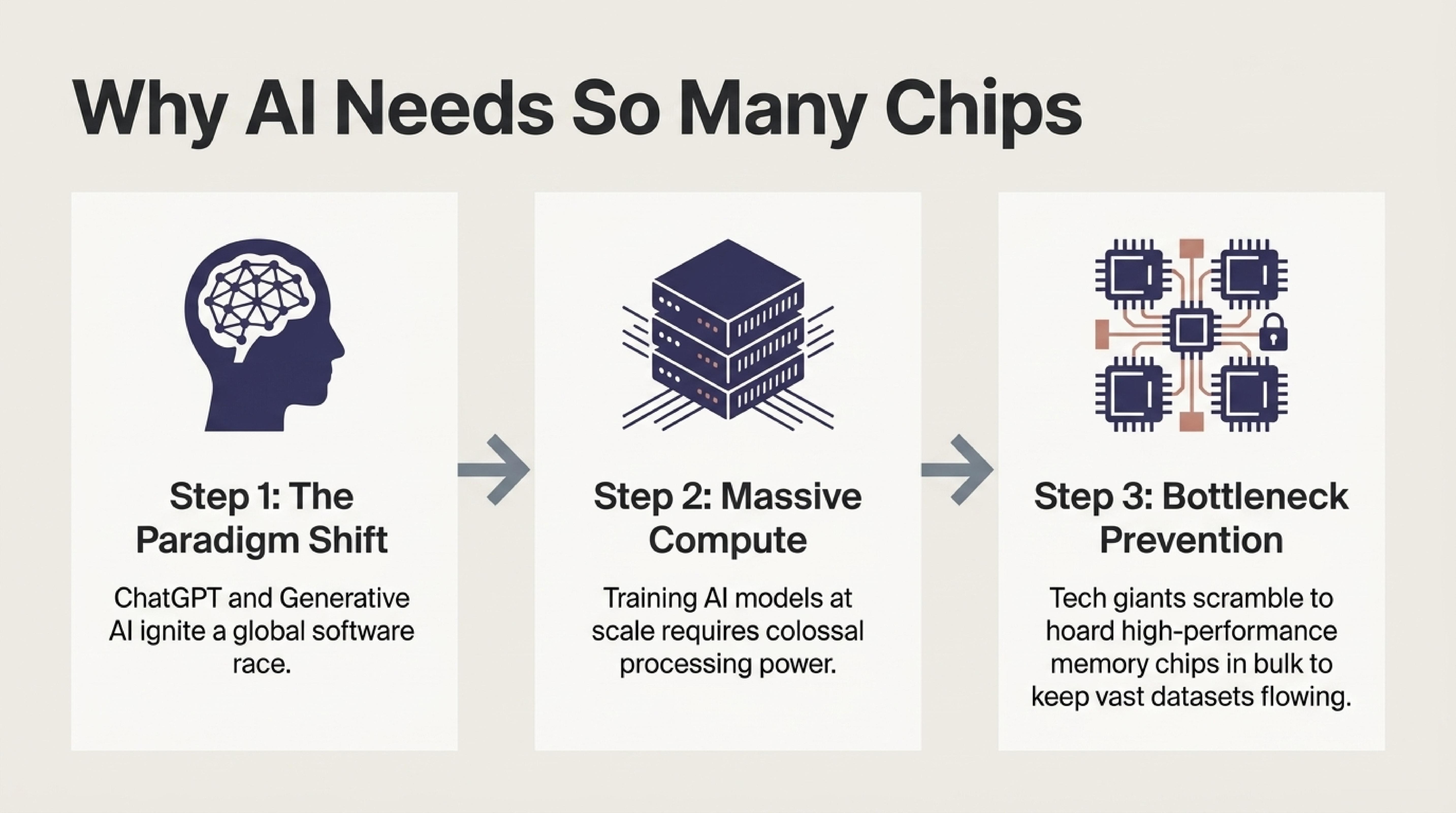
What set this off? The answer is Artificial Intelligence (AI). The AI boom ignited by ChatGPT didn't end as a software story. Training and running AI models at scale demands massive computing power — and that means explosive demand for high-performance memory semiconductors to support it all.

The quantity and quality of chips required to build a single AI server is in a completely different league from a standard server. High-volume data must flow without bottlenecks, and global tech companies are scrambling to secure high-performance memory chips in bulk. When a new technological paradigm drives chip demand so far beyond supply that prices rise and the boom sustains for years — that is what we call a semiconductor supercycle. Just as the PC era and the smartphone era each spawned their own cycles of explosive chip demand, AI is now the engine of the latest and arguably most powerful one.
This dazzling semiconductor boom is keeping economic indicators humming. But is pure celebration the right response? Broaden the lens a little and a cooler, more sobering set of risks comes into view behind the headline numbers.

Why Korea Can't Simply Celebrate: The Risks We Can't Afford to Forget
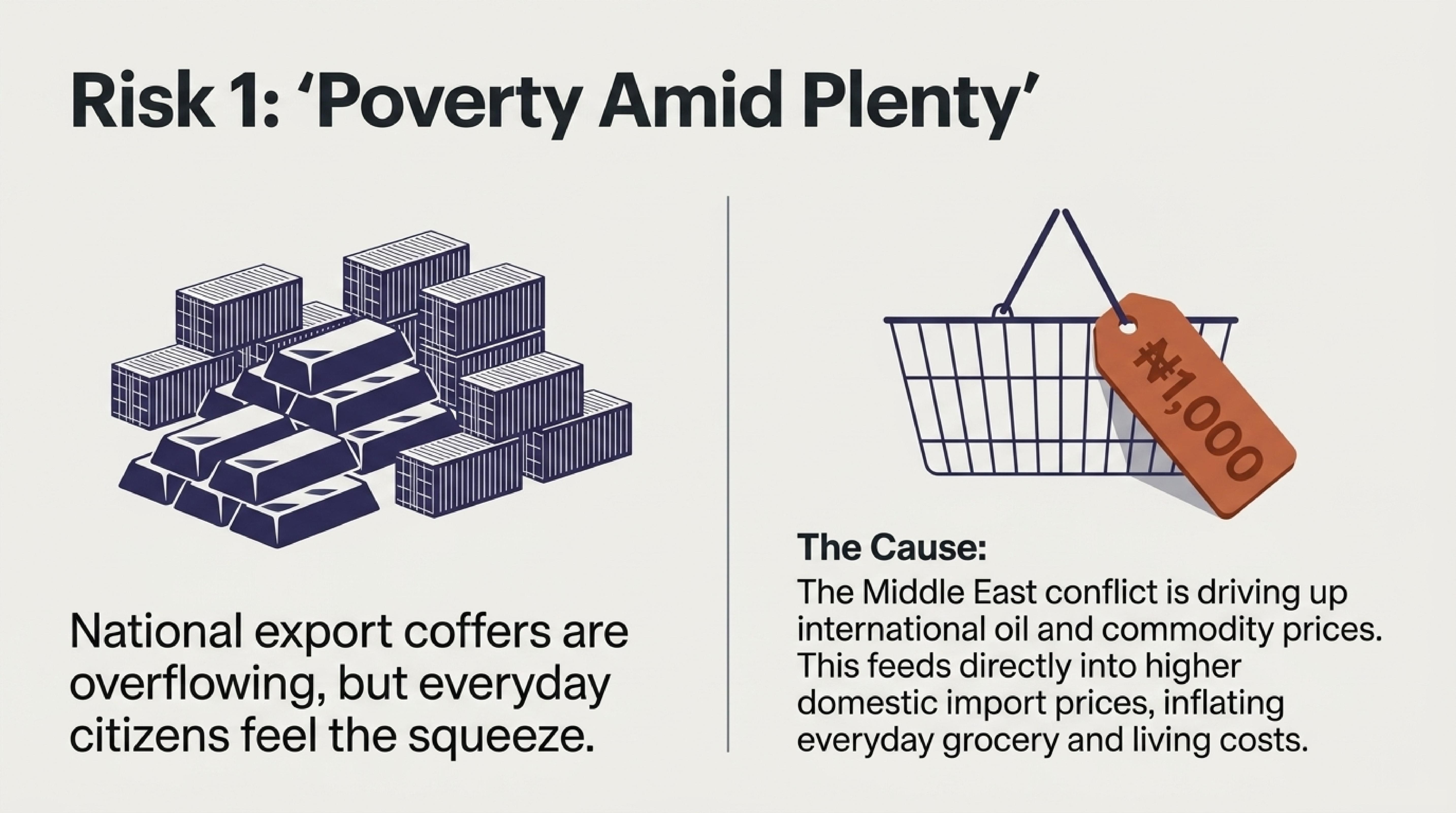
Export indicators are setting records daily — yet for ordinary Koreans, the economy still feels tight. The same external pressures are feeding directly into higher import prices at home. The national export coffers may be overflowing, but a surge in import prices — felt immediately on grocery bills and everyday costs — means most people are experiencing a paradox of 'poverty amid plenty.'
There's also a structural fragility worth confronting honestly: the current results rest overwhelmingly on a single product category. Semiconductors shouldering more than 37% of total export revenue is a double-edged sword. If the semiconductor supercycle turns sooner than expected — or a market shock materializes — the entire Korean economy could suffer a cascading collapse. The concentration creates a critical vulnerability.
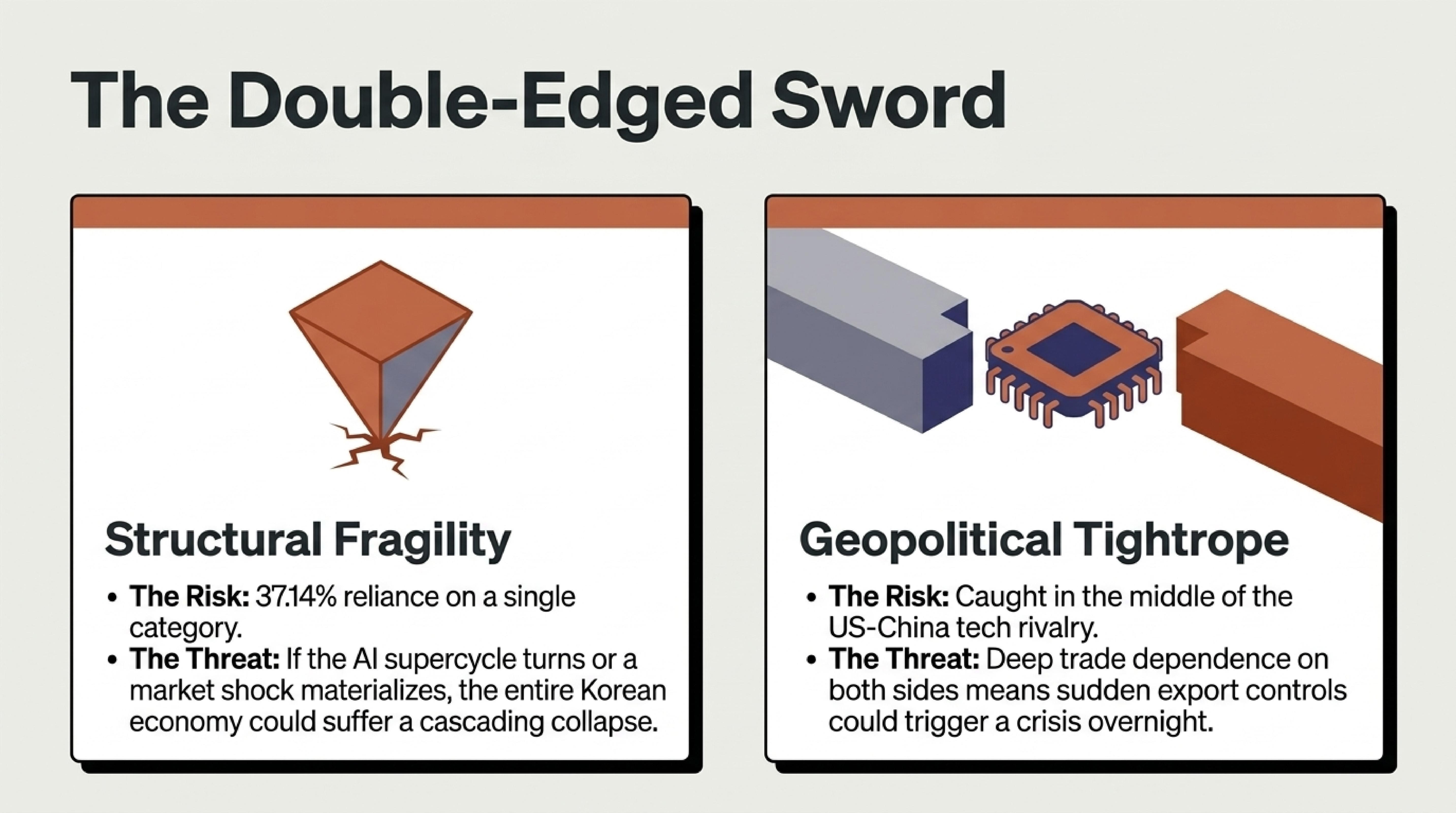
The larger time bomb is Korea's geopolitical position in the middle of the global power struggle — particularly the US-China tech rivalry. As the battle over semiconductor supply chains intensifies between Washington and Beijing, Korea — with its deep trade dependence on both — is forced to walk an increasingly precarious tightrope every day. The risk of trade pressure or sudden export control measures from either side is the fundamental reason Korea cannot afford to let its guard down, no matter how celebratory the atmosphere around the chip boom feels.
These latent risks lurk behind the glittering headline numbers, ready to go off without warning. Can the Korean economy nonetheless stay on course toward its ambitious targets through this complex environment?
Can Korea Break Into the Global Top-5 Exporters? What to Watch
The Korean government's ambitious dual targets for this year — $740 billion in total annual exports and a top-five global exporter ranking — now have a clear green light flashing. Despite the external headwinds described above, the expert view on the market outlook is decidedly optimistic.

Trade economists broadly assess that the powerful upward momentum in semiconductor exports is unlikely to reverse quickly, and that Korea's overall export trajectory should continue to trend steadily upward. How long will the chip boom last?
With AI having solidified itself as the core infrastructure of the global economy — well past the point of being a trend — the global demand for high-performance memory from tech companies looks set to continue for the foreseeable future. This structural demand explosion provides a powerful pillar of support under Korea's economy.
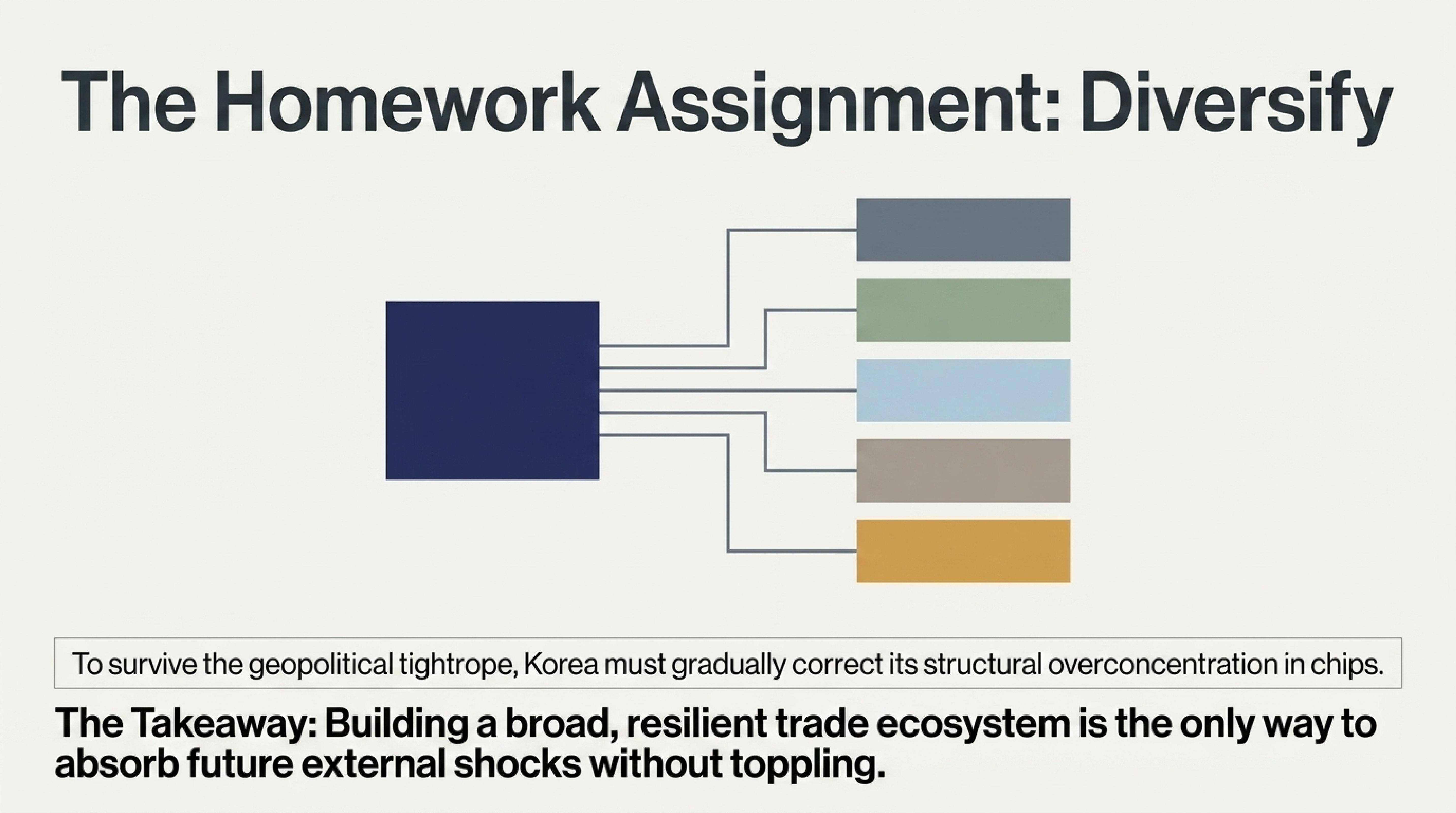
That said, it's too early to pop the champagne. The structural overconcentration in semiconductor exports — flagged as a warning light above — needs to be gradually corrected. Diversifying the trade ecosystem to build the kind of resilience that can absorb external shocks without toppling is a homework assignment Korea must complete.
But the value of breaking through even the fierce headwinds of a Middle East geopolitical crisis to deliver results like these is hard to dismiss. Isn't it a positive signal that the Korean economy can find a way through whatever headwinds come? Using hidden risks as a springboard for growth — and rising to claim a genuine place among the world's top-5 exporters — looks like Korea's next chapter to write.

Frequently Asked Questions
Q. What exactly is a semiconductor 'supercycle'?
A. A semiconductor supercycle refers to a period in which a new technological paradigm drives chip demand so far beyond supply capacity that prices rise significantly and boom conditions sustain over a prolonged period.
The current supercycle is being driven by the AI boom. Explosive demand for high-performance memory semiconductors to process vast datasets is generating the same kind of structural, market-wide prosperity that the PC era and the smartphone era each created in their time.
Q. What is the Middle East conflict actually doing to Korea's trade?
A. The conflict is roiling international oil and commodity prices and causing global logistics disruptions, which is driving a significant increase in Korea's import prices — a painful headwind for domestic consumers.
On the export side, however, Korea's performance has proven remarkably resilient — powered by the AI semiconductor boom, Korea has posted two consecutive months of exports above $80 billion and maintained strong upward momentum.
Q. Exports have crossed $80 billion — so why does the economy still feel tight for everyday Koreans?
A. There are two key reasons national export records aren't translating into an improved sense of economic wellbeing for most people.
- Rising import prices: The ripple effects of the Middle East conflict have pushed up oil and commodity prices, directly inflating the cost of food and everyday goods.
- Single-category concentration: With semiconductors alone responsible for over 37% of total exports, the warmth of the boom isn't spreading evenly across other industries — producing a sense of 'poverty amid plenty' for those outside the semiconductor ecosystem.
References
Semiconductors Keep Korean Exports Afloat Despite Middle East War — Two Consecutive Months Above $80 Billion
https://www.fnnews.com/news/202605010910502907
April Exports Break Through to $85.9 Billion Despite Middle East War — Up 48%, 2nd Highest Ever — Yonhap
https://www.yna.co.kr/view/AKR20260501020451003
Semiconductor Boom Drives April Exports to $85.9 Billion — 2nd Highest Ever, Following March
https://ichannela.com/news/detail/000000527012.do
Exports Hit $85.9B Despite Middle East War — "Semiconductors Held the Korean Economy Together"
https://www.mediapen.com/news/view/1096767
"Semiconductors Punched Through the Middle East War" — Top-5 Global Exporter Target Gets Green Light
https://www.newsis.com/view/NISX20260501_0003614312
Korea Exports Break $80 Billion for Second Consecutive Month — At This Rate, Japan Could Be Overtaken
https://www.chosun.com/economy/industry-company/2026/05/02/JCR7KY5ESNEHZGGQWQYT55VLEM/
- YouTube
www.youtube.com
Korea semiconductor exports, semiconductor supercycle, Korea April trade data, trade surplus, Middle East war economy, AI semiconductors, Korea economic outlook, $80 billion exports, memory semiconductor boom, import price inflation, global top-5 exporter, AI server demand, DDR4 price surge, HBM Korea, US China tech rivalry Korea