Samsung Electronics Q1 2026 Earnings: Inside the Semiconductor Supercycle That Drove Operating Profit Past $39 Billion

$39 Billion in Operating Profit? Breaking Down Samsung's Q1 Report Card
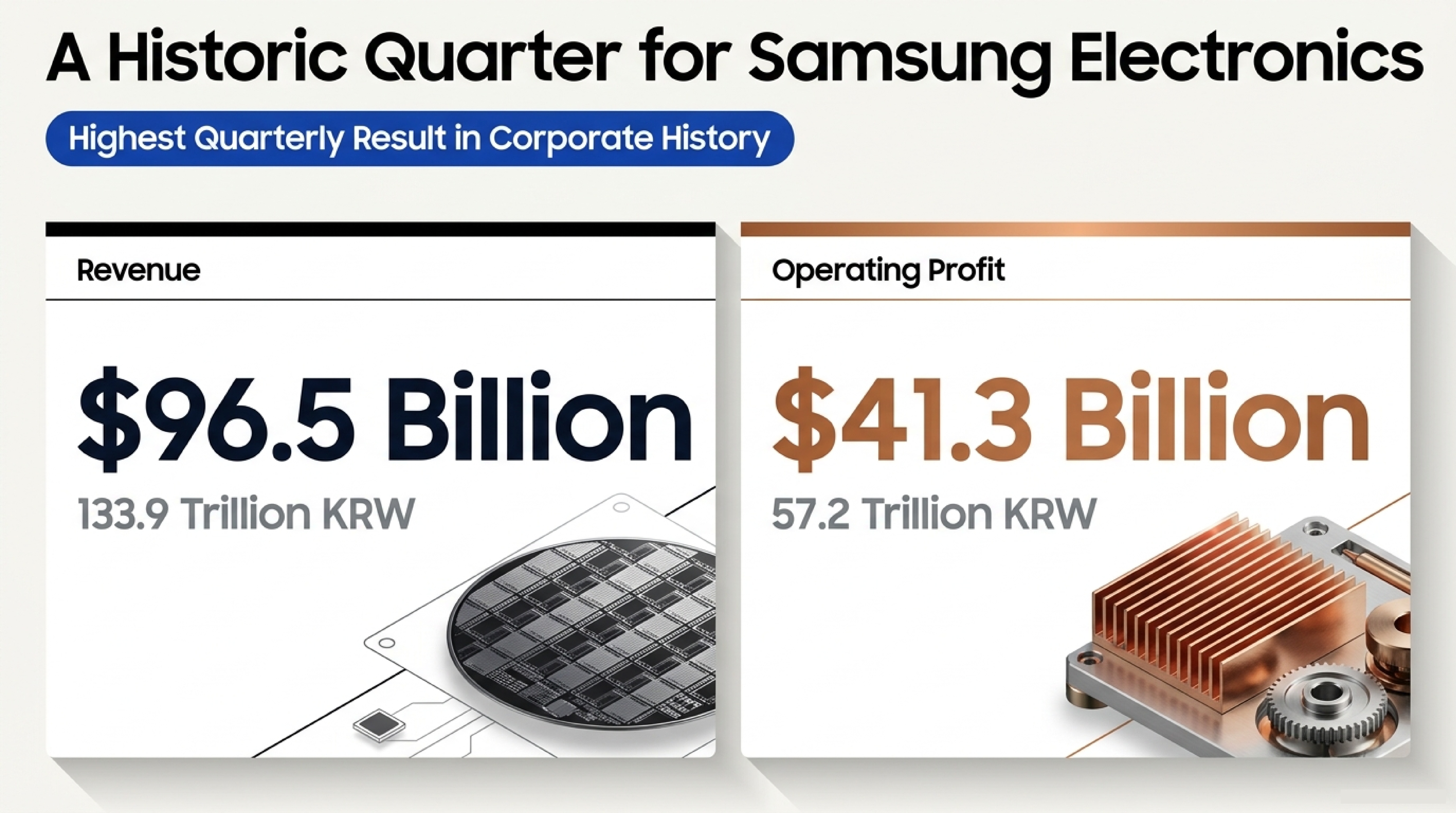
On April 30, Samsung Electronics delivered a jolt to the market with its confirmed Q1 2026 earnings. The numbers that came out were extraordinary: Revenue of 133.9 trillion KRW (~$96.5 billion USD) and operating profit of 57.2 trillion KRW (~$41.3 billion USD). This is more than a strong quarter — it is a historic record, the highest quarterly result in Samsung Electronics' entire corporate history.
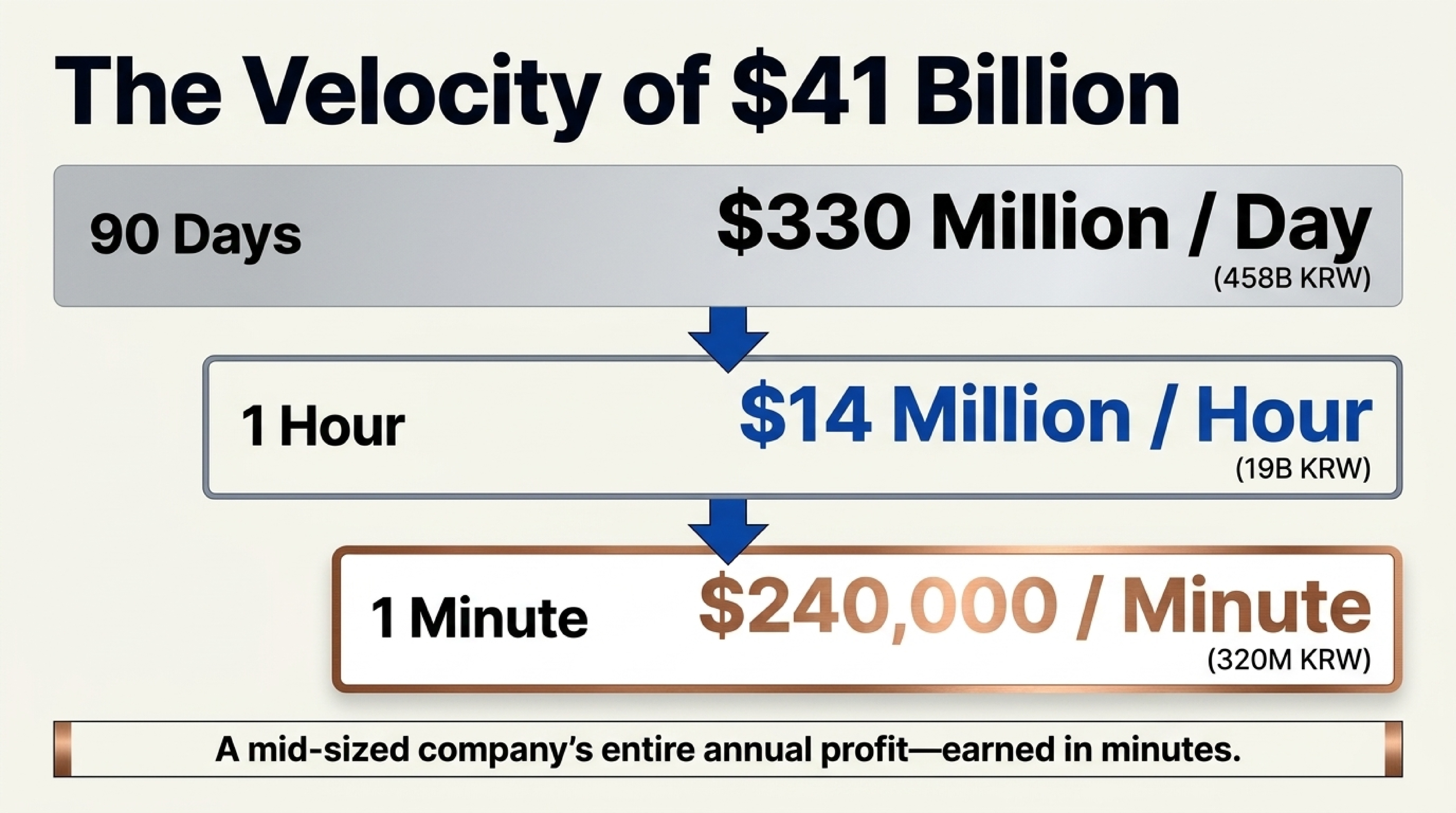
The scale of 57.2 trillion KRW in operating profit is almost impossible to grasp intuitively. Spread across roughly 90 days, that works out to approximately 458 billion KRW (~$330 million USD) in net profit per day. Break it down further and Samsung was banking roughly 19 billion KRW every hour, and 320 million KRW every minute. That's the equivalent of a mid-sized company's entire annual operating profit — earned in just a matter of days.
The market's reaction has been one of undisguised astonishment. In the immediate aftermath, the financial and securities community has been buzzing with admiration at the earnings surprise that blew past all estimates. This wasn't merely a bump in revenue scale — it was operating profit, the measure of true profitability, that showed the explosive, unprecedented surge. A giant that had been crouching springs upright and immediately shatters all-time records.
So what magic produced numbers of this magnitude? Behind the headline banner of $96.5 billion in revenue and $41.3 billion in operating profit, a true star performer was driving everything from the front. Peel back one layer of that massive report card, and you'll find a single business division running away from the field in spectacular fashion.
94% of Total Profit — All From Semiconductors Alone? The DS Division's Stunning Dominance
Of the total operating profit described above, a staggering 53.7 trillion KRW (~$38.7 billion USD) came from the semiconductor (DS) division alone. As a share of total company profit, that translates to a breathtaking 94%. In other words, more than nine out of every ten dollars the company earned was swept in by semiconductors.

Even during the previous semiconductor boom eras, it would be hard to find a precedent where a single division claimed this kind of overwhelming share. Typically, other major business divisions would backstop the company and keep the semiconductor profit concentration in the 60–70% range. But this Q1 report card quite literally shows the semiconductor division carrying the entire company on its back — and it's not an exaggeration at all.

The quality of the DS division's dominance is also notable. This wasn't just about moving more units to grow in scale — it reflects a high-profit-margin structure where earnings snowball the more product is sold. Remembering that this reversal came in such a short time after a punishing period of downturn makes the recovery all the more remarkable.
The semiconductor engine — Samsung's heart and core — is roaring at full throttle. So what exactly happened in the semiconductor market, and which products are flying off the shelves fast enough to generate these astronomical sums? The source of this explosive demand is what we turn to next.
The Return of the Semiconductor Supercycle — and AI Is at Its Center
What produced the semiconductor division's incredible profit-generating power? At the center of it all sits Artificial Intelligence (AI). The global AI frenzy has hardened from a passing IT trend into a vast industrial infrastructure — and in doing so, it has completely upended the semiconductor market.
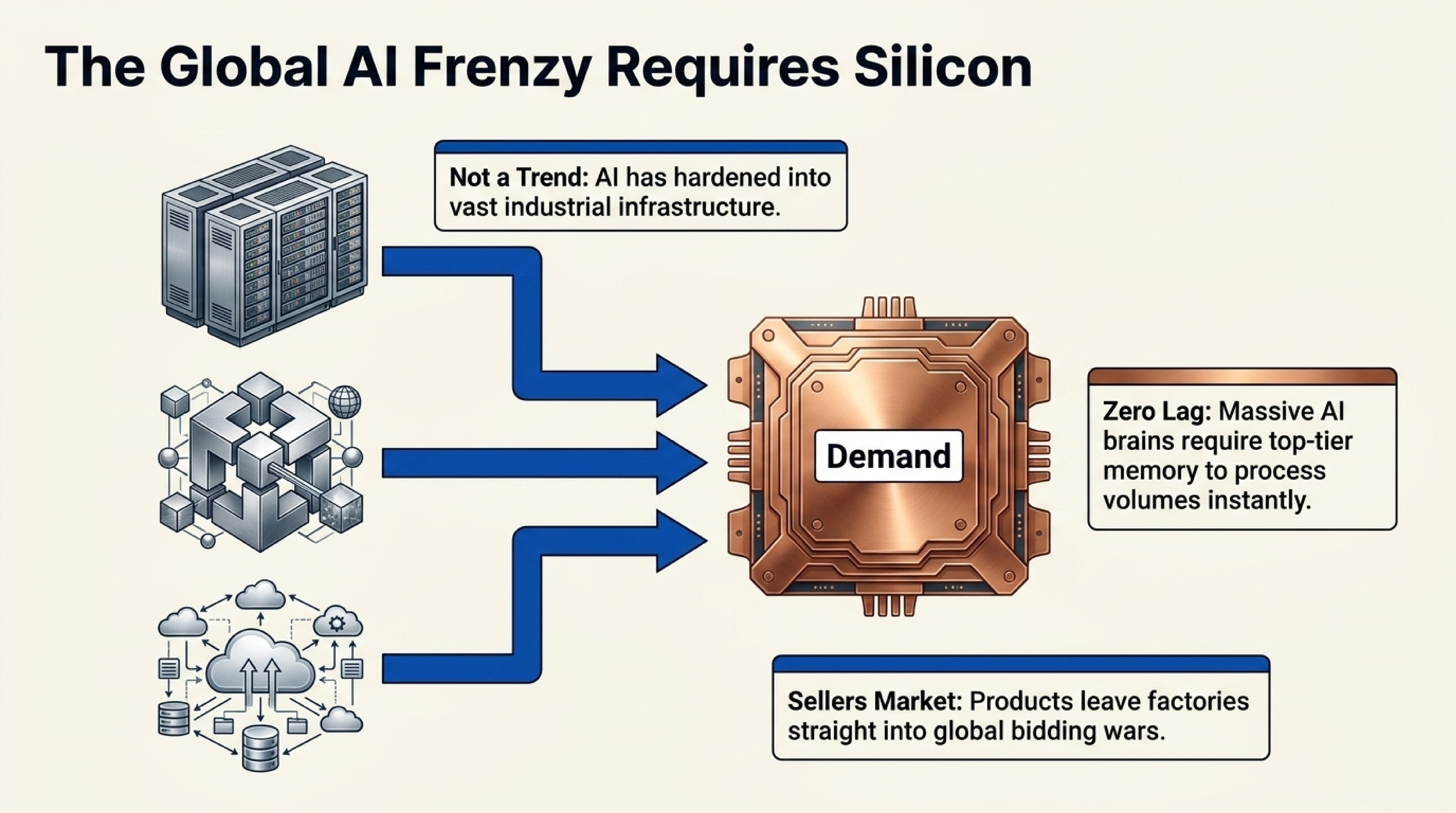
Global Big Tech companies are pouring astronomical capital into upgrading their proprietary AI models and building massive new data centers. To keep these enormous AI brains running without lag, top-tier memory semiconductors capable of processing vast volumes of data in an instant are non-negotiable. Products are barely out of the factory before global companies are lining up to grab them — creating an unprecedented demand explosion where sellers essentially name their price.

The leading contributor behind this blockbuster earnings result is HBM (High Bandwidth Memory) and other high-value premium products. HBM commands a price premium far above standard memory, but it's an indispensable component for dramatically accelerating AI computational speed. The market is in a near-frenzy trying to secure enough of it, and Samsung has absorbed a massive windfall by leveraging its unmatched mass production capability and technical competitiveness to maximize margins.

Industry experts are calling this boom something fundamentally different from what came before — a '2026-edition supercycle.' Previous semiconductor booms tended to arrive in predictable 2–3 year waves, driven by PC or smartphone replacement cycles. This one is different. A massive tsunami of AI infrastructure buildout — with the survival of global companies seemingly at stake — is generating a far more structural and sustained upward current.
As semiconductors soar with AI as their rocket fuel, it's natural to wonder how the other divisions are doing. What kind of report card did the smartphones in our hands and the appliances in our living rooms receive?
Are Smartphones and Appliances Taking a Back Seat? Fact-Checking the Other Divisions
The short answer: smartphones and home appliances also held their own — quietly doing their part. The only reason other divisions' results look small is the optical illusion created by the sheer scale of what semiconductors brought in.

The Mobile Experience (MX) division delivered solid results, buoyed by strong global sales of the flagship smartphone launched earlier this year. Despite sluggish overall recovery in the smartphone market, the premium-focused sales strategy successfully defended profitability. The TV and home appliance divisions also posted stable results by concentrating on high-value-added product categories and the B2B market. Even in a headwind of weak consumer sentiment, both served reliably as steady cash-generating contributors.

From a company-wide portfolio perspective, however, there is a mild concern worth noting. Despite the excellent defensive performance of other divisions, it's undeniable that Samsung's profit structure is now overwhelmingly concentrated in semiconductors. Having a powerful primary engine delivering explosive output is an enormous blessing for any company — but in the long run, true resilience against external shocks will require the smartphone and home appliance divisions to scale up and grow alongside semiconductors.
Ultimately, this Q1 report card is a joint achievement — semiconductors leading with a dazzling solo run, while other divisions provide steady support from behind. With the full picture across all divisions now clear, the natural question is whether this extraordinary performance can be maintained going forward.
Will This Last All Year? What to Watch for Q2 and Beyond
The short answer: the expert forecast for the semiconductor market in Q2 and the second half of 2026 is sunny — very sunny. The dominant view is that the semiconductor market will only heat up further as the year progresses.
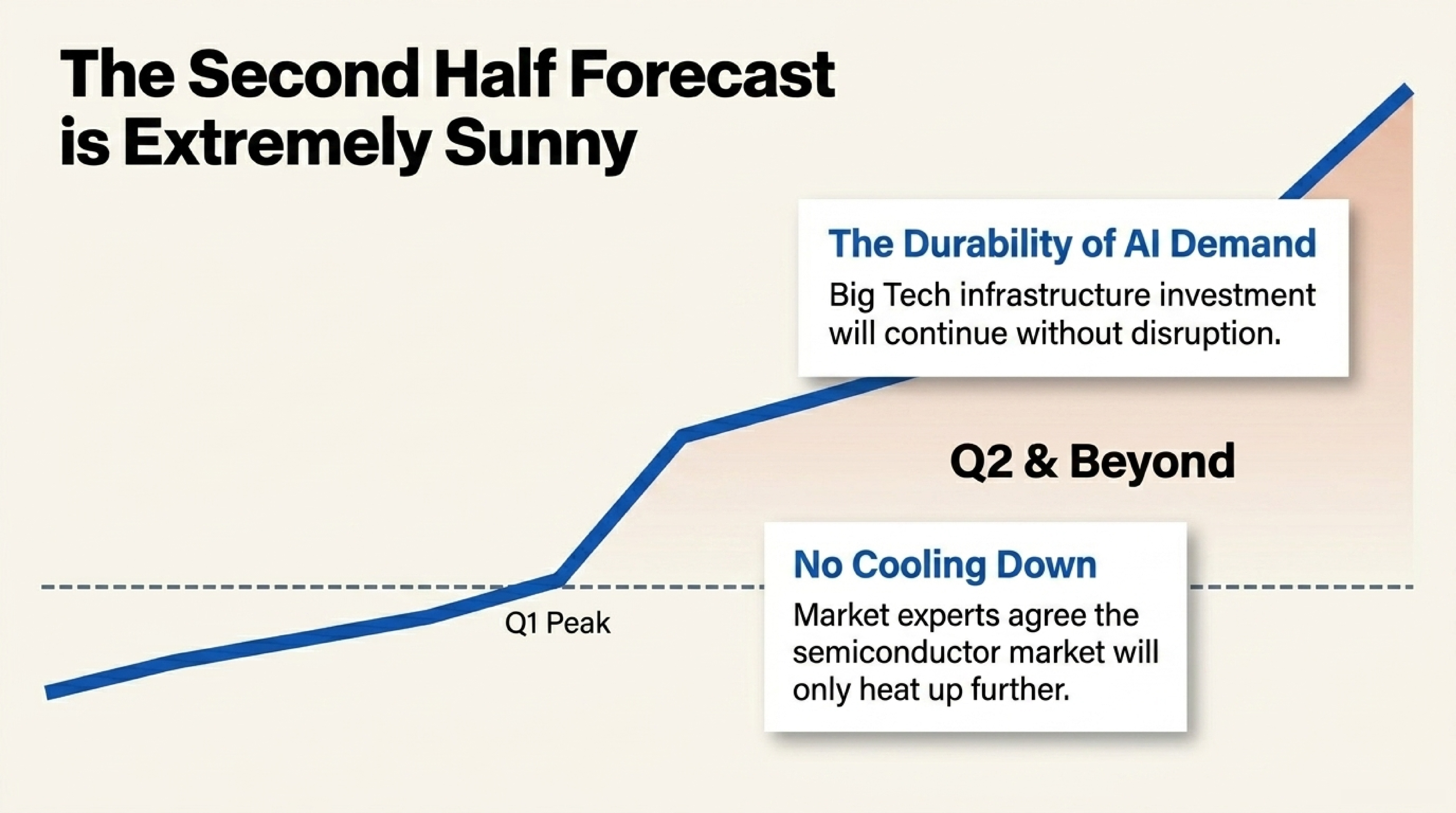
The strongest basis for confidence is 'the durability of AI demand.' Some had worried the AI frenzy might prove a short-lived theme — but the massive AI infrastructure investment by Big Tech described earlier is expected to continue without disruption into the second half. Market experts broadly agree that this robust demand is unlikely to cool in the near term, and will instead form a dependable pillar supporting second-half results.
What are the key things to watch for investors and general consumers going forward? The most critical variables are the timeline for mass production of next-generation HBM and whether Samsung secures significant new major customers in the second half. Whether Samsung can once again demonstrate an overwhelming technological lead over aggressive competitors — and cement its market dominance — will be the most powerful trigger for pushing results to the next level.
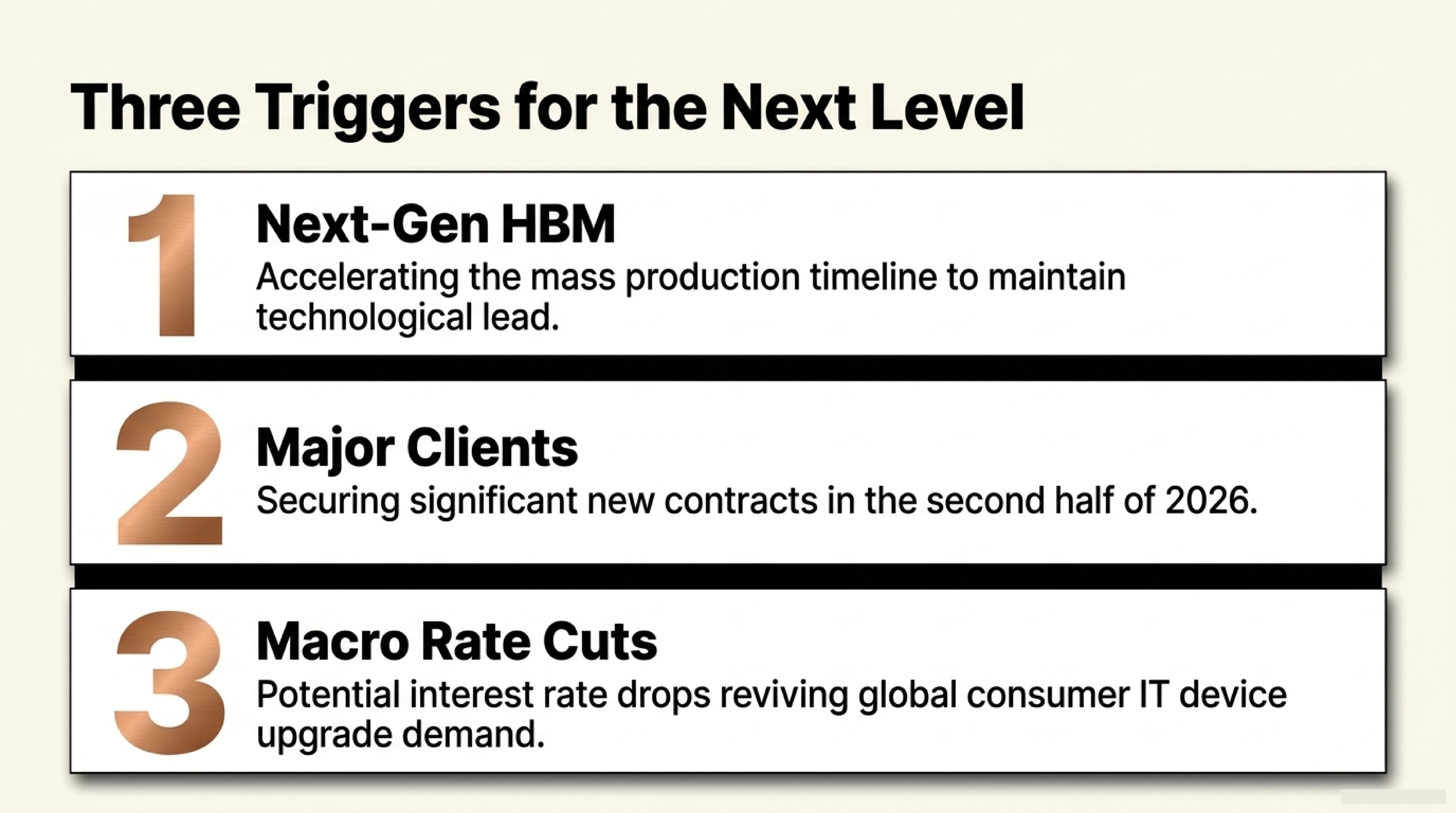
The second half also brings the global macroeconomic trajectory as an intriguing variable to monitor. What if interest rate cut expectations or a broader economic recovery brings general IT device upgrade demand back to life? With mobile and appliance divisions fully joining the push, a truly gapless company-wide supercycle could take shape. As the rest of 2026 unfolds, market anticipation has never been higher for semiconductors to pull at the front while other divisions push hard from behind in a seamless relay.
An All-Time Record — The One Thing to Remember
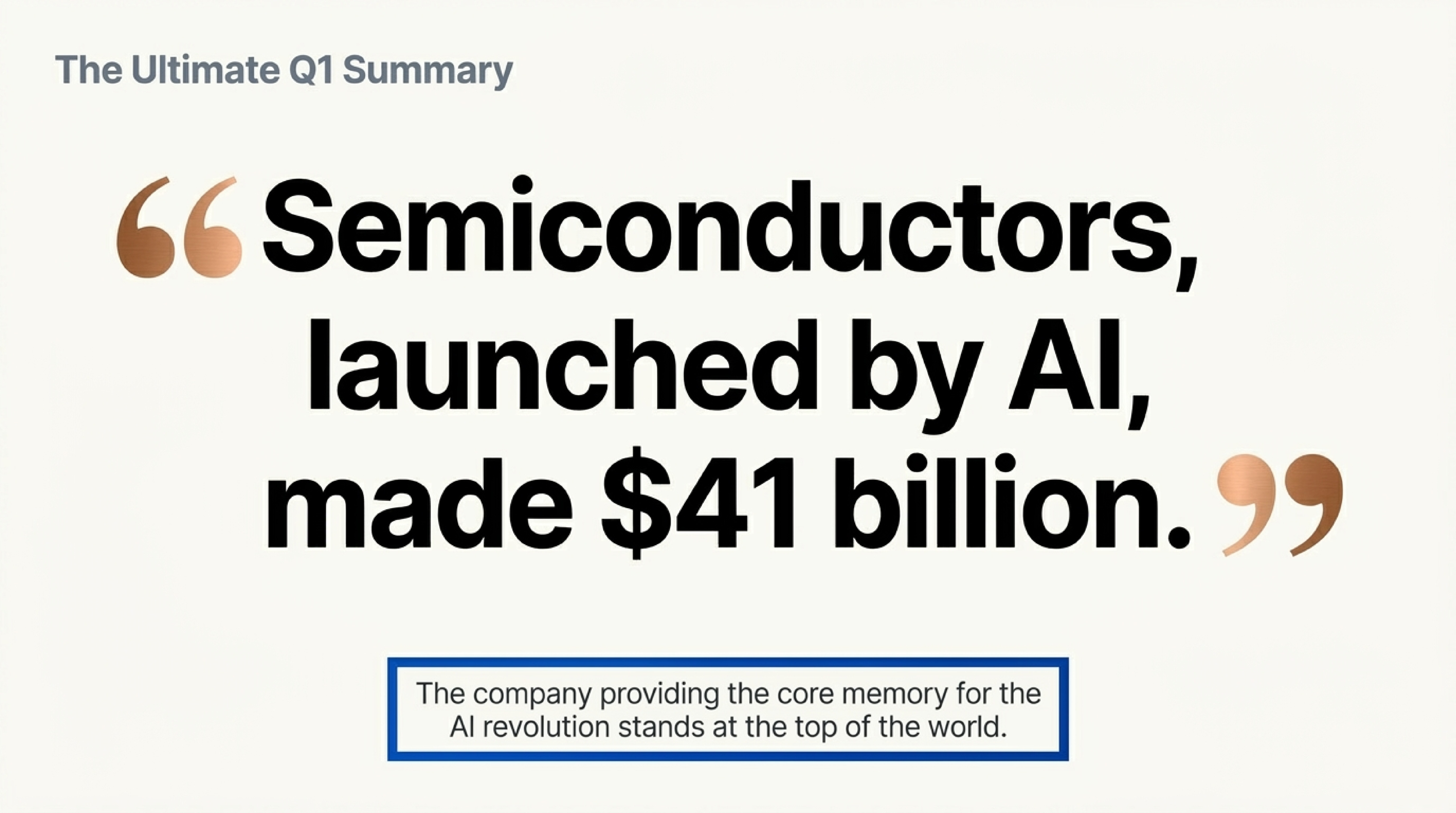
"Semiconductors, launched by AI, made $41 billion."
That single sentence perfectly summarizes Samsung Electronics' Q1 2026 report card. We are witnessing more than just a corporate earnings surprise — we are in the middle of a new industrial revolution shaped by the giant wave of artificial intelligence. When countless global companies race to enter the AI market, the company providing the core brain and memory that powers it all is right here in our midst.
The fact that Korea's flagship company holds firm command in the fierce competition among global tech giants carries enormous significance for the national economy as a whole. Strong semiconductor exports don't just fill the coffers of one company — they energize the entire domestic materials, parts, and equipment ecosystem, acting as a powerful tailwind for the broader Korean economy.
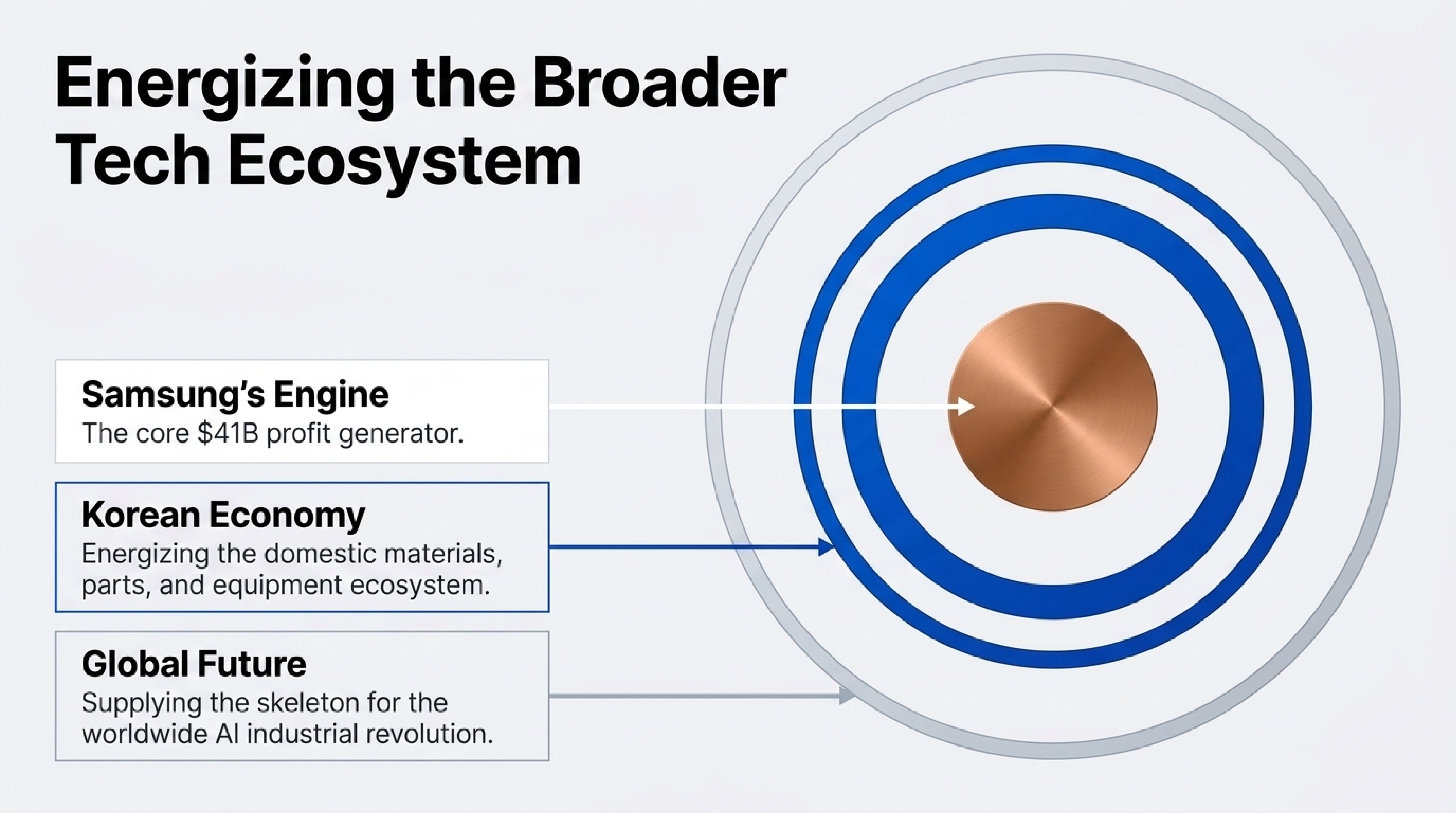
Setting aside the complex financial statements and granular market forecasts, the single insight worth holding onto is clear: the skeleton of the industries of the future will always be built on high-performance semiconductors — and on that massive stage, a Korean company has just proven it stands at the very top of the world.
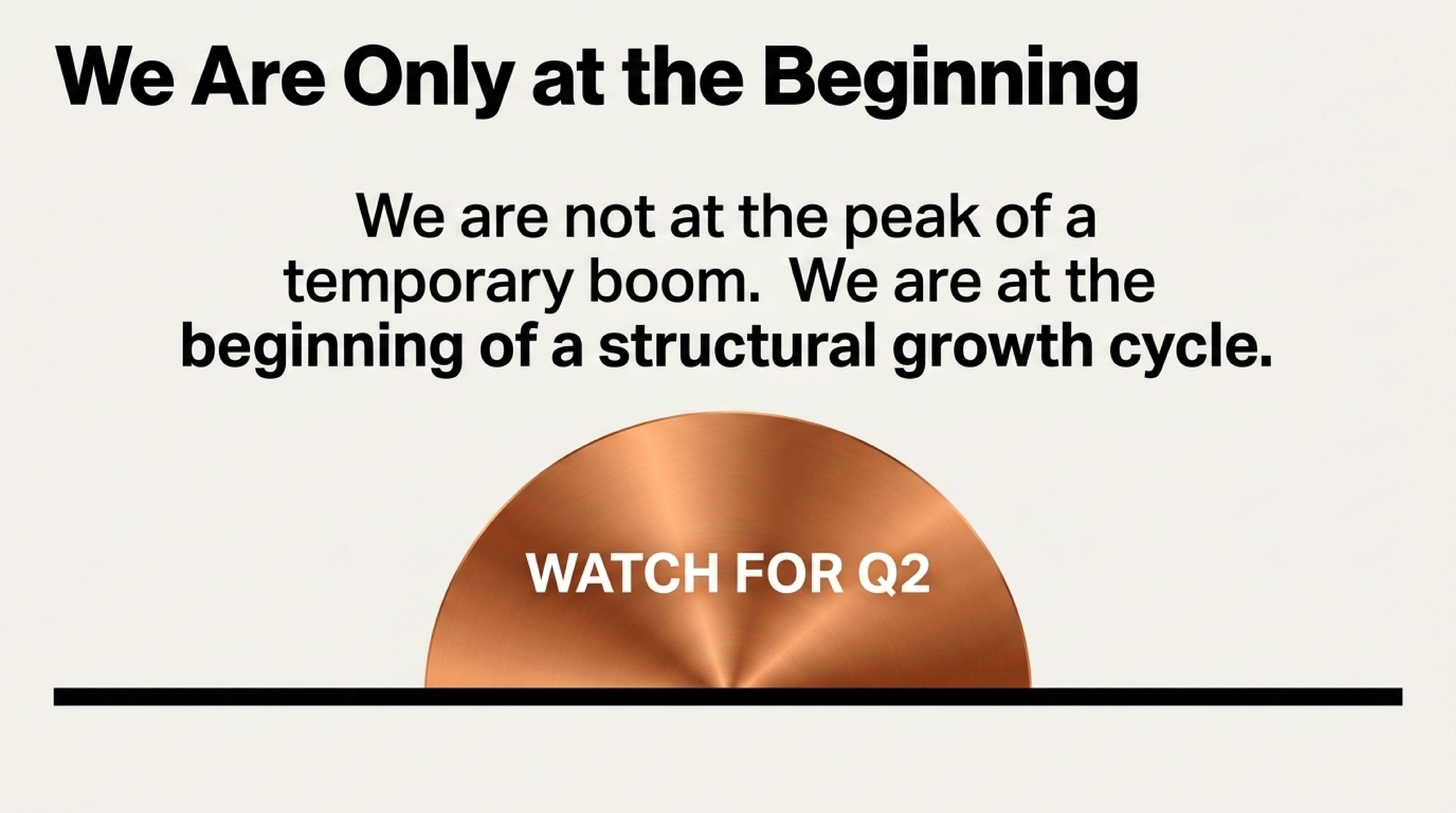
Isn't it already exciting to think about the next report card, just three months away? We are not at the peak of a temporary boom — we are at the beginning of a structural growth cycle. With the AI-driven semiconductor supercycle set to reshape our daily lives and economies in ever more astonishing ways, there's every reason to watch what comes next with genuine anticipation.
Frequently Asked Questions
Q. What exactly were Samsung Electronics' confirmed Q1 2026 results?
A. Samsung Electronics' confirmed Q1 2026 results announced on April 30, 2026 were revenue of 133.9 trillion KRW (~$96.5B USD) and operating profit of 57.2 trillion KRW (~$41.3B USD).
More than a strong quarter, this represents the highest quarterly result in Samsung Electronics' history since the company's founding.
Q. Why did the semiconductor (DS) division record such unusually high operating profit?
A. The semiconductor (DS) division drove the entire company's performance by recording 53.7 trillion KRW (~$38.7B USD) — accounting for 94% of total Q1 operating profit.
The core reason for this overwhelming result is the global AI boom. As global Big Tech companies ramped up AI data center infrastructure investment, demand exploded for high-value premium semiconductors such as HBM (High Bandwidth Memory).
Q. How long is the semiconductor supercycle expected to last?
A. Experts forecast that this boom will not end as a short-lived theme — it will develop into a '2026-edition supercycle' representing long-term structural growth.
Global corporate AI infrastructure demand remains solid and shows little sign of cooling soon. In particular, the mass production schedule for next-generation HBM and whether Samsung secures major new customers are the key watchpoints that will determine whether the boom extends further into the second half.
References
[Breaking] Samsung Electronics Q1 Revenue 133.9T KRW, Operating Profit 57.2T KRW — All-Time Quarterly Record — Maeil Business
https://www.mk.co.kr/news/business/12031892
Samsung Electronics Q1 Operating Profit 57.2T KRW — Semiconductors Alone Earned 53.7T
https://www.donga.com/news/Economy/article/all/20260430/133839847/1
Samsung Electronics 2026 Q1 Earnings Announcement (Official)
https://news.samsung.com/kr/samsung-electronics-2026-q1-earnings
Samsung Electronics Q1 2026: Revenue 133.9T KRW, Operating Profit 57T KRW Achieved
http://www.intn.co.kr/news/articleView.html?idxno=2050495
Samsung Electronics Q1 Operating Profit All-Time Record 57.2T — Semiconductors Account for 94%
https://www.newsis.com/view/NISX20260430_0003612559
Samsung Electronics Q1 Operating Profit 57.2T — Up 756% Year-on-Year, Semiconductors Alone 53.7T
https://www.businesspost.co.kr/BP?command=article_view&num=436874
Samsung Electronics Q1 Operating Profit 57.2T — Semiconductors Earned 94%
https://it.chosun.com/news/articleView.html?idxno=2023092161300
Samsung Electronics Q1 2026 earnings, semiconductor supercycle, Samsung operating profit record, earnings surprise, AI semiconductor demand, Samsung stock outlook, HBM mass production, DS division results, all-time quarterly record, High Bandwidth Memory, memory semiconductor boom, Samsung HBM, AI data center investment, Samsung Q1 2026