Trump's 25% EU Auto Tariff Bombshell — Can Hyundai Actually Come Out Ahead?
25% Out of Nowhere — What Just Happened?
On May 1, 2026, a megaton shock hit the global economy. The Trump administration announced without warning that it would impose a 25% tariff on automobiles imported from the European Union. The announcement blindsided the world's media and financial markets alike.
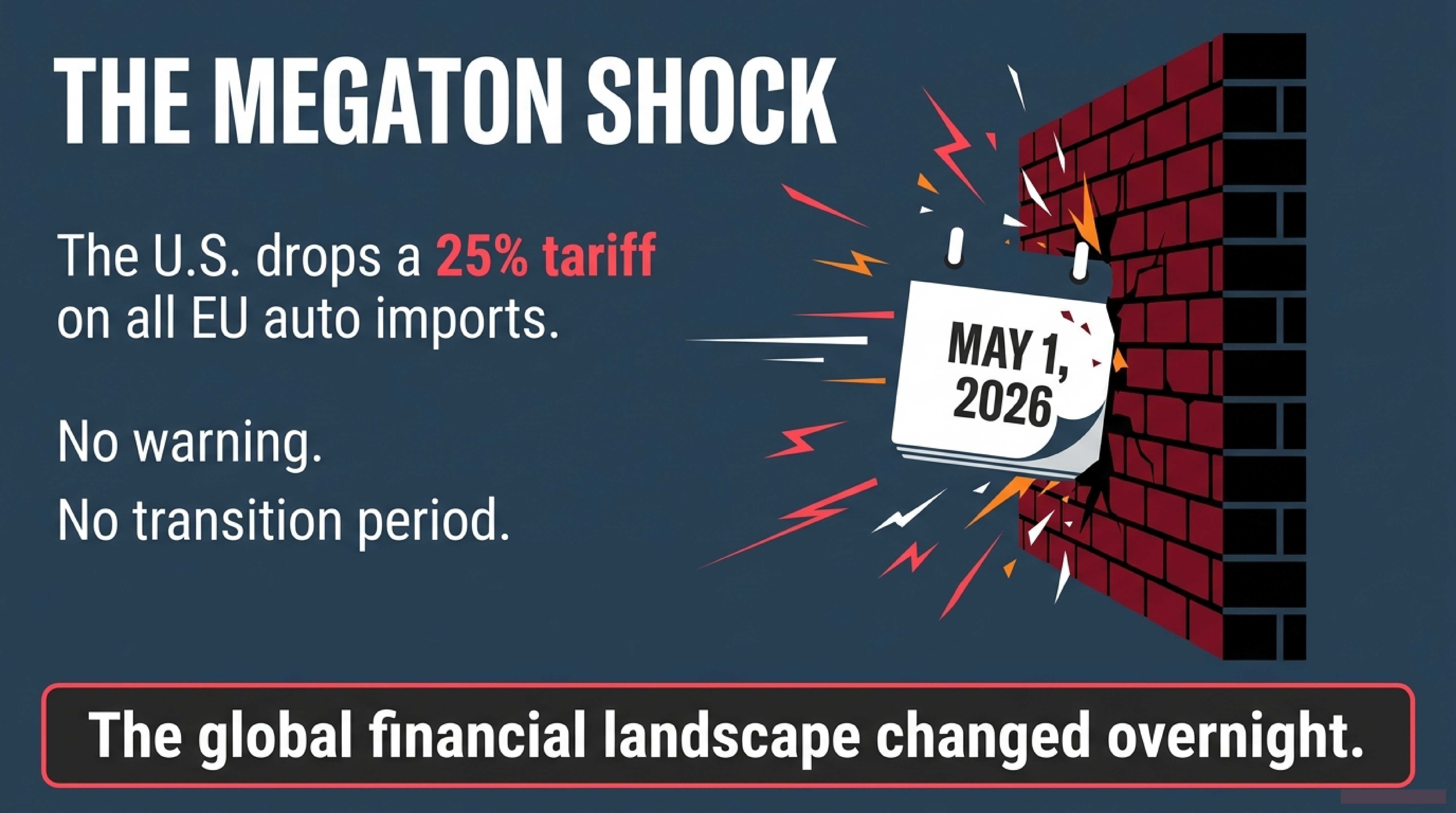
To understand just how dramatic a number 25% is: the standard U.S. import tariff on passenger cars is 2.5%, and European vehicles had been subject to rates in the 10–15% range following prior trade friction. This announcement effectively jumped that rate to 25% overnight. In practical terms, the added cost pressure translates to thousands of dollars per vehicle, forcing significant sticker price increases for consumers. That's ten times the standard tariff rate — and given the high price tags on automobiles, it amounts to a near-total declaration of war on European car imports to America.

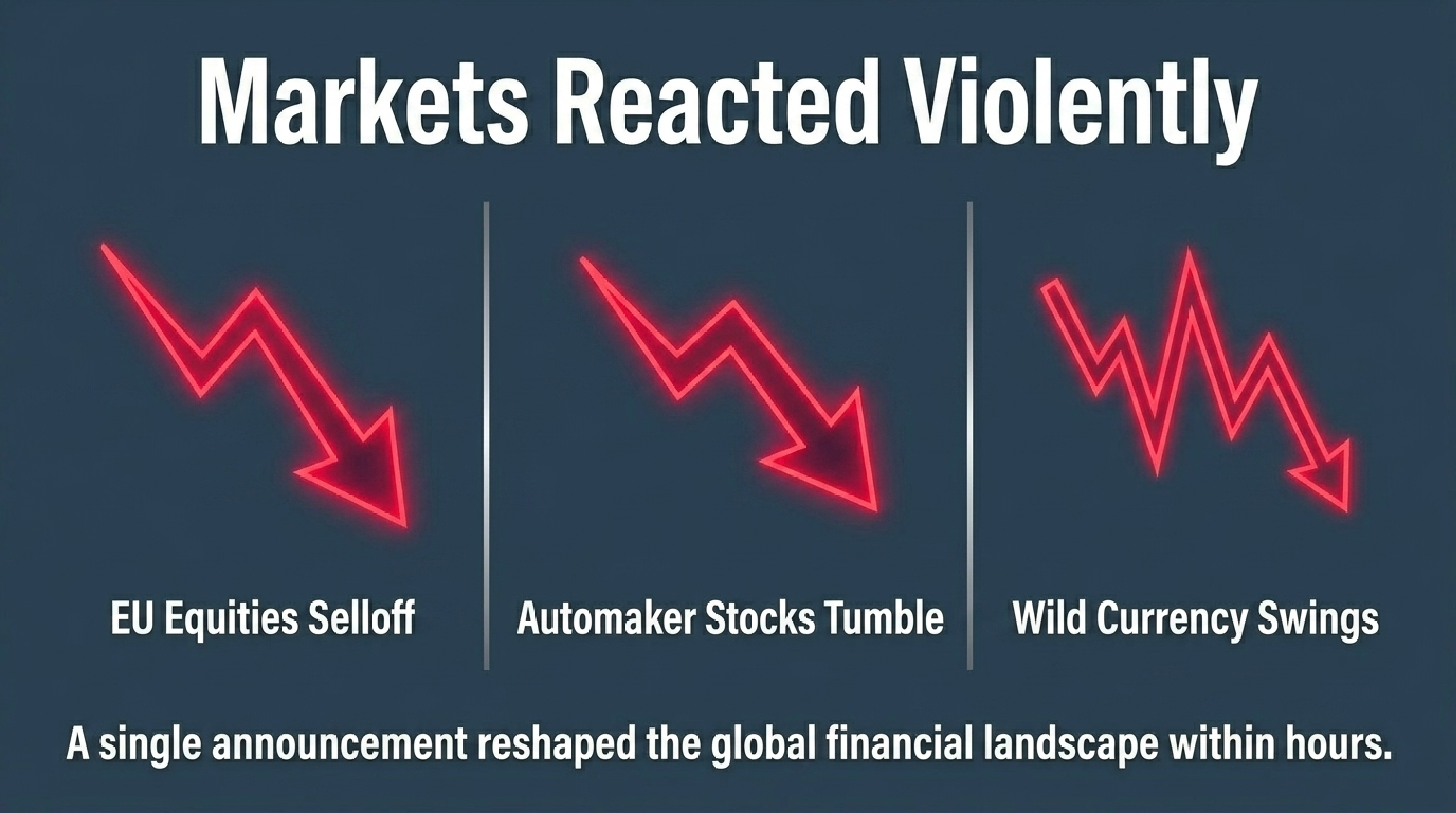
Markets responded immediately and violently. European equities opened in a sharp selloff. Major global automakers' stocks tumbled across the board. Currency markets saw wild swings as uncertainty spiked. A single announcement reshaped the global financial landscape within hours.
Even by the standards of a self-declared America First administration, why pull this lever so suddenly against a traditional ally? The reasons run deeper than a simple trade deficit complaint. Let's look at what really put Europe in the crosshairs.
Why Did Europe Land in the Crosshairs? (Trade Deficits + Iran)
The stated rationale from the Trump administration is 'trade imbalance' and 'failure to honor past agreements.' Trump has long complained loudly that the U.S. runs a massive deficit in trade with Europe and that the EU has not lived up to previous trade commitments. Viewed through the strictly transactional 'America First' lens, this tariff is a blunt warning: the losing deal ends now.

But the real detonator is elsewhere — it's the Iran conflict. With Middle East tensions at a peak, Washington wanted its allies to align firmly with its hardline position. When the EU declined to fall in line and responded with lukewarm half-measures, it infuriated the Trump administration. In other words, Europe's failure to support a key U.S. security posture as a core ally became a powerful accelerant for this tariff decision — punishment dressed up as trade policy.
This is Trump's signature 'pressure diplomacy' at full throttle — drive the other side to the edge until they yield maximum concessions. Meeting diplomatic and security grievances with the sharpest possible economic blow is a ruthless but characteristic strategy.

The EU, now staring at that trade wall in real time, has little room left to absorb the shock. So how devastating is the reality that now confronts European automakers?
Red Alert for Mercedes and BMW — The European Auto Industry's Nightmare
With 25% now a reality, the European auto industry — particularly Germany's three premium titans (Mercedes-Benz, BMW, and Audi), all of which have been aggressively competing in the U.S. market — have a fire under their feet. This measure so far exceeds existing tariff rates that it amounts to a punitive bomb. The first casualty: price tags on European vehicles sitting in U.S. showrooms will need to be torn off and replaced immediately.
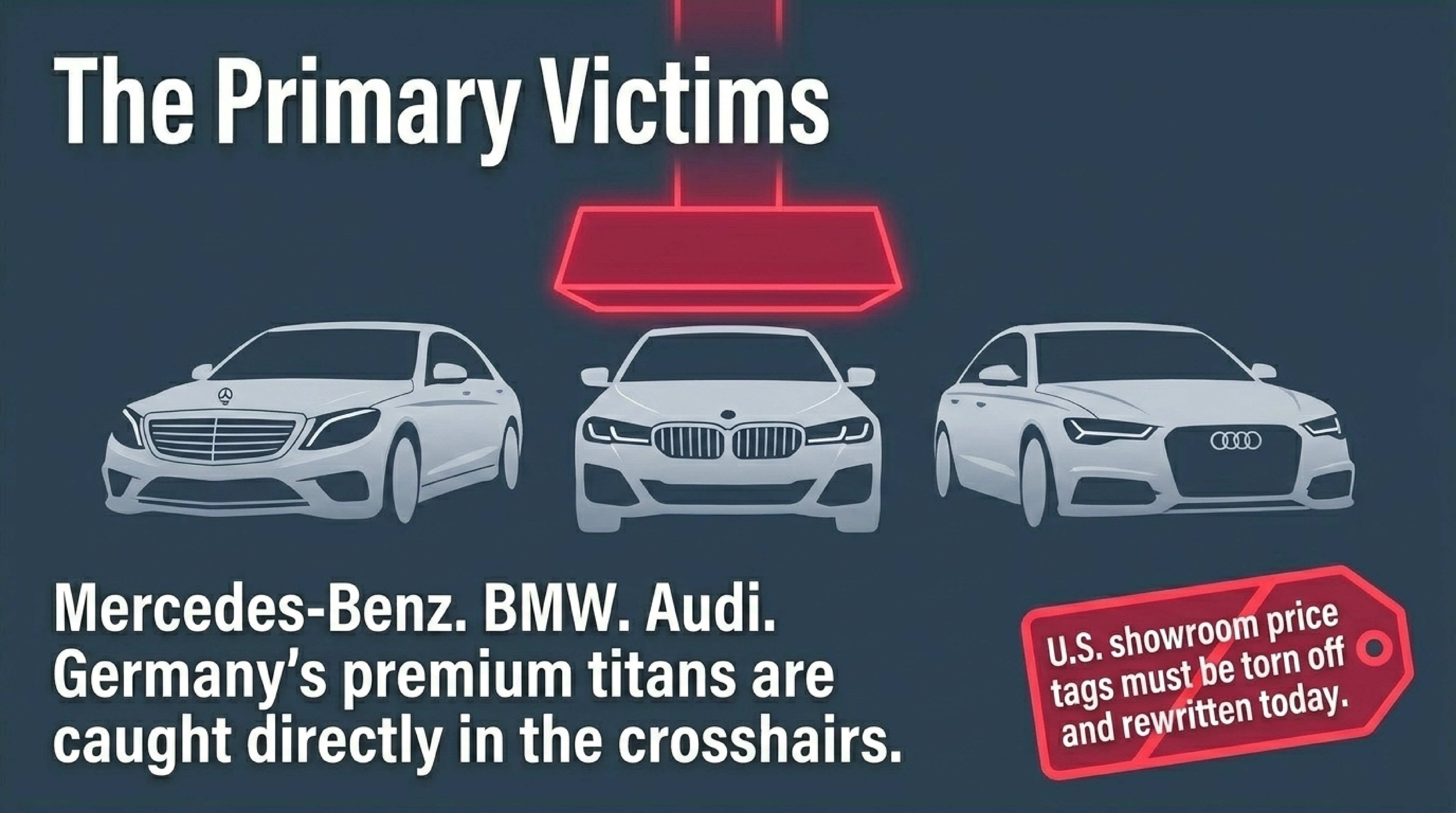
Even setting aside the raw cost math, the damage is severe. The tariff hike creates thousands of dollars of additional cost per vehicle that has to go somewhere — either into the sticker price or onto the manufacturer's income statement. Consumers facing a sudden price jump will hesitate before opening their wallets. European manufacturers are trapped in an impossible dilemma: raise prices and watch sales volumes crater, or swallow the tariff costs themselves and sacrifice operating profit entirely.
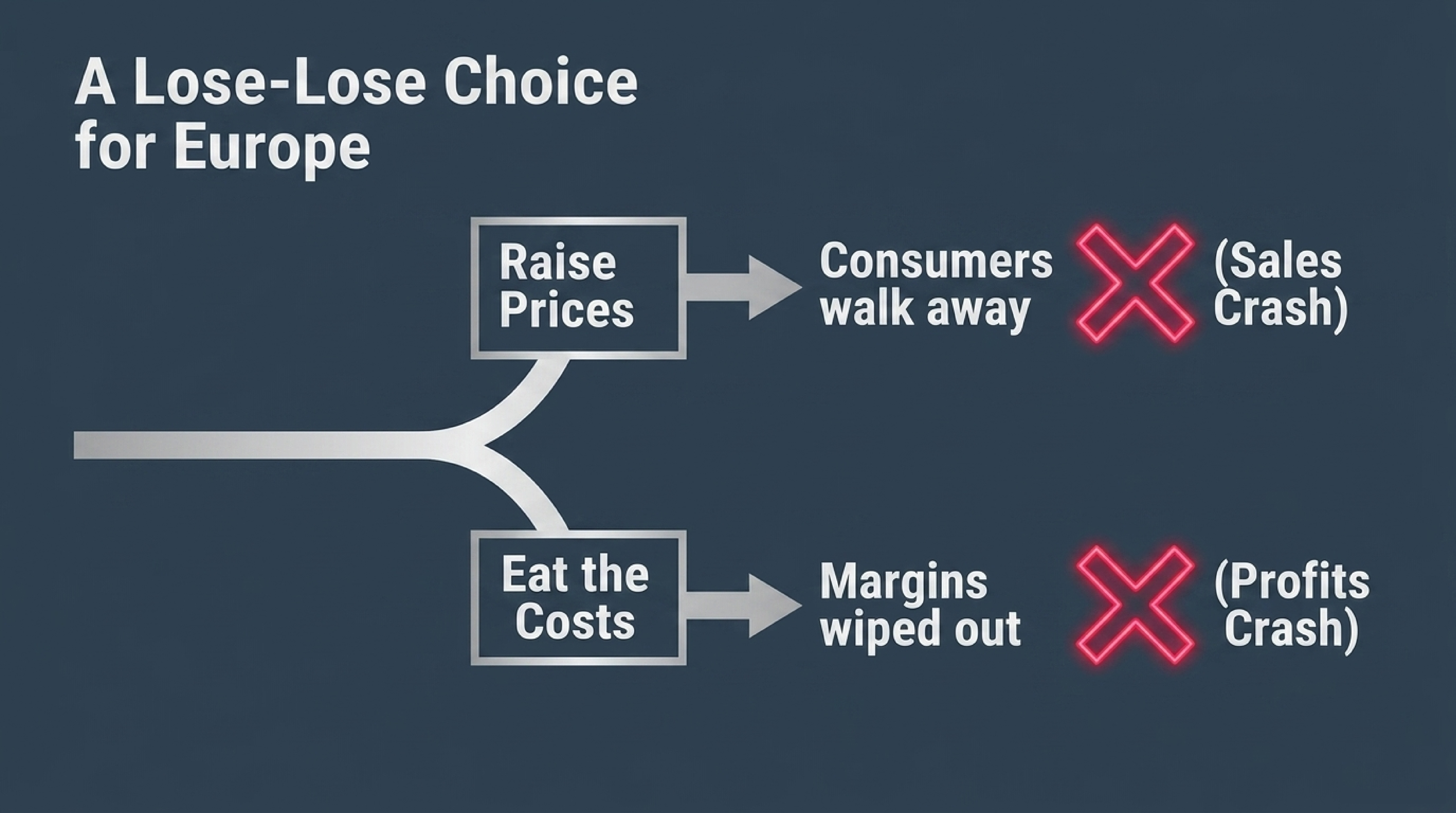
The hardest-hit sector is predictably German automakers. While some have U.S. production facilities as a buffer, the high-margin premium models and critical components that drive profitability still cross the Atlantic from Europe in significant volumes. And the EU is not prepared to sit back and absorb this quietly. Brussels is already fingering its own retaliatory tariff cards targeting U.S. exports — and the atmosphere suggests this could escalate into a full-blown transatlantic trade war.

With European brands backed to the edge of a cliff by this enormous new tariff wall, where does that leave their fiercest competitors in the U.S. market? Are Korean automakers quietly smiling right now?
Is Hyundai Smiling? The Unexpected Windfall for Korean Automakers
With European cars now carrying a heavy 25% tariff sandbag, the competitive dynamics of the U.S. auto market are shifting at speed. For Hyundai and Kia — which have been aggressively targeting America with their premium Genesis brand and high-margin SUV lineups — an unexpected window of opportunity has opened.

American consumers looking at dramatically higher sticker prices on European vehicles will hesitate. In the price segments where Korean cars have been going head-to-head against Mercedes, BMW, and Audi, Korean automakers now hold an enormous relative price advantage. With design and product quality that have earned sustained recognition in the U.S. market, Korean brands are well-positioned to capture that drifting consumer attention.
In the short term, this is a genuine golden opportunity for Hyundai and Kia to grow their U.S. market share. While European brands struggle with price increase pressure, Korean automakers can move quickly into the vacated space and pocket meaningful gains. Market observers already expect a measurable uptick in consumers choosing Korean vehicles as alternatives to European cars — particularly in the luxury sedan and EV segments.
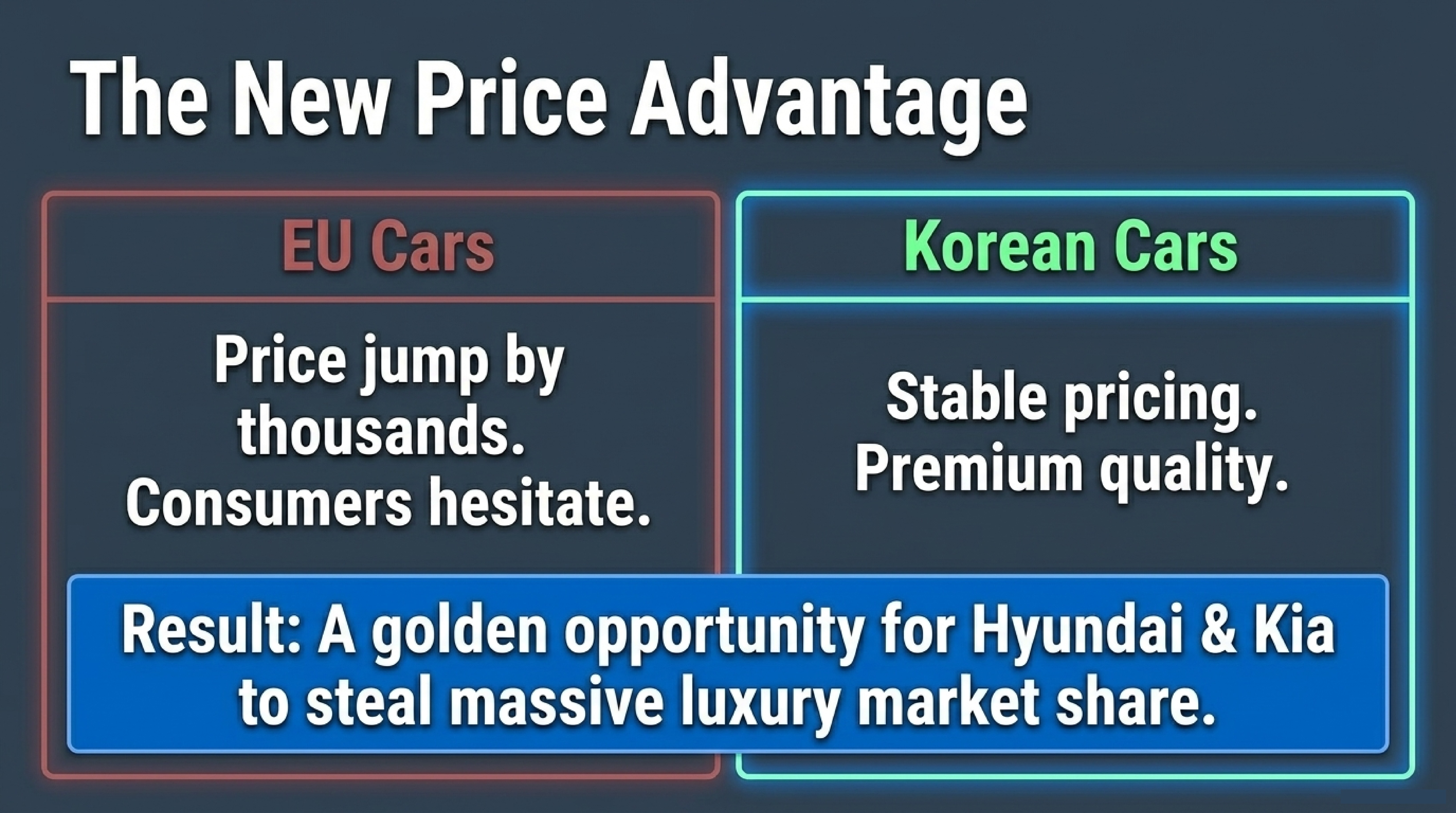
Europe's crisis has become Korea's near-term opportunity — and the auto industry has reason to feel optimistic right now. But this is not the moment to pop champagne. Will Trump's tariff cannon stop at the EU? The same blade that just slashed Europe on trade imbalance grounds could pivot toward Korea at any moment — and that risk is closer than it might appear.
Hold the Celebration — Could Korea Be Next?
The shrapnel from Trump's EU tariff bomb could cross the Pacific and land on Korea's doorstep. Once the Trump administration picks a target, its tariff weapon swings without hesitation. The EU is currently in the center of the crosshairs — but that cold blade could pivot toward Korea at any point, and the concern is growing louder.
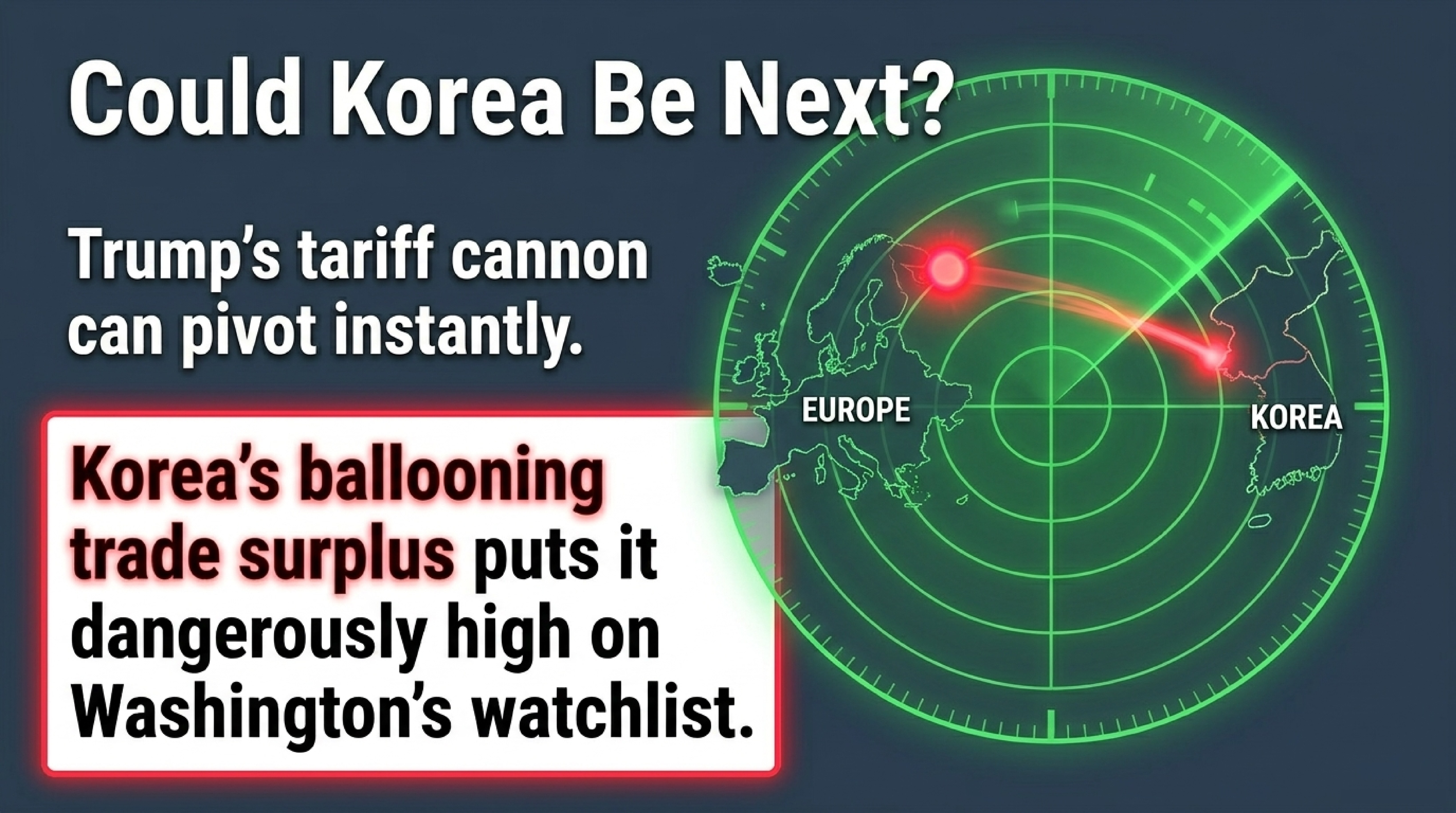
The biggest pressure point is Korea's ballooning trade surplus with the United States. Countries that extract large profits from the American market are always near the top of Washington's watchlist. Layer in non-trade diplomatic and security grievances — just as we saw with Europe and Iran — and the situation becomes dangerously complicated. The precedent Trump just set — using 'Iran non-cooperation' as the trigger for European tariffs — sends a clear warning: any country that fails to align with U.S. global security policy should expect consequences.
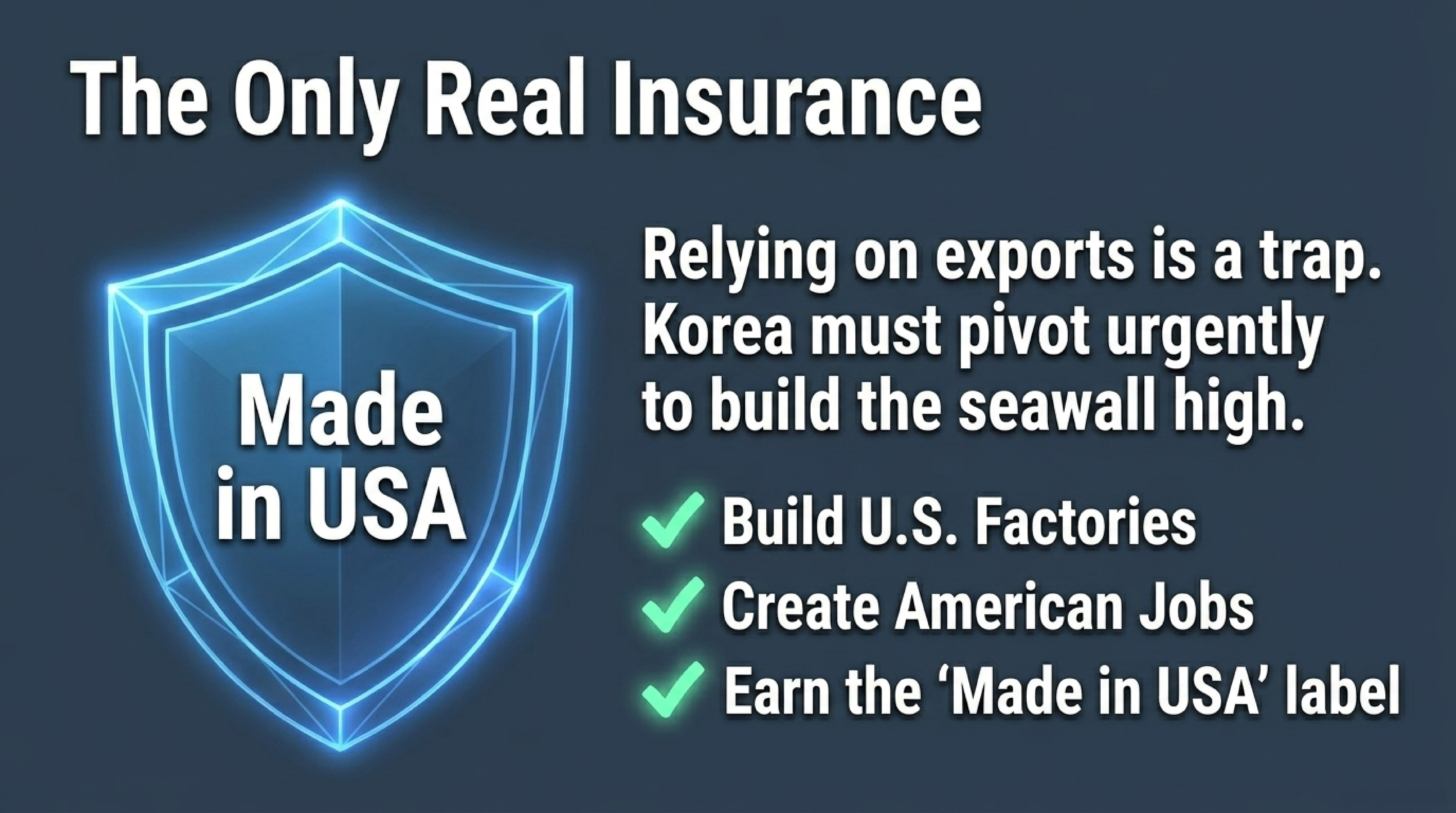
How should Korea's auto industry manage this time-bomb risk? The answer lies in expanding U.S. domestic production and a thorough rethink of America strategy. In an environment of deep uncertainty about when the next tariff wall might materialize, relying solely on Korean-manufactured exports is a dangerously exposed position. Korea's major automakers are already moving — quietly but urgently overhauling their U.S. strategies. Building factories on American soil, creating U.S. jobs, and earning that 'Made in USA' label is the only reliable insurance policy against sudden trade pressure that can materialize without warning.
Right now is not the time to celebrate Europe's stumble. It is the golden window to build the seawall high — before the storm arrives. In a global economy lurching like a rollercoaster, what are the key developments to track as this situation unfolds?
Global Economy in the Storm — What to Watch Next
Trump's dramatic decision is sending massive waves through the global economy. The three-line summary of what this episode means: First, the U.S. has dropped a 25% tariff bomb on EU automobiles. Second, the European auto industry faces serious structural damage. Third, Korea's automakers can expect short-term windfall gains — but simultaneously carry the risk of becoming the next target.
The first thing to watch in the coming news cycle is the EU's counter-response and whether this escalates into a full transatlantic trade war. Will Europe capitulate to the weight of American tariffs, or fire back with its own retaliatory measures against U.S. exports? If both sides dig in and go head-to-head on national pride, the conflict risks spilling well beyond the auto sector and disrupting global supply chains across the board.
The second watchpoint is how nimbly Korea navigates the new era of trade uncertainty. Hyundai and Kia can press their price advantage in the U.S. market in the near term — but the risk that American protectionism pivots toward Korea is very real. As discussed, rapid U.S. localization is essential. Rather than getting comfortable on a short-term tailwind, building genuine resilience through export diversification and supply chain restructuring — the kind that can withstand sudden trade pressure — matters more now than ever.
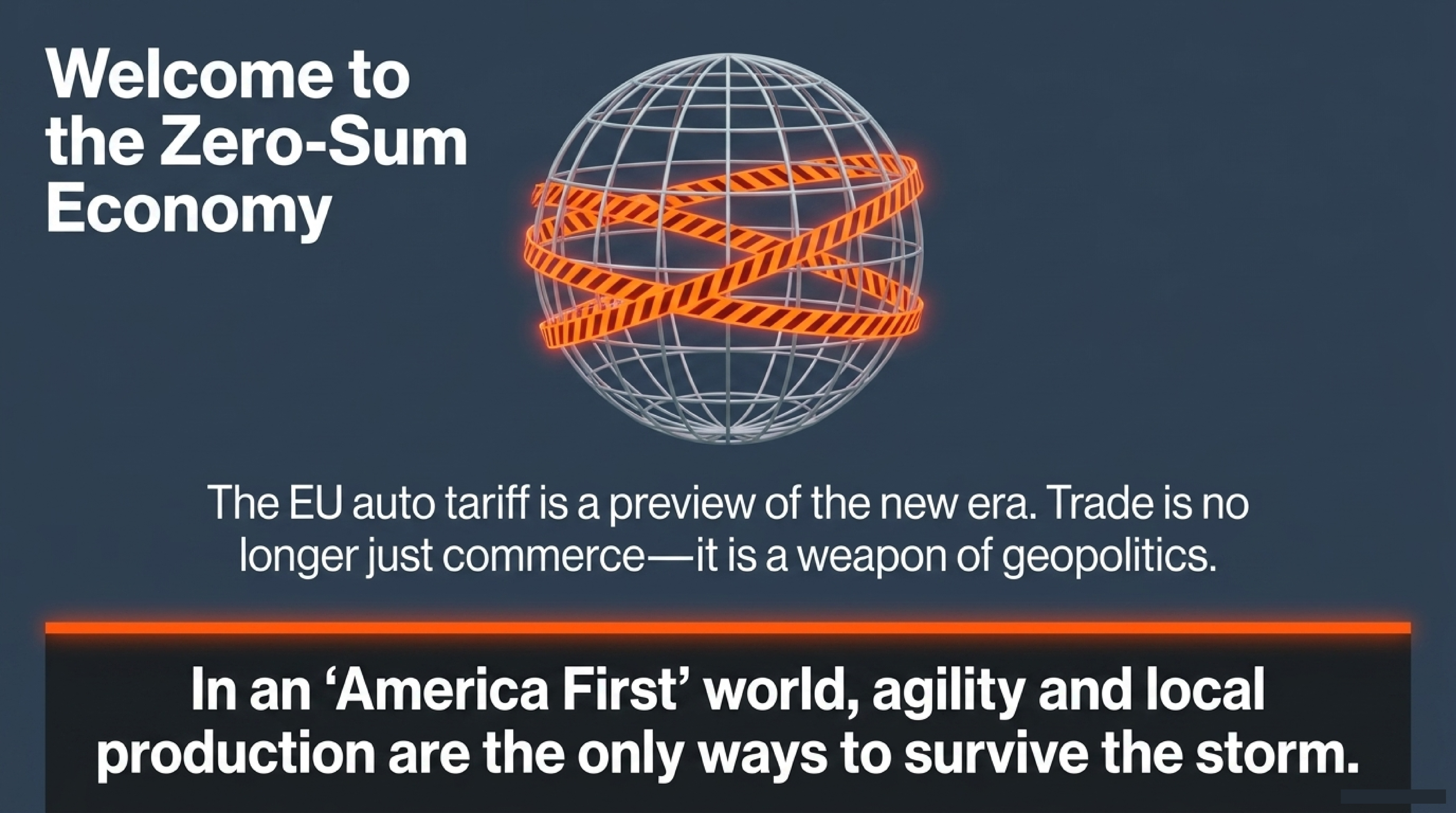
Ultimately, the EU auto tariff episode is a sobering preview of the zero-sum global economy that America First now governs. In a stream of international news that updates daily, this is the moment to watch the U.S.-EU tug-of-war — and Korea's efforts to survive and strategize in the gap between them — with sharper eyes than ever.

Frequently Asked Questions
Q. When does Trump's 25% EU auto tariff actually take effect?
A. The tariff increase was announced on May 1, 2026, but the precise implementation date has not yet been confirmed.
Given the immediate and intense reaction from global equities and currency markets, the measure is expected to be enforced quickly. This story warrants close ongoing attention.
Q. Are Korean car exports to the U.S. also subject to this 25% tariff?
A. No — not immediately. This announcement is directed specifically at the European Union.
However, Korea runs a significant trade surplus with the U.S. and could find itself subject to American trade pressure at any time. Korean automakers are already moving proactively to expand U.S. domestic production as a hedge against this risk.
Q. How much will this push up car prices in the U.S.?
A. Import tariffs on European vehicles are jumping from the previous standard rate of 2.5% to 25% — a tenfold increase.
For example, a European luxury sedan priced at $50,000 in the U.S. market would jump to $62,500 if the full tariff were passed through — an increase of more than $12,000 overnight.
Q. How is the EU responding to Trump's tariffs?
A. The EU has pushed back hard against what it characterizes as a unilateral and unjustified measure, signaling it will not accept this without a response.
Brussels is actively considering a powerful retaliatory tariff package targeting American exports, raising the risk that this bilateral dispute escalates into a full-scale global trade war.
References
Trump Raises EU Car Tariff to 25% — Could Korea Get Caught in the Crossfire Over Iran Non-Cooperation?
https://www.ikbc.co.kr/article/view/kbc202605020002
Trump Raises Tariff on EU Passenger Cars and Trucks to 25%
http://www.mediadale.com/news/articleView.html?idxno=274772
Trump Surprise Announcement: EU Auto Tariff Rising to 25% 'Starting Next Week' — What About Korea?
https://www.kyeonggi.com/article/20260502580001
Trump: 'EU Passenger Cars and Trucks Tariff to 25%' — EU: 'Will Respond If Agreement Violated'
Trump tariffs, EU auto tariff 25%, US EU trade war, European car tariffs, Hyundai Kia windfall, trade war 2026, US Korea trade, auto export, EU tariff hike, Hyundai Kia US market, protectionism, global economy, Mercedes BMW tariff, America First trade policy, Genesis EV US market