Trump's Germany Troop Threat: What It Actually Means — and Should Korea Be Worried?
A Single Truth Social Post Just Rattled the Global Security Order
On April 29, 2026, a short post on Donald Trump's Truth Social platform sent shockwaves through global security circles. Trump wrote that "the United States is looking at the possibility of reducing its forces in Germany, and a decision will be made soon" — floating the idea of cutting the approximately 35,000 American troops currently stationed there.
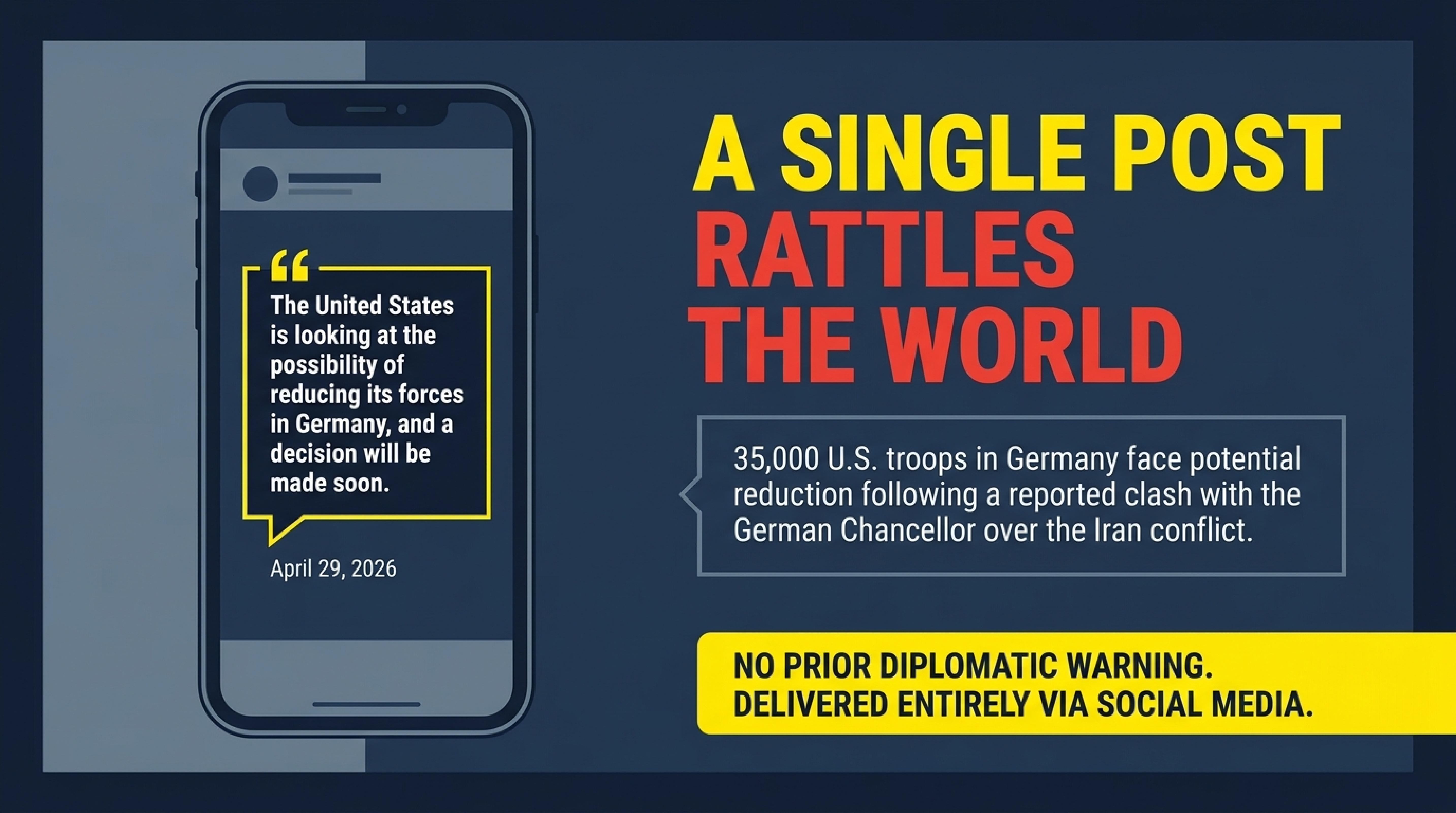
The remarks reportedly came after a clash with the German Chancellor over the Iran conflict. With no prior diplomatic warning to one of America's closest allies, the statement hit the foreign policy world like a thunderbolt.
The most immediate casualty was Germany and the broader European security architecture. With the continent's security already strained by the ongoing Ukraine conflict, the suggestion that the U.S. military presence in Germany — Europe's most significant American forward base — could be reduced landed as a bolt from the blue. German politicians scrambled to respond, and across the EU a chilling anxiety spread quickly: the American security umbrella can be folded at any time. What alarmed allies most wasn't just the content — it was that a decision of this magnitude was floated unilaterally via social media, with zero advance coordination.

As of May 1, 2026, major international outlets are running the story as their lead. Analysts warn this may signal a genuine large-scale repositioning of U.S. forces globally — not just political posturing. The Western security alliances that have held firm since World War II are facing a serious stress test. What seemed like an unshakeable commitment yesterday is suddenly in question, and the world is watching closely.
So why did Trump choose this moment to drop such a bombshell on one of America's oldest allies? To understand his real motives, you have to start with how he fundamentally thinks about alliances in the first place.
The Invoice Diplomacy: What Is Trump's 'Transactional Alliance'?
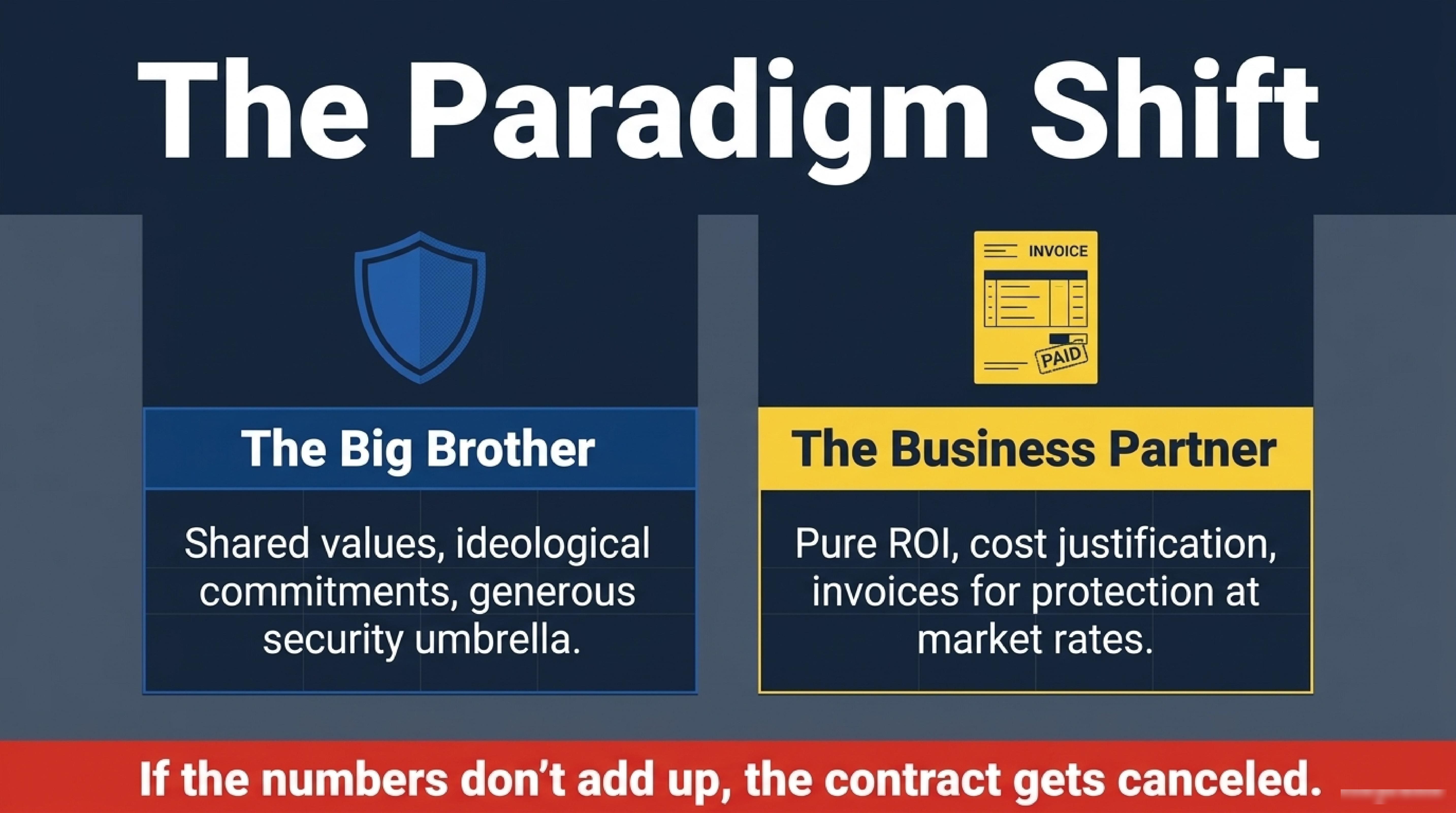
The traditional American approach to alliances resembled a big-brother relationship: share the values of freedom and democracy, and America would extend its security umbrella generously, treating allies almost like family. Trump's worldview doesn't operate that way. His so-called 'transactional alliance' is rooted entirely in business logic.
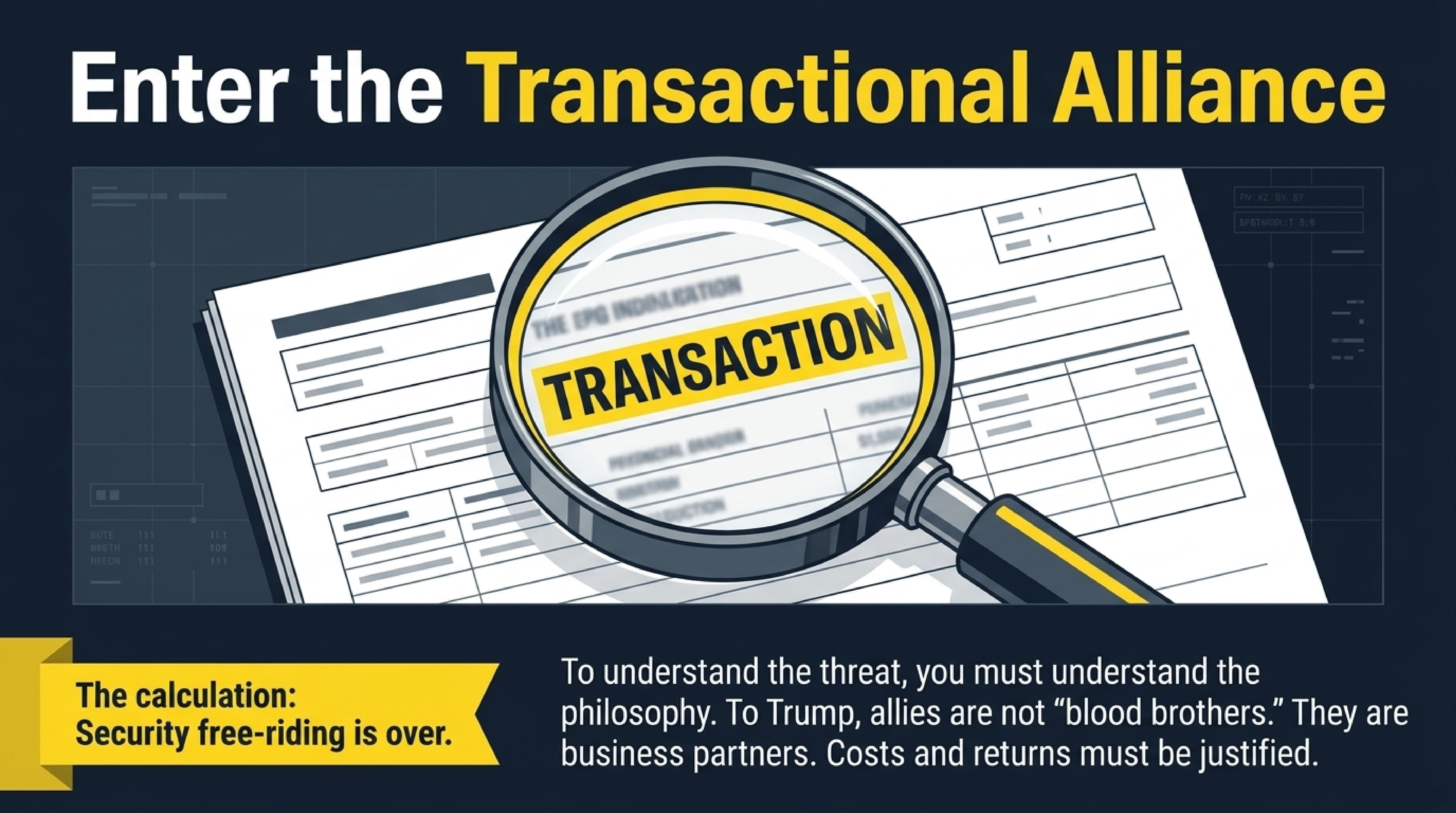
Put simply, allied nations are not blood brothers — they are business partners and clients whose costs and returns must be justified. The calculation in Trump's mind is clear: "Why should America defend other countries for free?" Security free-riding is unacceptable. If you want U.S. protection, you pay for it. Like an invoice that lands on the table after every meal — without fail.
This business-minded approach has flipped traditional American diplomatic grammar on its head. Where past administrations worried that a wavering alliance would fracture the free world's solidarity, Trump's foreign policy operates on a colder premise: if the numbers don't add up, the contract can be cancelled and the troops pulled out. No ally is exempt. If a partner is deemed to be under-contributing to defense spending, Trump will send the invoice — and mean it. That is the essential nature of his brand of 'transactional alliance.'
With this calculation firmly in place, where will Trump's demanding gaze land next after Germany? South Korea — a key U.S. ally for over seven decades — cannot escape this cold business partner's spreadsheet.
Is the USFK Next? What Korea Actually Faces
The moment Trump's Germany remarks landed, anxiety began simmering inside Korea: could the U.S. Forces Korea (USFK) be next? If even Germany — the backbone of European defense — is being put on notice, the Korean Peninsula can hardly consider itself immune. Both media and public opinion are watching nervously for any signs of spillover.

Seoul moved quickly to contain the narrative. The government issued a firm statement: "There have been absolutely no discussions with the United States regarding any reduction or withdrawal of the USFK." Officials stressed that the strength of the U.S.-Korea alliance remains solid, and that the Germany issue does not automatically translate into any threat to American forces on the Korean Peninsula.
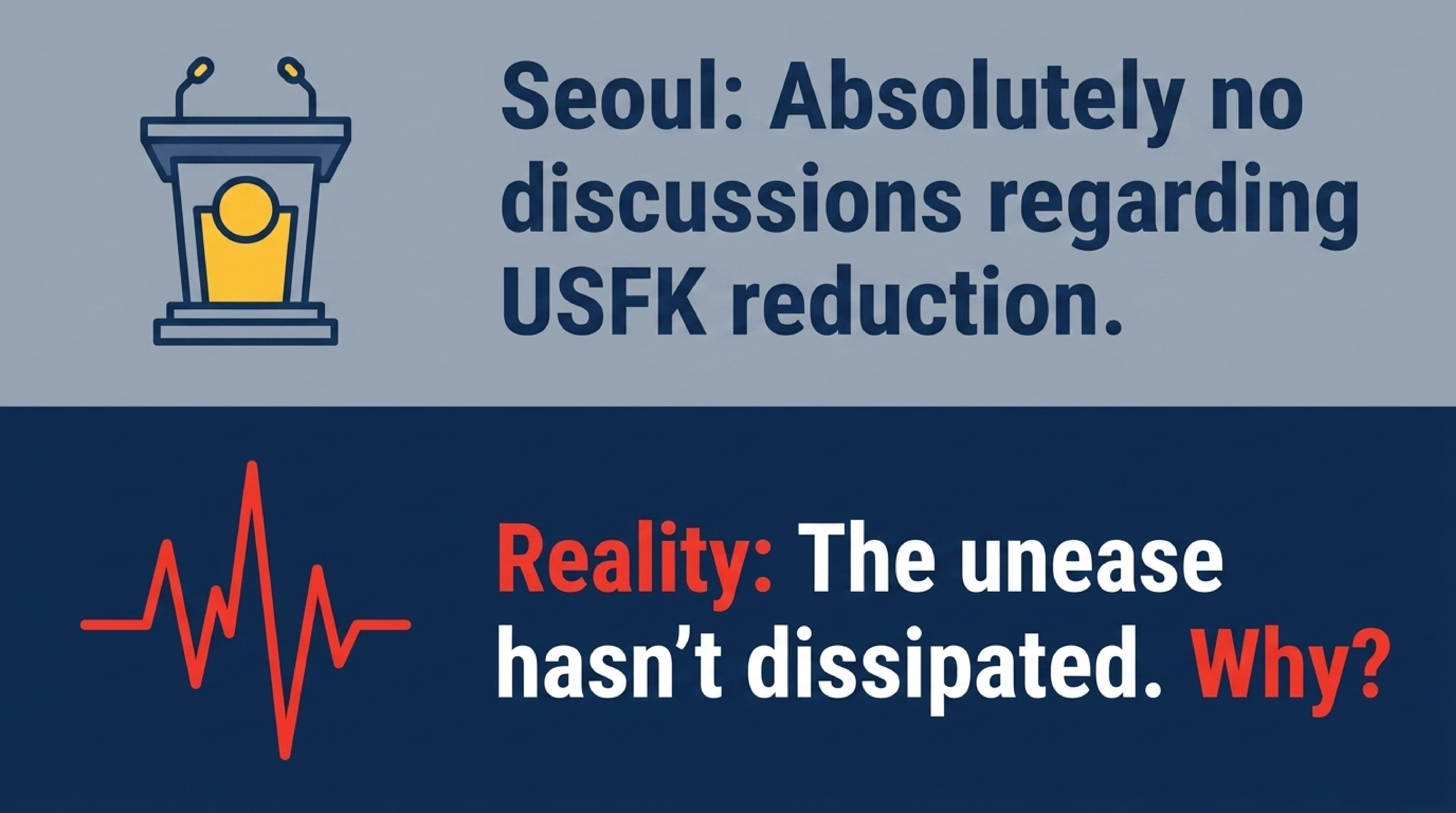
Even so, the unease hasn't fully dissipated — and there's a clear reason for that. The security environment Korea now operates in is meaningfully different from Trump's first term. North Korea's capabilities continue to advance. Strategic competition between the great powers surrounding the peninsula is intensifying. Geopolitical tension on and around the Korean Peninsula is as high as it has ever been. Against that backdrop, Trump's signature unpredictability is an anxiety multiplier in its own right.

That's why no amount of official reassurance fully settles the nerves. So what is Trump's endgame here? The answer almost certainly comes back to money.
It's Always About the Bill: Defense Cost-Sharing Is Coming
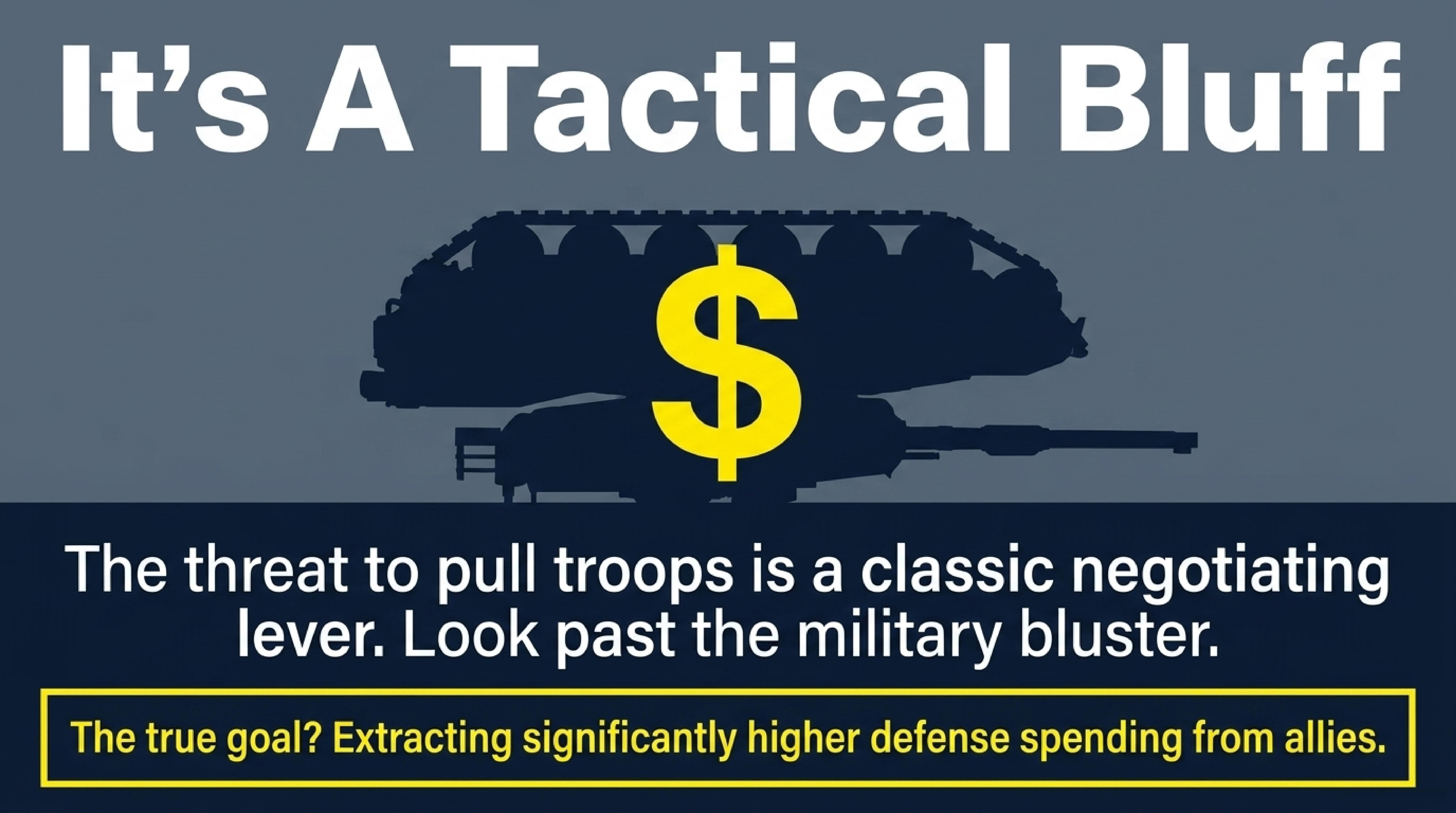
Flip Trump's troop reduction threat toward Germany over, and the word printed on the back is: money. The bluster about pulling troops is almost certainly a tactical bluff designed to dramatically drive up defense cost-sharing contributions — the same playbook Trump ran during his first term, using troop reduction as a lever to extract higher defense spending from allies who he viewed as free-riders. The pattern is running again.
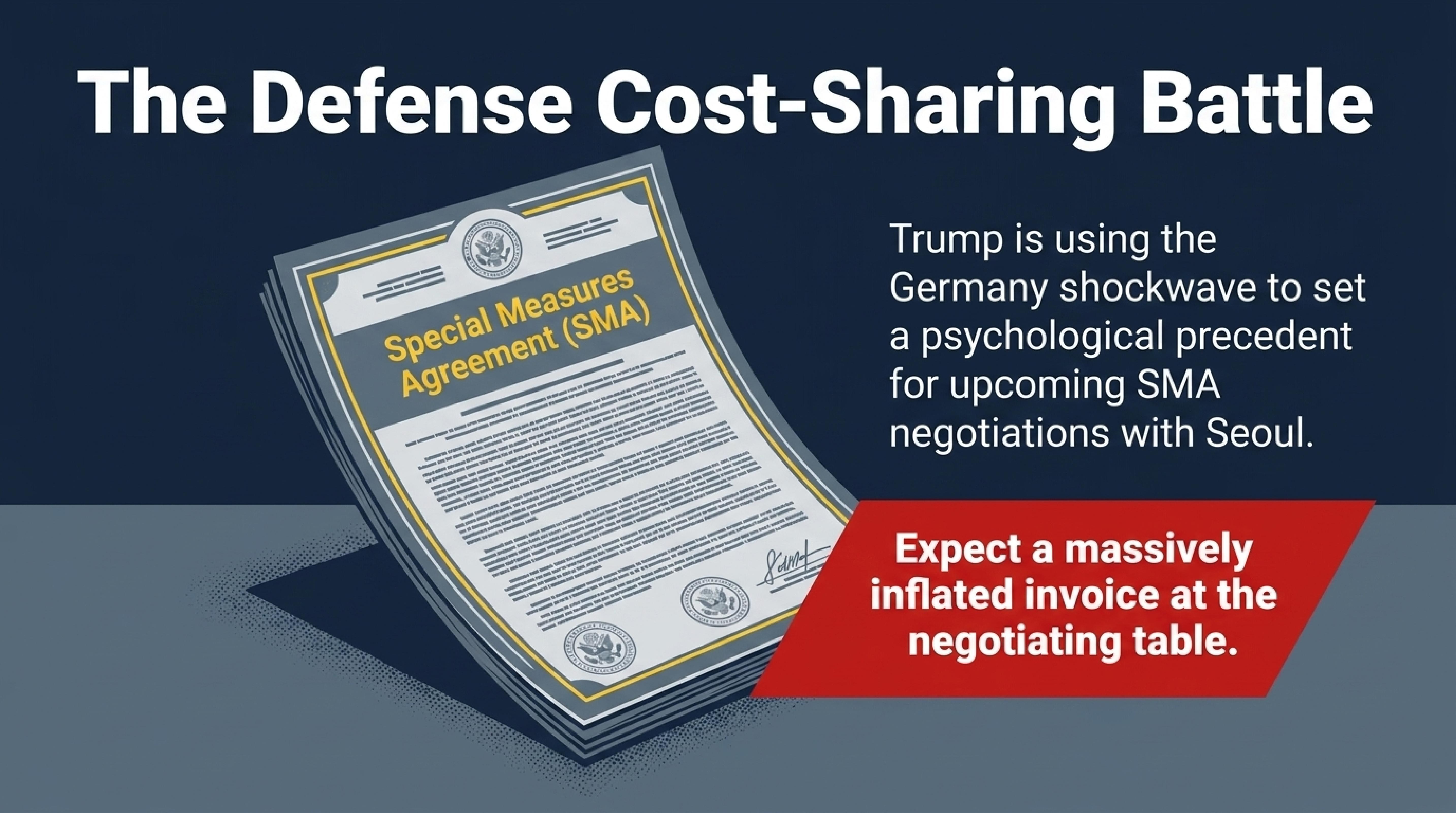
The fallout is likely to reach Korea soon. The upcoming Special Measures Agreement (SMA) negotiations — the bilateral framework that determines how much South Korea pays annually toward the costs of stationing U.S. troops on the peninsula — are expected to be unusually contentious. The Trump administration may well use the Germany episode as a precedent, arriving at the SMA table with a far larger invoice than usual. The stage is being set before negotiations even formally begin.
How should Korea respond when that large bill arrives? Panicking and opening the wallet immediately is not the answer. This is the moment for a calculated, pragmatic diplomatic strategy. Korea's real leverage at the table includes:
- An already significant cost-sharing record: Korea already contributes substantially to alliance costs — the numbers make a compelling case in their own right.

- U.S. weapons procurement: Korea's large-scale purchases of American military equipment represent a substantial contribution to the U.S. defense industry and economy.
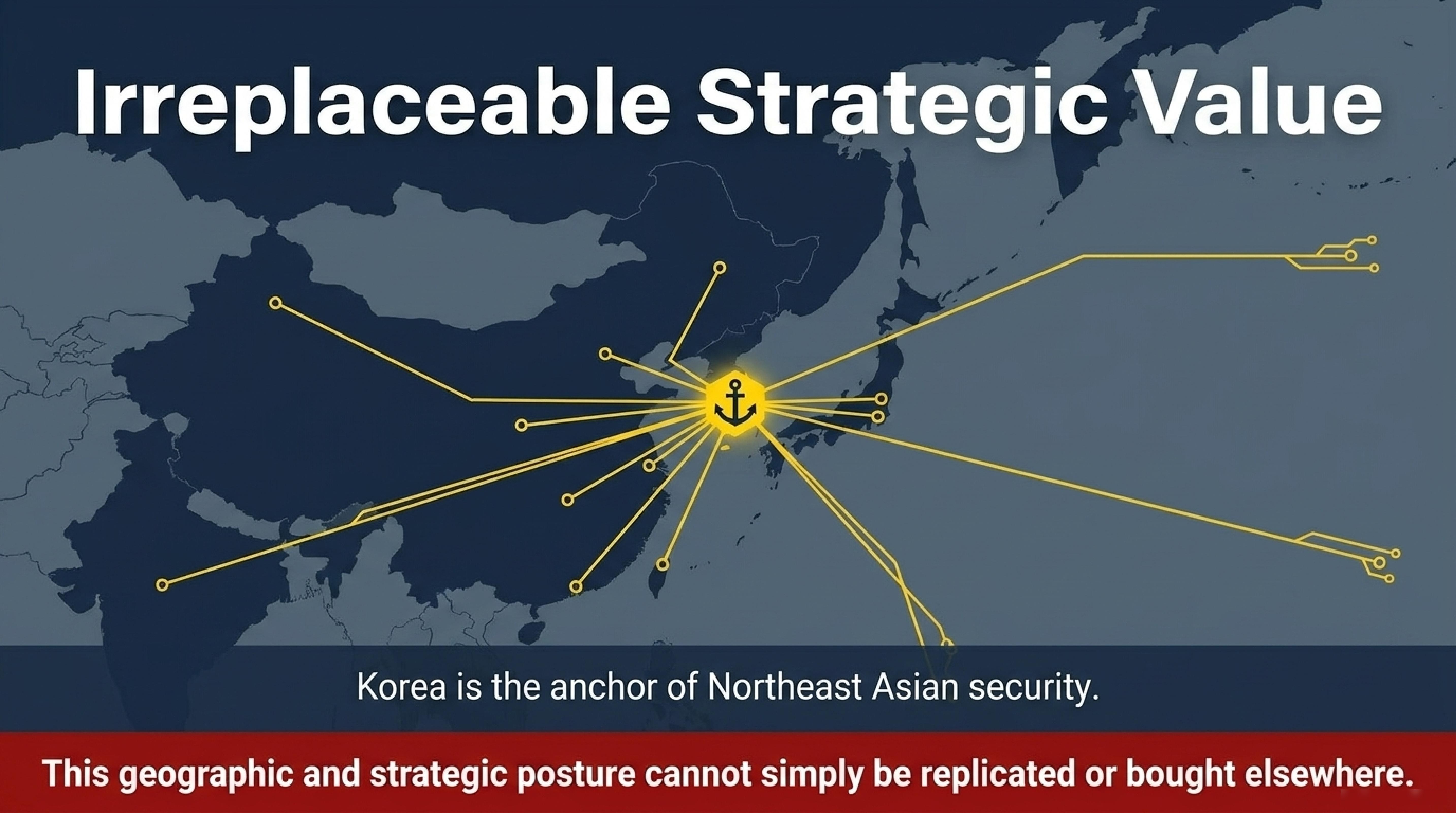
- Irreplaceable strategic value: As the anchor of Northeast Asian security, Korea's role in the U.S. strategic posture in the Indo-Pacific cannot simply be replicated elsewhere.
If the other side comes with pure business logic, the response should be equally clear-eyed — not emotional panic, but a cool and precise counter-ledger. With the core nature of the defense cost-sharing threat now clear, it's worth stepping back and keeping a steady perspective on what's actually happening.
Staying Calm in a Turbulent Security Landscape
Three key takeaways from everything we've covered:
- First: Trump is using the Germany troop threat to aggressively present allied nations with a 'security invoice' — the message is pay more or face consequences.
- Second: Through the lens of transactional alliance thinking, the pressure on Korea to increase its SMA defense cost-sharing is likely to intensify significantly.
- Third: Despite this, there are currently no substantive discussions between the U.S. and Korea about any reduction or withdrawal of U.S. Forces Korea.

The daily drumbeat of alarming headlines makes it easy to feel like a crisis is imminent — but the reality is more nuanced. This moment is better read as a prompt for Korea to strengthen its own defense capabilities and diversify its diplomatic relationships, rather than as evidence of an immediate breakdown. Experts counsel turning anxiety into strategic action rather than paralysis.
The international order is always in motion, and more friction and noise will come. Trump's characteristically unpredictable rhetoric and his habit of making unilateral announcements via social media are genuinely destabilizing for allies. But the strategic depth of the U.S.-Korea alliance — built over more than seventy years — and the security architecture of Northeast Asia are not the kind of thing that crumbles overnight because of a social media post.
The task is not to be swept up in vague alarm, but to look behind the headlines with a clear and objective eye. Understand the real intent behind the word 'transaction' — and respond with preparation rather than panic. Is Trump's latest move a negotiating bluff, or a genuine signal of alliance disruption? Watch the facts closely as they develop. The real price tag on that incoming invoice is still being written.

Frequently Asked Questions
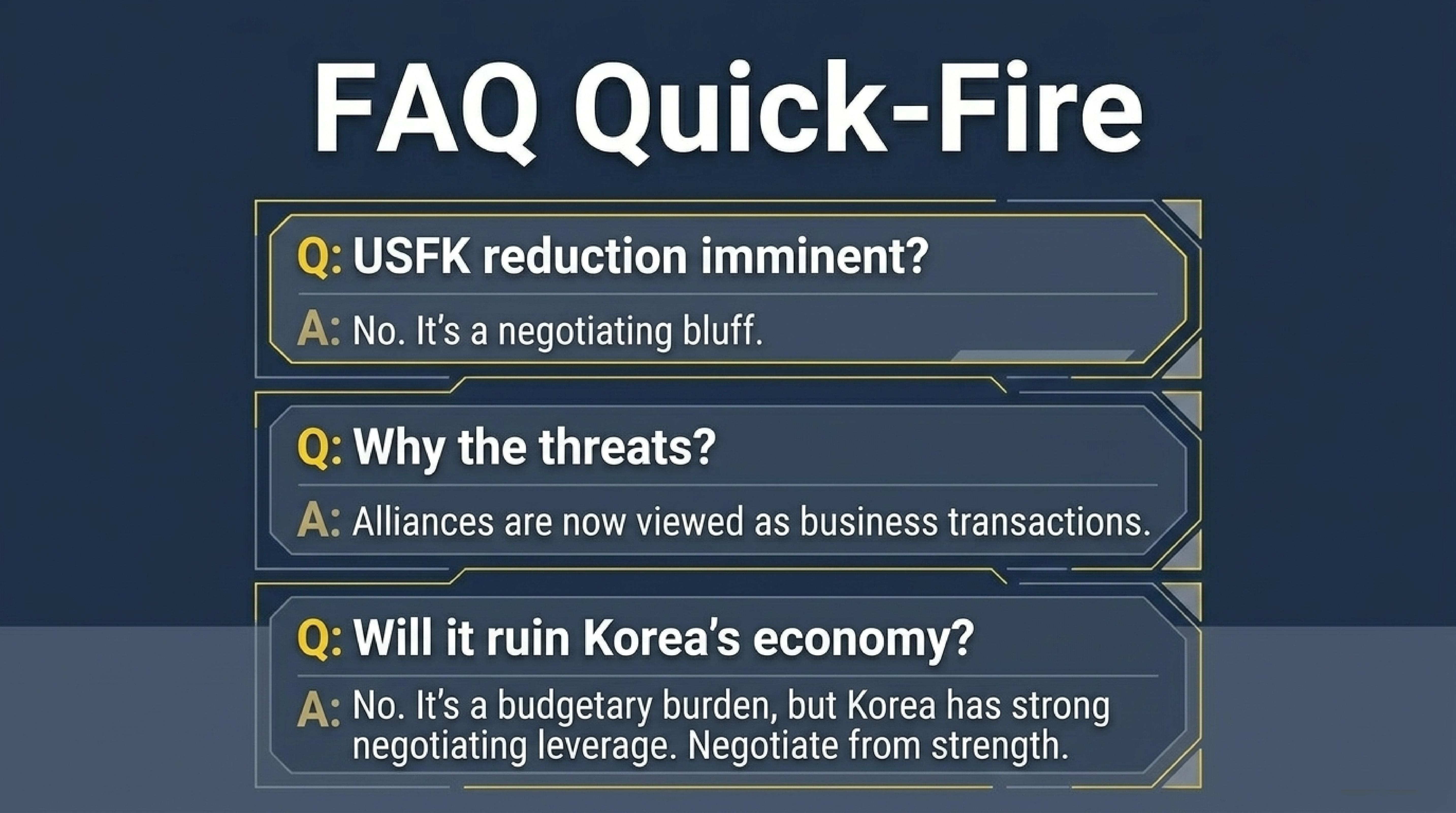
Q. Is a reduction of U.S. Forces Korea (USFK) actually imminent?
A. Almost certainly not in the immediate term. The South Korean government has stated officially that there have been no substantive discussions with the United States regarding any reduction or withdrawal of the USFK.
The weight of evidence points toward Trump's Germany statement being a tactical pressure move — a negotiating bluff designed to gain leverage in upcoming Special Measures Agreement (SMA) talks rather than a genuine precursor to withdrawal. Measured observation rather than alarm is the appropriate response.
Q. Why does Trump keep threatening to pull U.S. troops from allied countries?
A. Because Trump views alliances through a strictly transactional lens — as business partnerships rather than ideological commitments. Where traditional U.S. foreign policy prized shared values like freedom and democracy, Trump prioritizes cost and return on investment.
Under this framework, the era of free-riding on American security is over. If you want U.S. protection, you pay for it at market rates. Allies deemed to be under-contributing are subject to troop-reduction threats regardless of how long-standing the relationship is.
Q. If Korea's defense cost-sharing contribution rises sharply, will it hit the Korean economy?
A. A substantial increase in SMA payments would place some additional burden on Korea's national budget, but it would be a stretch to say it would deal a crippling blow to the broader economy. The primary focus of this discussion is the security and diplomatic outlook, not macroeconomic impact.
Korea already contributes meaningfully to the alliance through existing cost-sharing and substantial purchases of American-made defense equipment. Rather than approaching negotiations from a position of fear, Korea should leverage these concrete contributions to negotiate from a position of strength.
References
Following Trump's Germany Remarks, Seoul Says: "No Discussions at All on USFK Reduction or Withdrawal" — Maeil Business
https://www.mk.co.kr/news/politics/12032523
[Editorial] Trump's Germany Troop Cut Could Spark Fears Over U.S. Forces in Korea — JoongAng Ilbo
https://www.joongang.co.kr/article/25425032
Trump Formally Signals Possible U.S. Troop Reduction in Germany — Concerns Raised Over Impact on USFK — Seoul Newspaper
https://www.seoul.co.kr/news/international/2026/04/30/20260430500191
Trump threatens to reduce troop numbers in Germany amid growing row with NATO allies — The Guardian
https://youtu.be/GAkK7PjCpwM?si=7_1Mcgf4nDpJZWEl
Trump Germany troops, USFK reduction, US Forces Korea, transactional alliance, Trump foreign policy, US military redeployment, Korea defense cost-sharing, SMA negotiation, US-Korea alliance, NATO allies defense spending, Trump Truth Social Germany, Korea security policy, Indo-Pacific security, US troop withdrawal allies