Trump's 10% Global Tariff Ruled Unlawful — Why the Courts Keep Blocking His Trade Agenda
Following February's Supreme Court ruling against reciprocal tariffs, the U.S. Court of International Trade has now also struck down Trump's 10% global tariff as unlawful. The executive branch's aggressive tariff push is running into repeated judicial roadblocks.
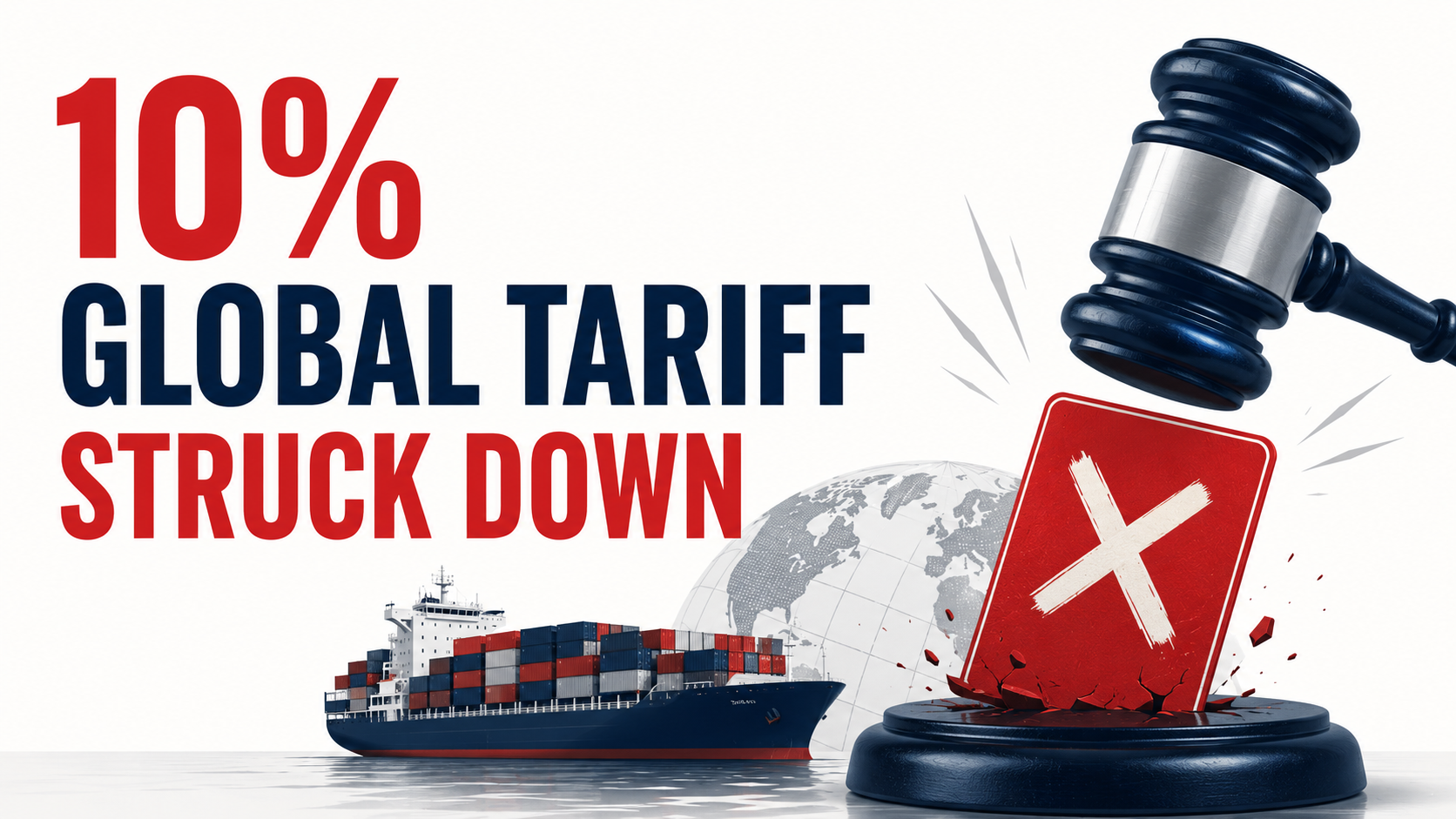
Another Red Card — The 10% Global Tariff Gets Struck Down
On May 7, 2026, an announcement from the United States commanded the attention of global markets. The U.S. Court of International Trade (CIT) struck down the Trump administration's '10% global tariff' — one of the centerpiece trade policies of the current administration — ruling it unlawful. A trade policy that the executive branch had been pushing hard ran squarely into the judiciary's wall and was stopped cold.

To use a soccer analogy: a player charging aggressively across the pitch, pursuing goal after goal, has received a 'second red card' from the referee and been sent off the field. That word 'second' matters — because the judicial red card for Trump's trade agenda is not a first.
Just a few months ago in February, the Supreme Court had already handed down an unlawful ruling against the administration's 'reciprocal tariffs' — another flagship trade initiative. Two decisive rulings in the first half of the year alone — first reciprocal tariffs, now the global tariff — have significantly eroded the administration's trade policy momentum. Both core engines of its trade agenda have been switched off by the courts.
With consecutive unlawful rulings now on the books, both domestic and global markets are watching closely for the fallout. So what exactly was this '10% global tariff' that generated such fierce controversy — and why did the courts shut it down? Let's break it down clearly.
A Flat 10% on Everything? What the Global Tariff Actually Was
The 10% global tariff was exactly what it sounds like: a blanket 10% import tax applied uniformly to goods from every country, with no exceptions. This is fundamentally different from the traditional approach of targeting specific countries for unfair trade practices or imposing duties on particular product categories. The entire point was to apply the same standard to every import, regardless of origin.

Think of it as a theme park's 'mandatory base entry fee.' When you visit a theme park, you pay the admission price at the gate — regardless of which rides you plan to use or where you'll eat. The global tariff operated on exactly the same logic: if you want to sell goods in the vast American consumer market, you first pay a 10% entry toll — no matter what you're selling or where it was made. In effect, it was a sweeping, across-the-board barrier raising the cost of access to the American market.
The administration's core rationale for this sweeping universal tariff was protecting American industry and reducing the trade deficit. As years of cheap foreign imports took a toll on U.S. manufacturing and eroded American jobs, the tariff was designed as shock therapy — artificially raising the price of imports to tilt the competitive playing field back toward domestic producers. Make every import 10% more expensive, and American-made goods become relatively more competitive. The goal was to rebuild domestic manufacturing capacity and put Americans back to work — a hard expression of America First economics.

A policy designed with a clear intent to reclaim America's industrial footing — yet it was stopped before it could be enforced. Why did the judiciary refuse to allow it?
Why Did the Court Rule It Unlawful?
The CIT's core reason for blocking the tariff was straightforward: 'executive overreach.' Under the U.S. Constitution, the power to regulate commerce and impose tariffs rests fundamentally with Congress — not the executive branch. The court found that the Trump administration's attempt to unilaterally impose tariffs on every country in the world — without explicit congressional authorization — exceeded the legal authority granted to the presidency.
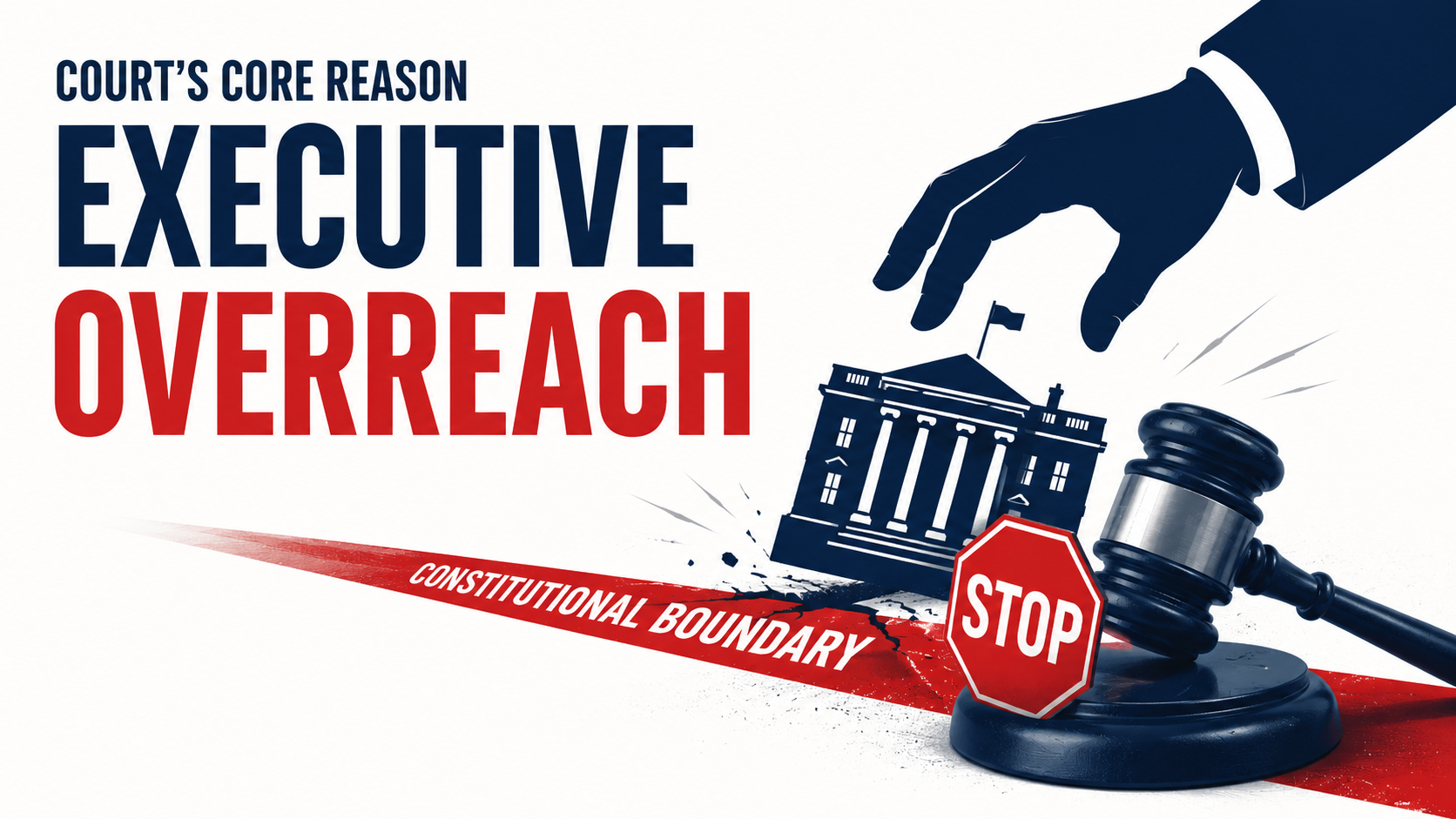
A corporate analogy makes the legal logic easier to follow. If the government were a large company, the President would be the 'CEO' and Congress would be the 'Board of Directors' — the body that makes and approves the company's most consequential decisions. This case was equivalent to a CEO unilaterally rewriting the company's most fundamental trading rules without seeking any board approval whatsoever. The judiciary stepped in and drew a clear line: "Even the most capable CEO cannot unilaterally make this kind of sweeping rule change on their own."
Ultimately, this ruling is significant for what it reaffirms: the courts have once again firmly drawn the outer boundary of the trade powers available to the President. However strong the administration's intention to protect American industry and cut the trade deficit, it cannot skip over the constitutional separation of powers and the proper legal process to get there. The judiciary has made its position unmistakable.

With this hard legal brake now applied to the administration's unilateral trade moves, the timing coincides — curiously — with a global economy already struggling with its own crisis. The judicial decision is landing at a moment that gives it particular weight for world markets.
Strait of Hormuz Crisis Meets Tariff Ruling — Does the Global Economy Get Room to Breathe?
The global economy is already under extreme stress from the U.S.-Iran military confrontation in the Strait of Hormuz that erupted in early May. Hundreds of cargo vessels have been disrupted, global supply chains are under serious threat, and inflation fears are rising worldwide. Even ceasefire agreements have been undermined by renewed exchanges of fire, shaking one of the world's most critical trade arteries.

Had the 10% global tariff been enforced on top of this already-precarious situation, the outcome could have been an ugly double-shock inflationary scenario. Layer a sweeping 10% import tax over the spiraling logistics costs driven by the Hormuz crisis, and the combined economic damage would have landed squarely on consumers worldwide — with nowhere to hide.
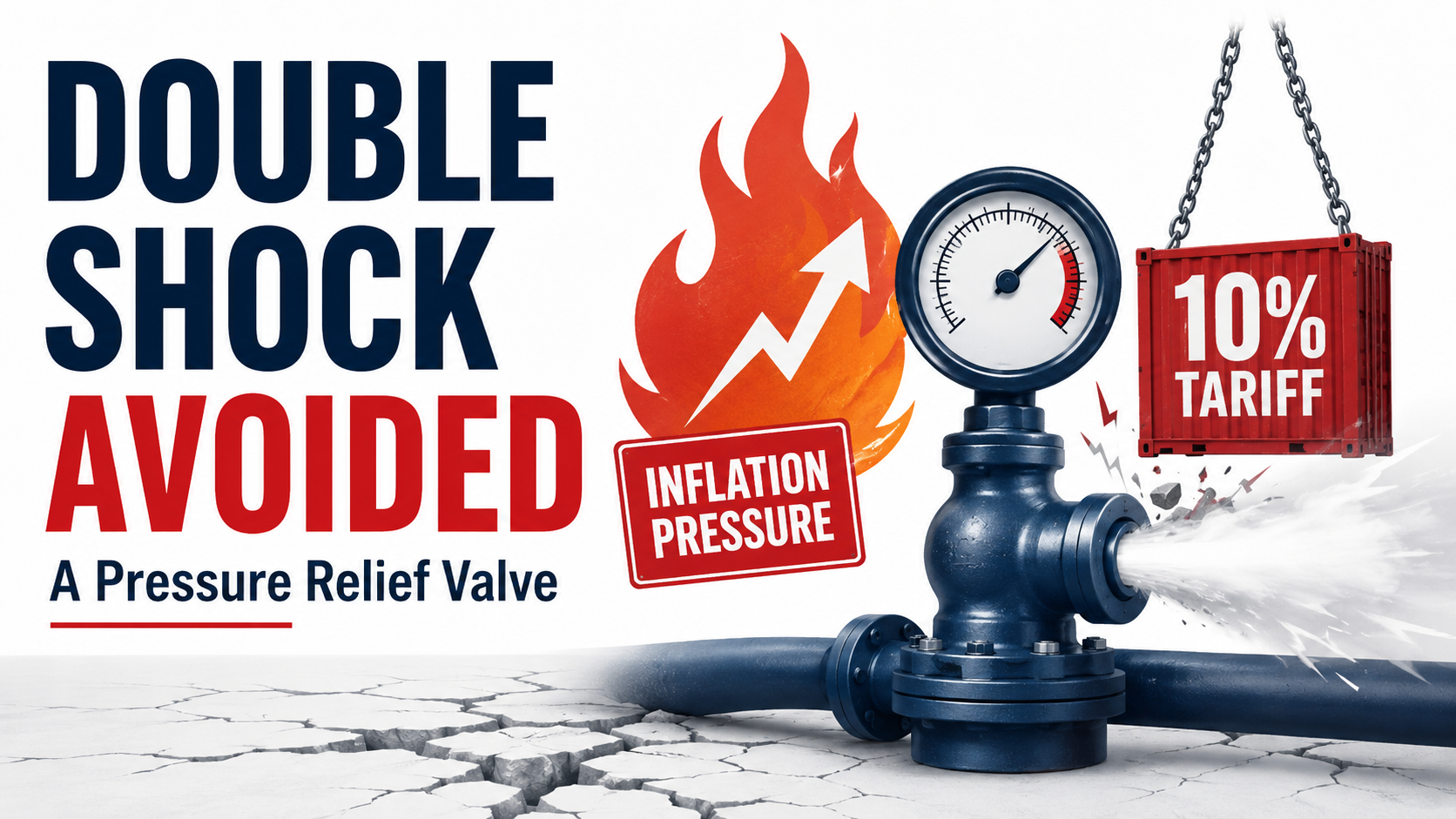
The CIT's unlawful ruling has, at least for now, served as a crucial 'pressure relief valve' for a global trade market that was already backed against a wall. By blocking the worst-case chain reaction of supply chain paralysis compounded by a tariff shock, the ruling has given the world economy a moment to catch its breath. Importers and exporters who had been bracing for sudden policy turbulence have gained some short-term reprieve.

The most immediate fire has been contained. But what path does the Trump administration travel now that its flagship trade policies have hit a wall?
The Trade War Hits a Wall — What Comes Next?
As described above, back-to-back judicial rulings have effectively put the Trump administration's core trade policies on hold. The administration is widely expected to appeal the CIT's ruling immediately. But even if the case moves to a higher court, most legal analysts believe it will be very difficult to establish the constitutional legitimacy of a unilateral tariff measure that circumvented Congress's explicit authority. In the process, the political friction between the executive branch and Congress over trade authority is expected to intensify further.
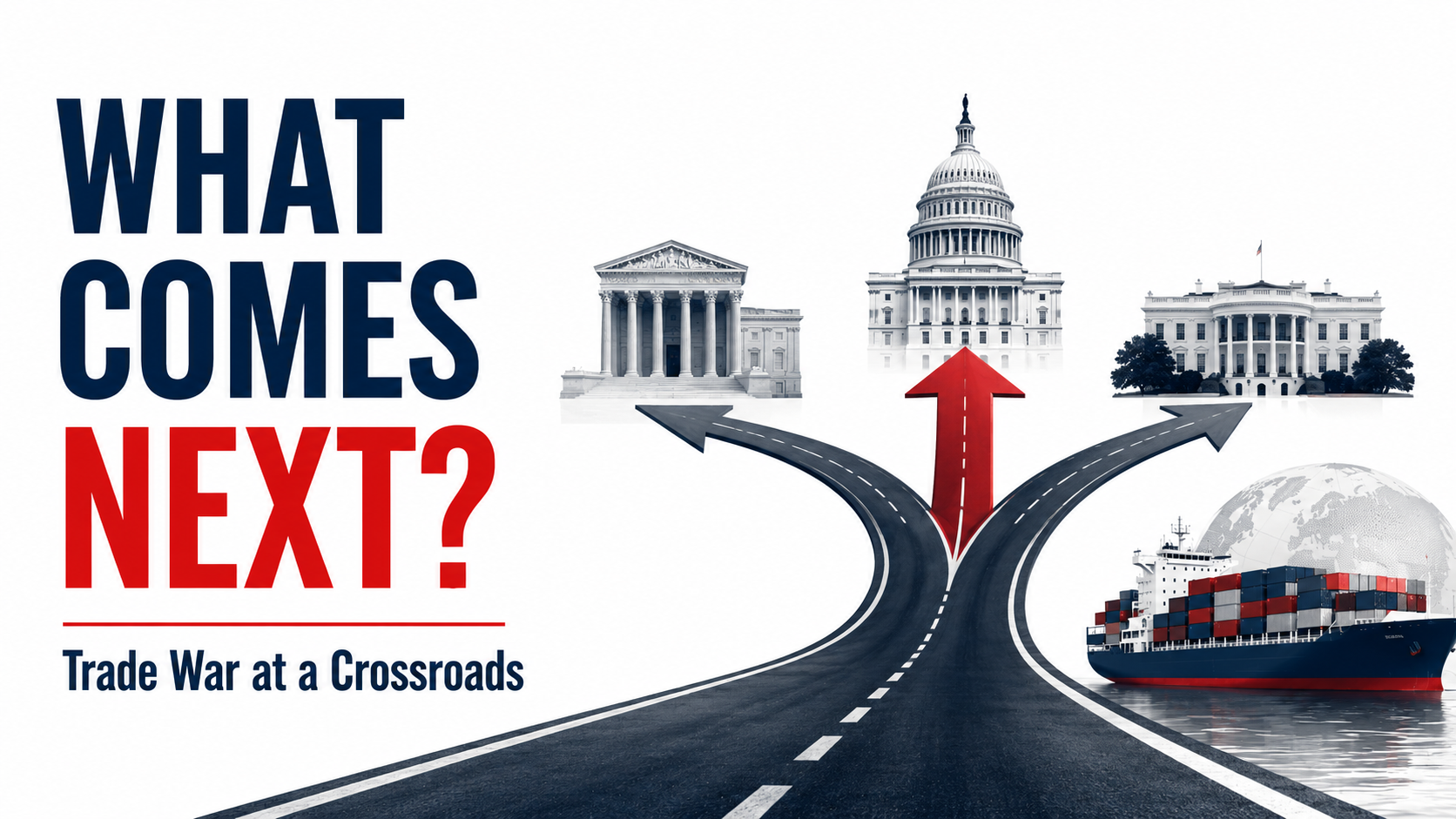
This sequence of events carries an important lesson for anyone watching the global economy. Even the most aggressive protectionist trade policy cannot be implemented without genuine legislative cooperation and political process — the courts have made that explicit. This points toward a possibility that U.S. trade policy may be forced to move away from unilateral executive action and toward more deliberate, congressionally vetted approaches.
When reading global economic news going forward, it's important not to react to every White House statement or aggressive executive announcement at face value. Before any policy becomes reality, it must run the gauntlet of judicial review and congressional response — the checks and balances that define how American governance actually works. Keeping that in mind will help you read the trade news with sharper, more dimensional eyes.
How the United States' embattled trade war finds its next move — and what the shifting global trade landscape means for economies around the world — is well worth tracking closely from here.
References
U.S. Court of International Trade Strikes Down 10% Global Tariff as Unlawful — Trump's 'Alternative Tariff' Also Loses at First Instance (Summary) — Yonhap
https://www.yna.co.kr/view/AKR20260508012552071
U.S. Court Rules Trump's '10% Global Tariff' Unlawful — Second Judicial Block, Following Reciprocal Tariff Ruling
https://www.ddaily.co.kr/page/view/2026050808191140452
Trump's '10% Global Tariff' Ruled Unlawful by U.S. Court of International Trade
https://www.seoul.co.kr/news/international/2026/05/08/20260508500009
US military says it intercepted Iranian attacks on 3 Navy ships in Strait of Hormuz — AP News
https://apnews.com/article/iran-us-israel-war-may-7-2026-fdc6d2ae9396377919c967746fa9996b
Trump tariff ruled unlawful, US Court of International Trade, 10% global tariff, Trump trade policy court, executive overreach tariffs, reciprocal tariff Supreme Court, US trade war 2026, Strait of Hormuz global economy, separation of powers trade, congressional tariff authority, protectionism checks and balances, Trump tariff appeal, global tariff blocked