Why Does the GM Korea Exit Rumor Refuse to Die — Even After an $600 Million Investment?
They Spent $600 Million — and People Still Say They're Leaving?
Imagine your neighbor spends nearly $600 million renovating their home with top-of-the-line upgrades — then the whole street is whispering, "I heard they're moving out tomorrow." It makes no logical sense. Yet this is precisely the absurd situation playing out right now in the Korean auto industry. The protagonist is GM Korea — General Motors' Korean operation.

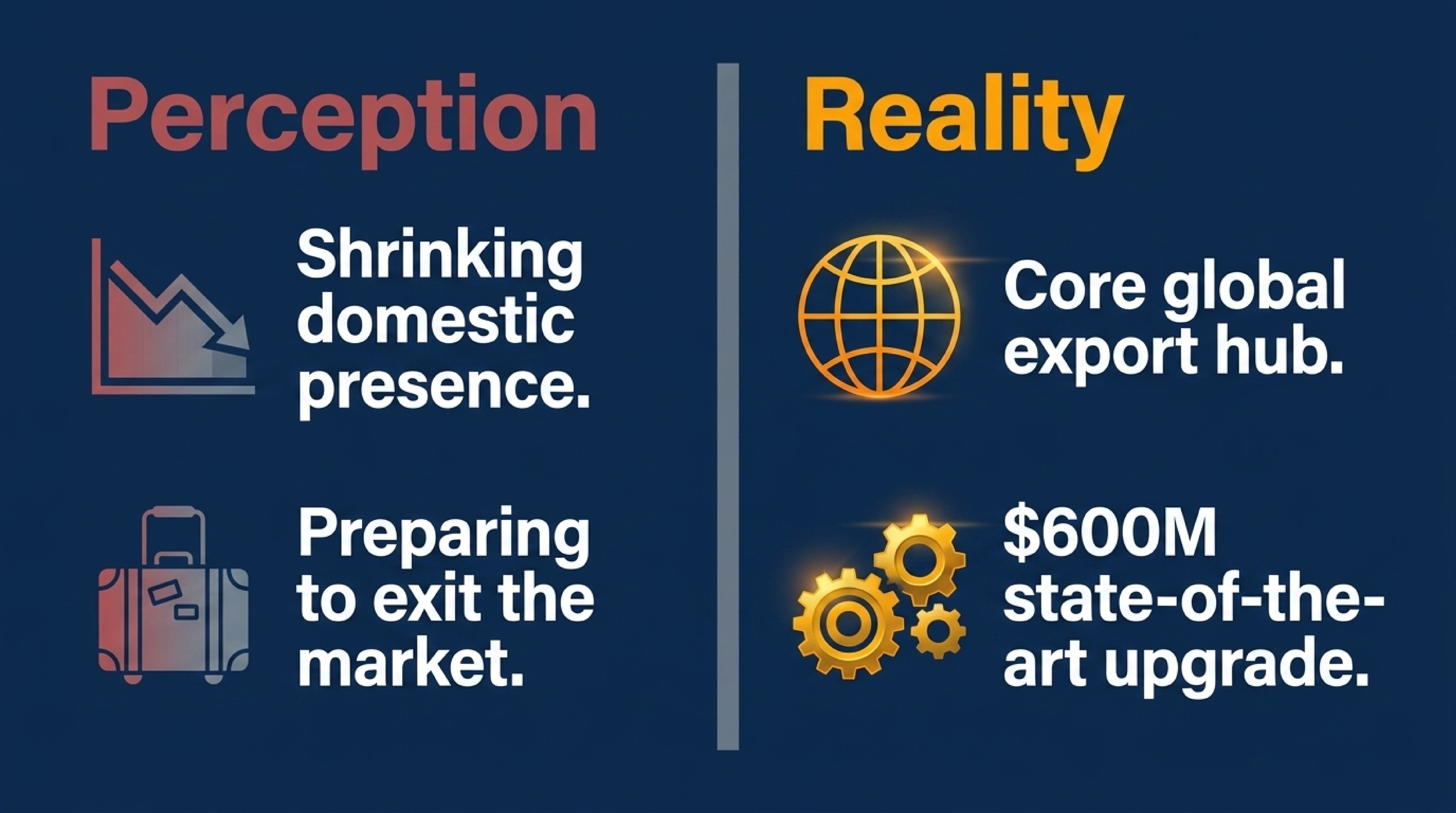
GM Korea recently officially announced a large-scale additional investment plan worth approximately $600 million (roughly 880 billion Korean won) aimed at modernizing factory equipment and strengthening competitiveness in the production of global compact SUVs. This is no routine maintenance expense. The decision reflects a clear and deliberate commitment from GM's headquarters to firmly establish the Korean plants as key export hubs for the global market — including the introduction of state-of-the-art press machinery and the construction of next-generation production lines. From a business logic standpoint, a company planning an imminent exit simply does not pour this kind of capital into a facility.

And yet the situation continues to drift in an odd direction. Despite the powerful, concrete positive signal of a massive investment announcement, the market and public reaction remains cold and skeptical. A quick scroll through the comments sections on automotive news articles or Korea's car enthusiast communities turns up comments treating GM Korea's eventual departure as a foregone conclusion — "they'll be packing up soon enough." A stubborn contradiction has taken hold: the real facts of investment coexist with unfounded rumors of withdrawal.
Objective data and executive decisions clearly point toward staying and growing — yet an undercurrent of anxiety still lingers in the public mind. Even waving a several-hundred-billion-won receipt under people's noses hasn't fully restored market trust. Where does this peculiar climate of distrust come from? To understand this stubborn cycle of suspicion, we need to look beyond the current investment figures and dig into why the market came to distrust GM so deeply in the first place.

Has GM Become the Boy Who Cried Wolf? Why the Exit Rumor Won't Die
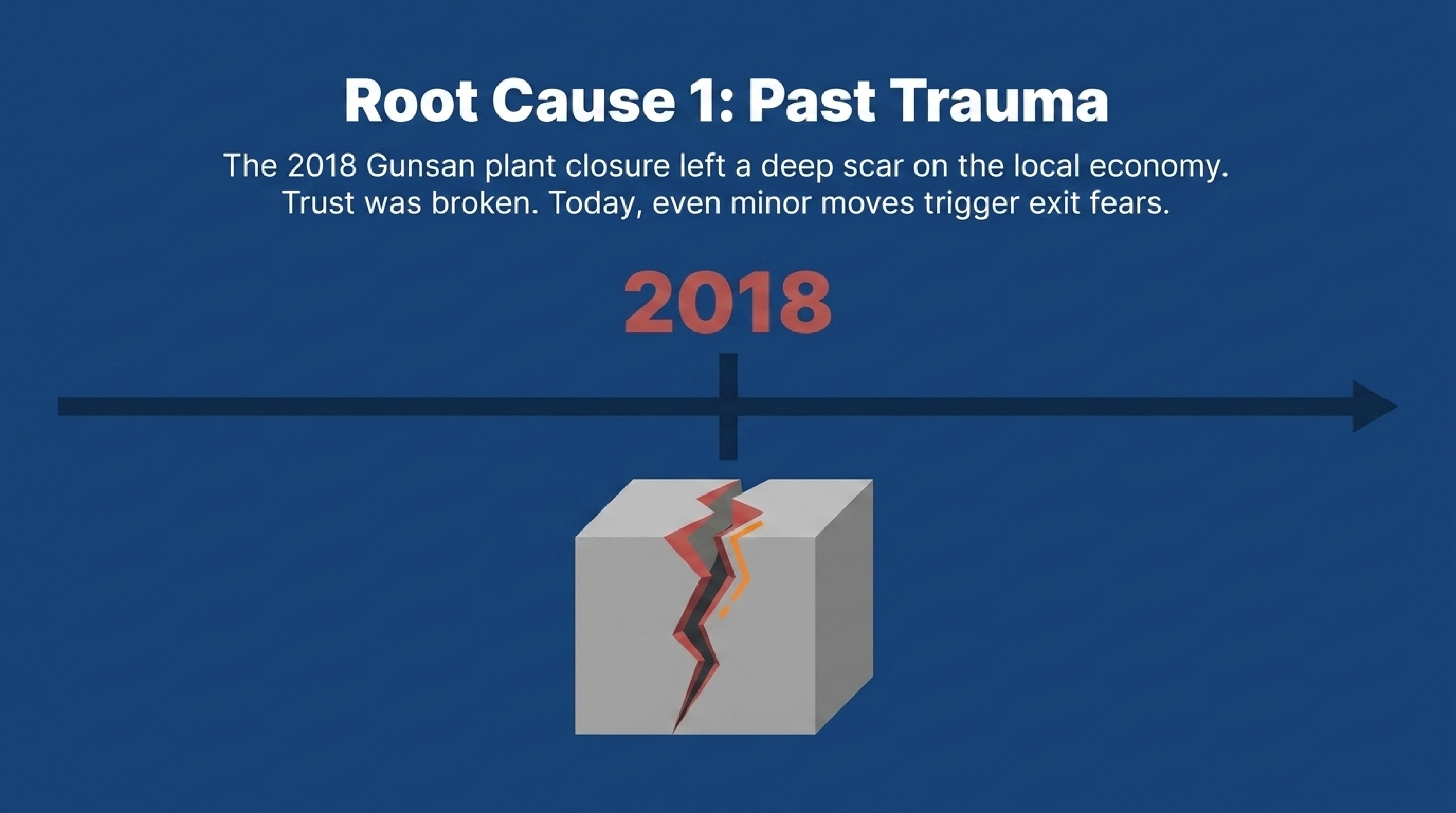
The public's suspicion doesn't evaporate simply because of a big investment announcement — and there's a painfully good reason for that. The single biggest cause is the deep trauma left by the 2018 Gunsan plant closure. For those who watched firsthand as the local economy buckled and thousands of jobs disappeared, the closure of a factory was a shock far greater than any ordinary corporate restructuring. Once lost, trust does not come back easily — and ever since, even the smallest move by GM Korea has been read as a potential sign of impending departure.
Fanning the anxiety further is global GM headquarters' ruthlessly profit-driven management strategy. Global GM has strictly maintained a profitability-first restructuring approach — if a market isn't making money, leave without hesitation. The company has demonstrated exactly this by pulling out of once-major markets including Europe, Russia, India, and Australia when returns fell short. Treating the global market like a single chess board — removing underperforming pieces without sentiment — this track record is more than enough to fuel reasonable suspicion that the Korean operation could one day be next.

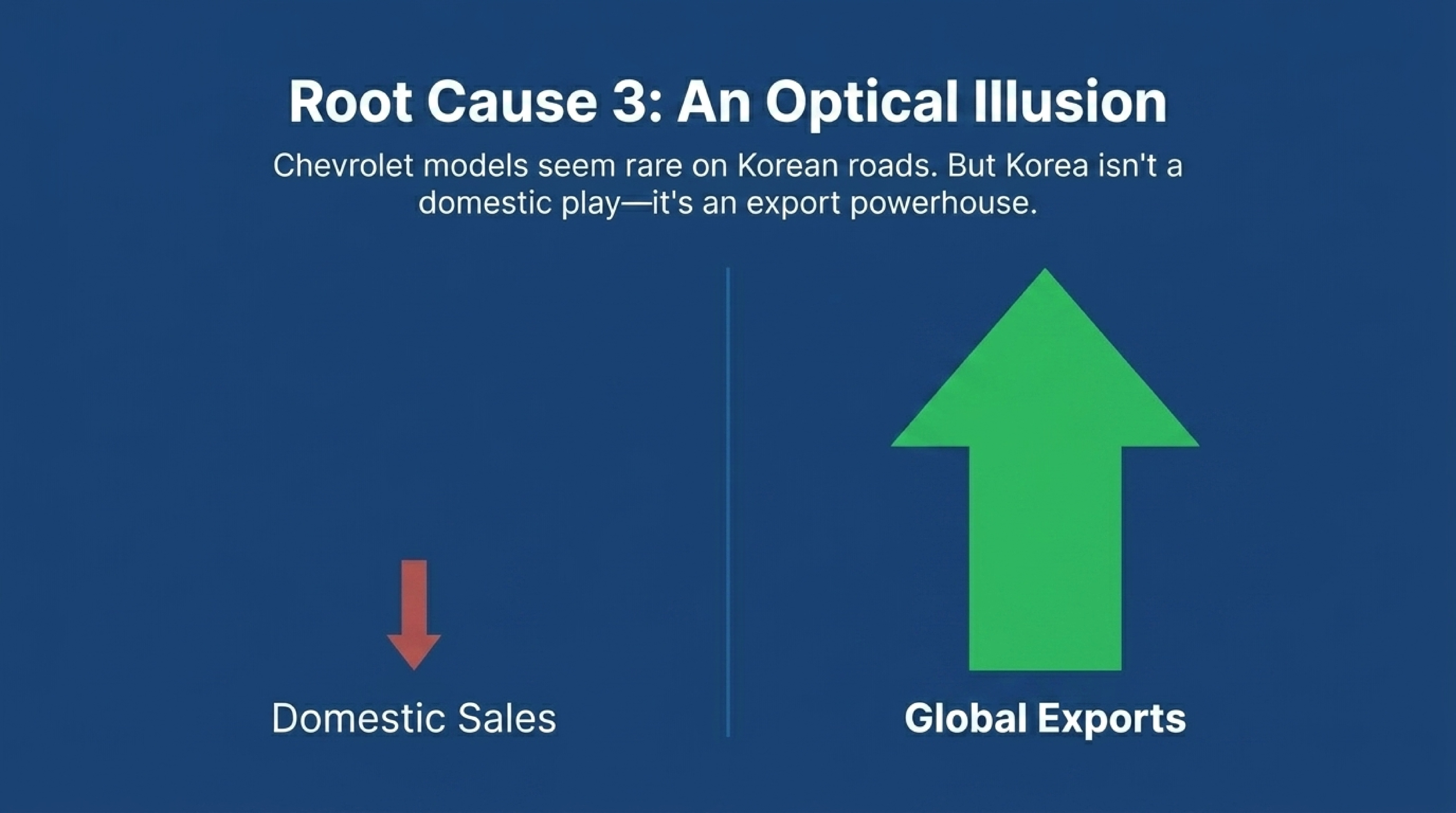
Adding to this is the optical illusion created by GM Korea's continued loss of domestic market share. As Chevrolet new models become rarer on Korean roads and domestic sales volumes decline, it's easy for the public to conclude that the company has lost its commitment to the Korean market. In reality, this reflects GM Korea's current business structure — which is oriented toward export production rather than domestic sales. The domestically visible slump has been misread as a sign of impending departure.
The combined weight of historical wounds, headquarters' uncompromising profit-first strategy, and the visible domestic sales slump has left GM branded in the public mind as the boy who cried wolf. Having traced the painful background behind why public suspicion took root, it's time to flip the perspective and take a clear-eyed look at what this massive investment is actually for.
The $600 Million Bill: Where Exactly Is the Money Going?
An owner planning to close a restaurant doesn't upgrade the kitchen with top-of-the-line equipment. Tracing where the $600 million is actually going makes it immediately clear why the withdrawal rumors don't add up. This enormous sum is not being spent on short-term optics or routine factory maintenance. It has been channeled into a sweeping facilities upgrade designed to completely transform the factory's capabilities and prepare for the future.
The most visible changes are at the Changwon and Bupyeong plants. The investment at both sites lays the groundwork for flawlessly manufacturing the next-generation global vehicle — the CUV (Crossover Utility Vehicle). Existing production lines have been torn out and replaced, with major construction undertaken across the entire manufacturing process — pressing, body assembly, painting, and final assembly.
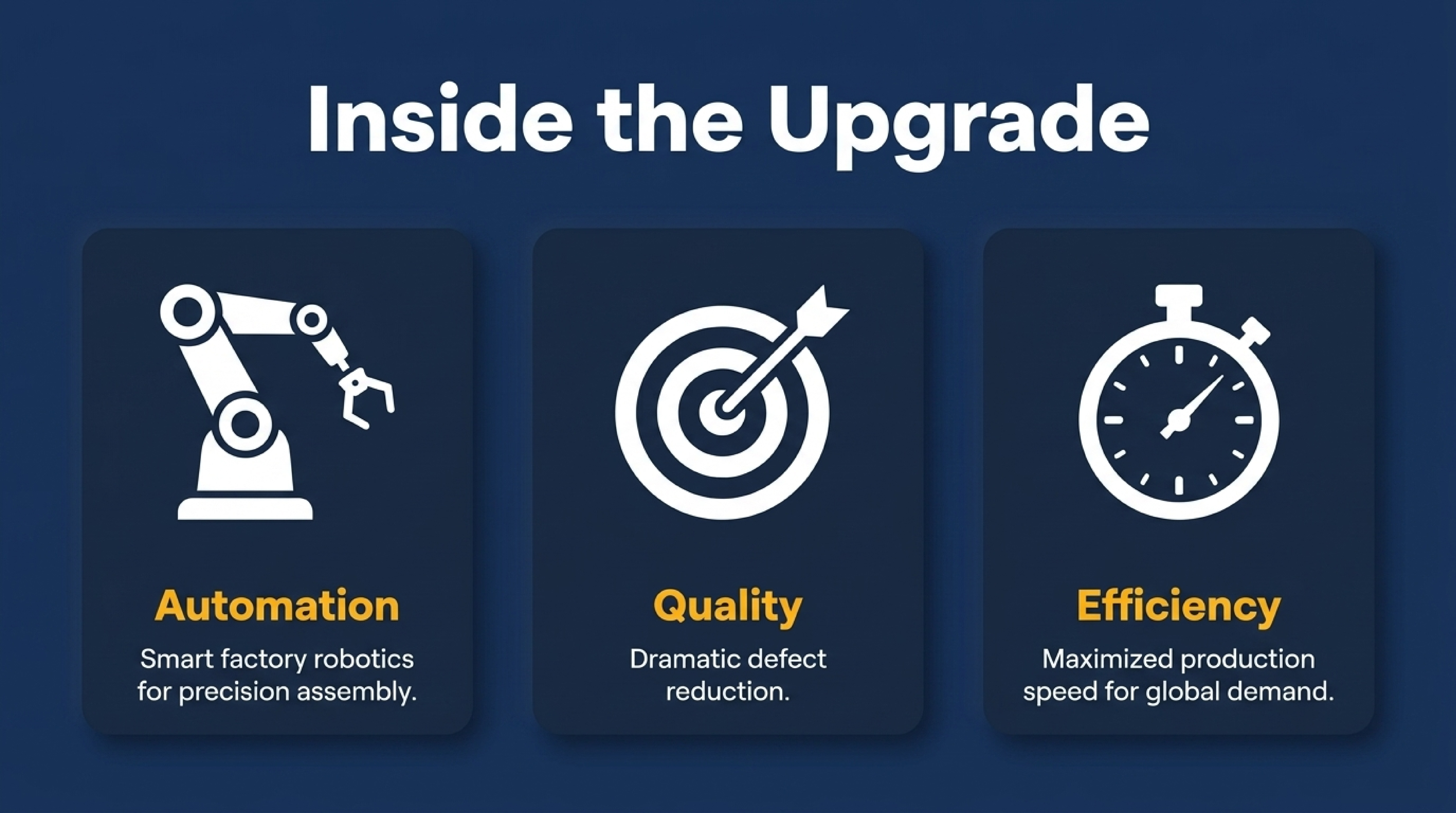
- Introduction of state-of-the-art automation: The latest robotics and smart factory technologies have been deployed for precision welding and assembly work that exceeds the limits of manual labor, with fully renewed production lines.
- Maximized production efficiency: Defect rates have been dramatically reduced and production speed increased, completing a robust foundation capable of reliably meeting demanding global customer requirements on time.
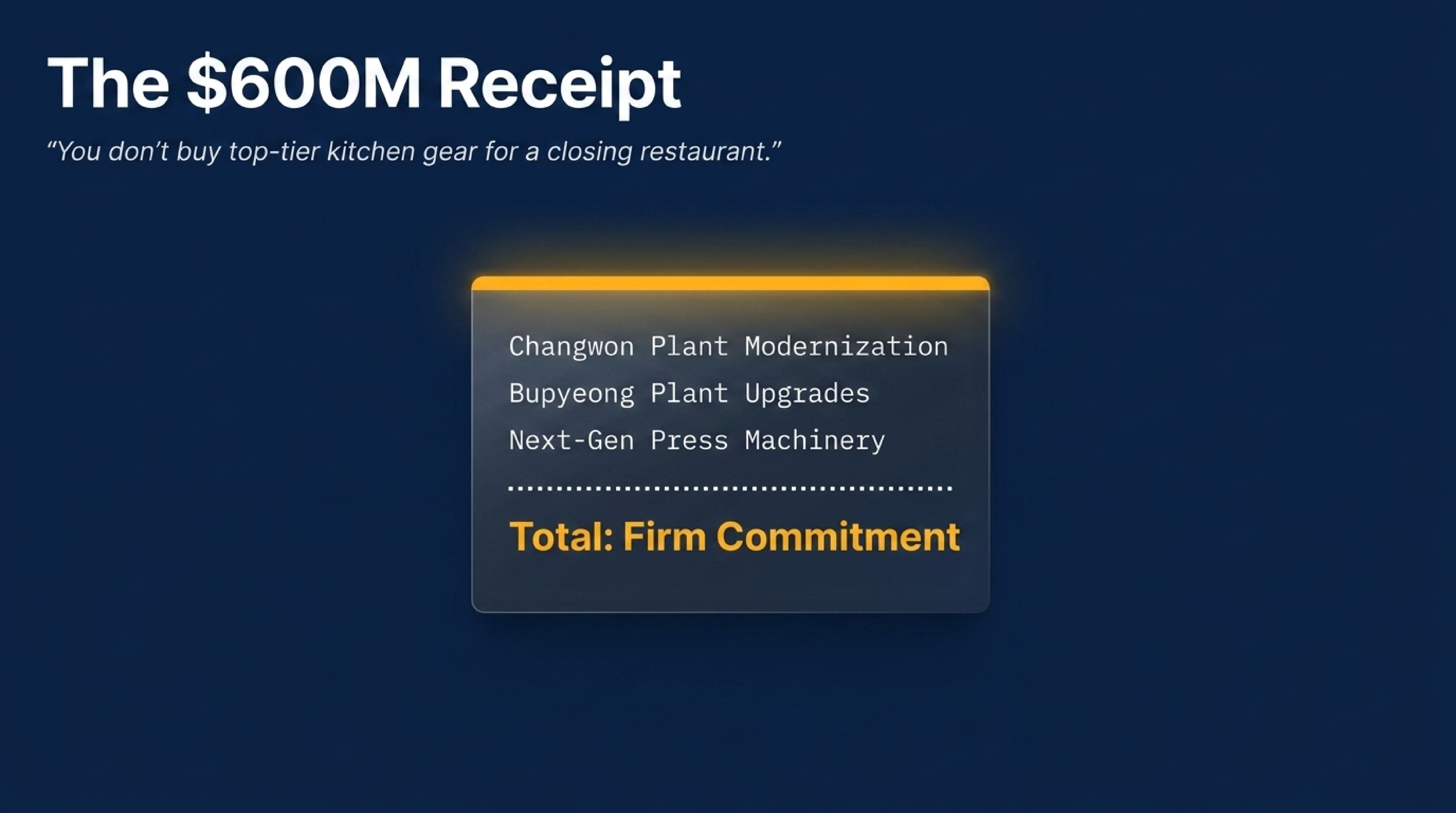
The line items on the $600 million bill add up to one thing: 'building a long-term, stable production base aimed squarely at the global market.' A company planning to walk out tomorrow does not spend hundreds of billions renovating a factory from the floor up. Once you see the substantial, undeniable reality of this investment for what it is, the doubt naturally begins to clear. And it was this concrete evidence that gave GM's executives the ammunition to finally step forward on April 28 and deliver a firm, pointed rebuttal to all the speculation.

"We Are Not Leaving." GM Executives Speak Out on April 28
The atmosphere at the April 28 press briefing was distinctly different from the polished corporate events the company typically runs. The GM Korea executives who took the microphone spoke with unmistakable intensity, directly confronting the persistent withdrawal rumors and making no effort to conceal their frustration. Unlike the usual corporate playbook of staying silent on rumors and waiting for them to pass, this time management took the stage personally to deliver an active, unequivocal response.
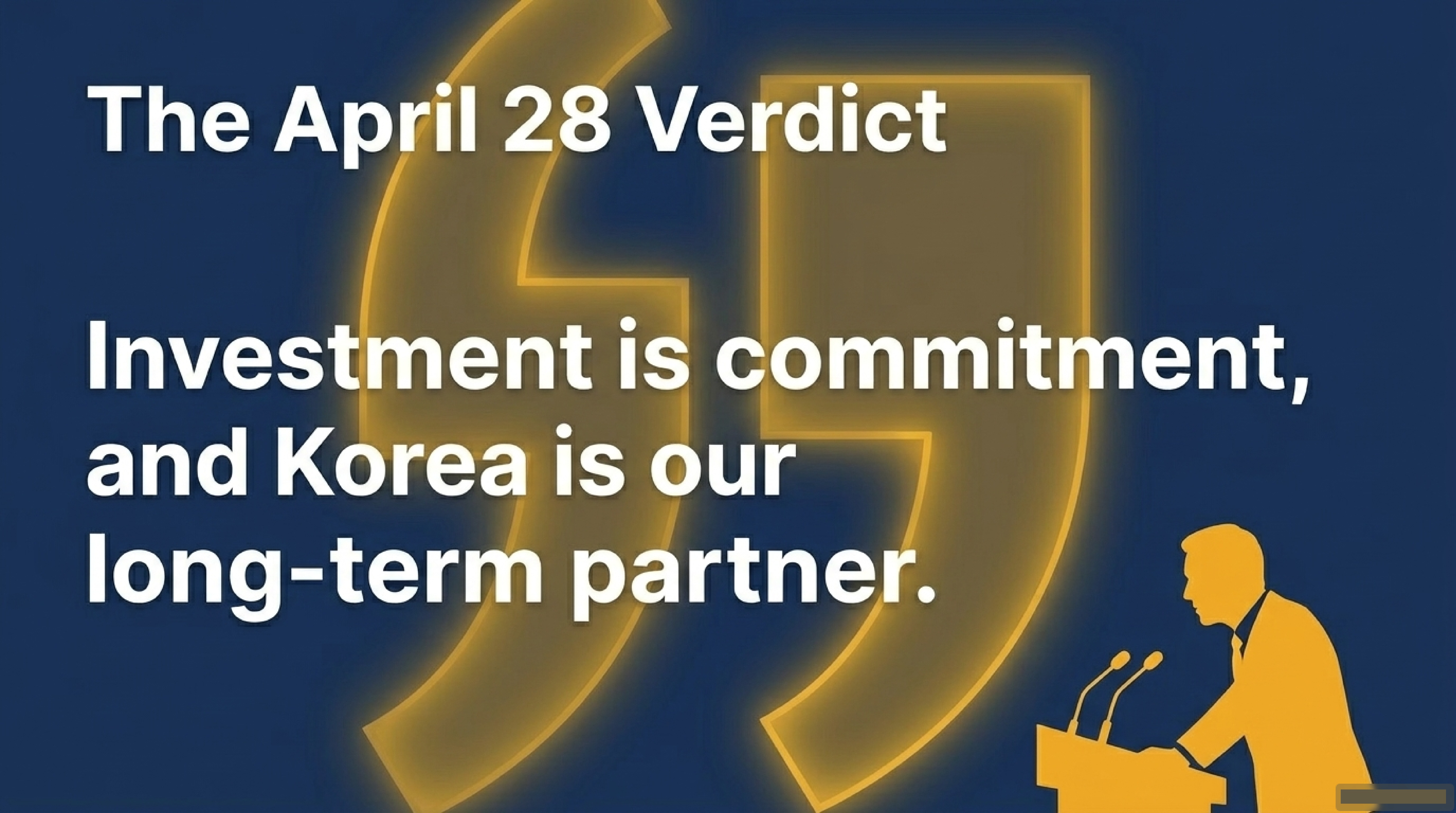
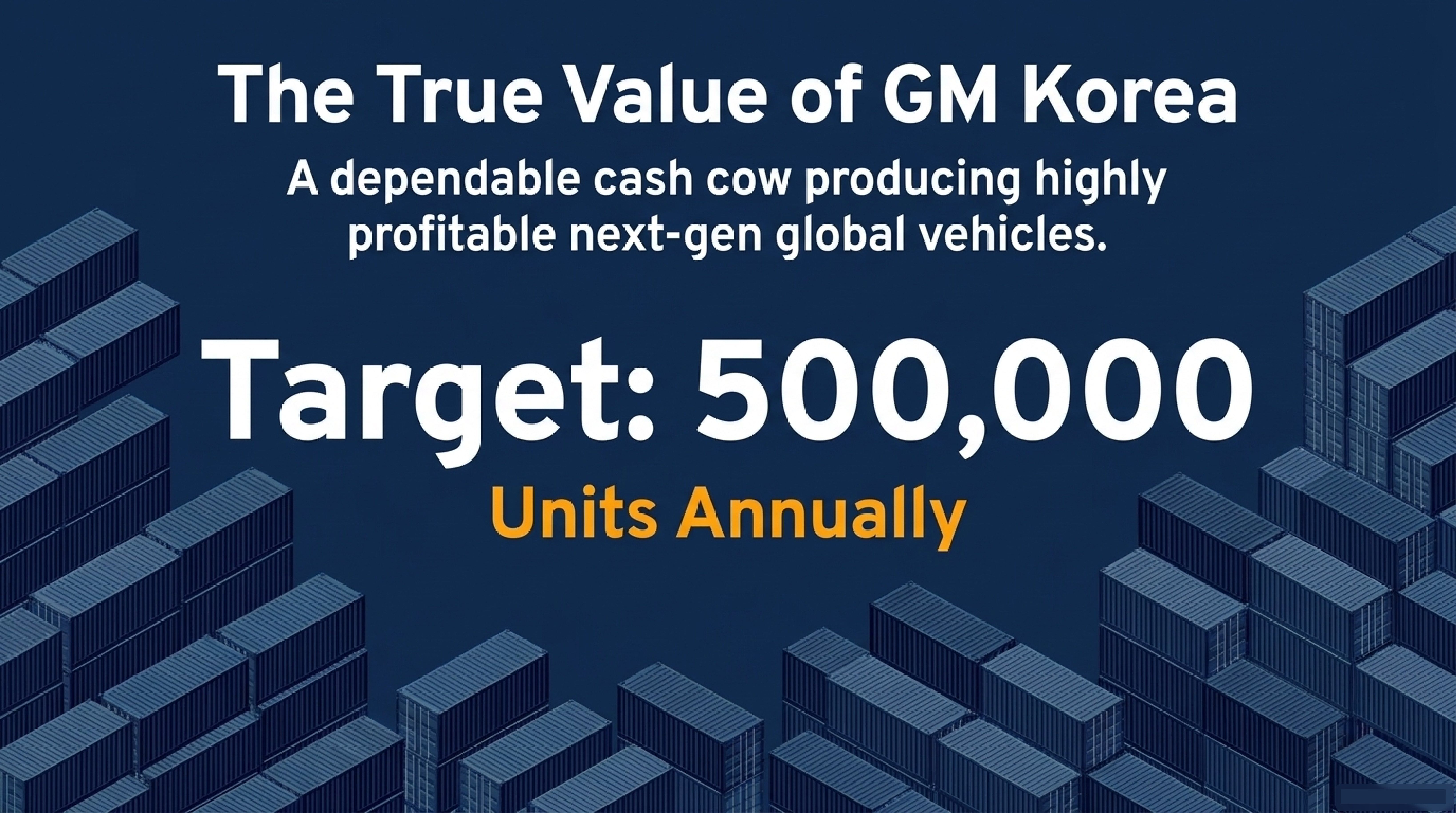
The core message the executives delivered to the public that day was clear and intuitive: "Investment is commitment, and Korea is our long-term partner." Crucially, the executives went further — they publicly disclosed specific business plans including an annual production target of 500,000 units and plans to expand global export volumes going forward, presenting a renewed long-term vision affirming that the Korean operation will continue as a core partner within the global GM organization. The executives emphasized that the massive capital investment itself is the most definitive action proving their firm trust in the Korean operation and their commitment to its future.
The real reason the executives took such an unusually forceful stance is that the relentless withdrawal rumors were causing genuine, serious damage to the company's operations. Unfounded speculation was being recycled as established fact — sapping the morale of employees working diligently on the factory floor, while simultaneously planting vague anxiety in consumers about future after-sales service, eroding brand trust in a damaging cycle. Through this press briefing, management made clear their determination to finally break that destructive loop for good.
The strong denial and resolute message from the executives sent a clear signal of containment to the market. But beyond the executives' firm declaration — looking at it from the perspective of a coldly profit-driven global GM — what objective strategic value does the Korean market actually hold that makes them so determined to maintain such a tight partnership?
So What's the Verdict? GM Korea's Future and How We Should Look at It
Taking all the facts together, the current GM Korea withdrawal rumor is closer to excessive worry than reality. The state-of-the-art production facilities backed by $600 million in investment and the solid position as a global core hub are simply not the kind of thing you build for a company about to pack up and leave overnight.
The question we should be asking has shifted — from 'when are they leaving' to 'what are they going to build next.' The automotive industry is right in the middle of a massive wave of transition from internal combustion engines to electric vehicles (EVs). With global GM betting heavily on electrification, the most important thing to watch is what new mission the Korean operation will be assigned within this massive transformation. For now, the plant is playing a vital cash-cow role — focused on producing highly profitable next-generation global vehicles — but in the longer term, the blueprint GM Korea draws for the coming EV era will be what truly determines its future.
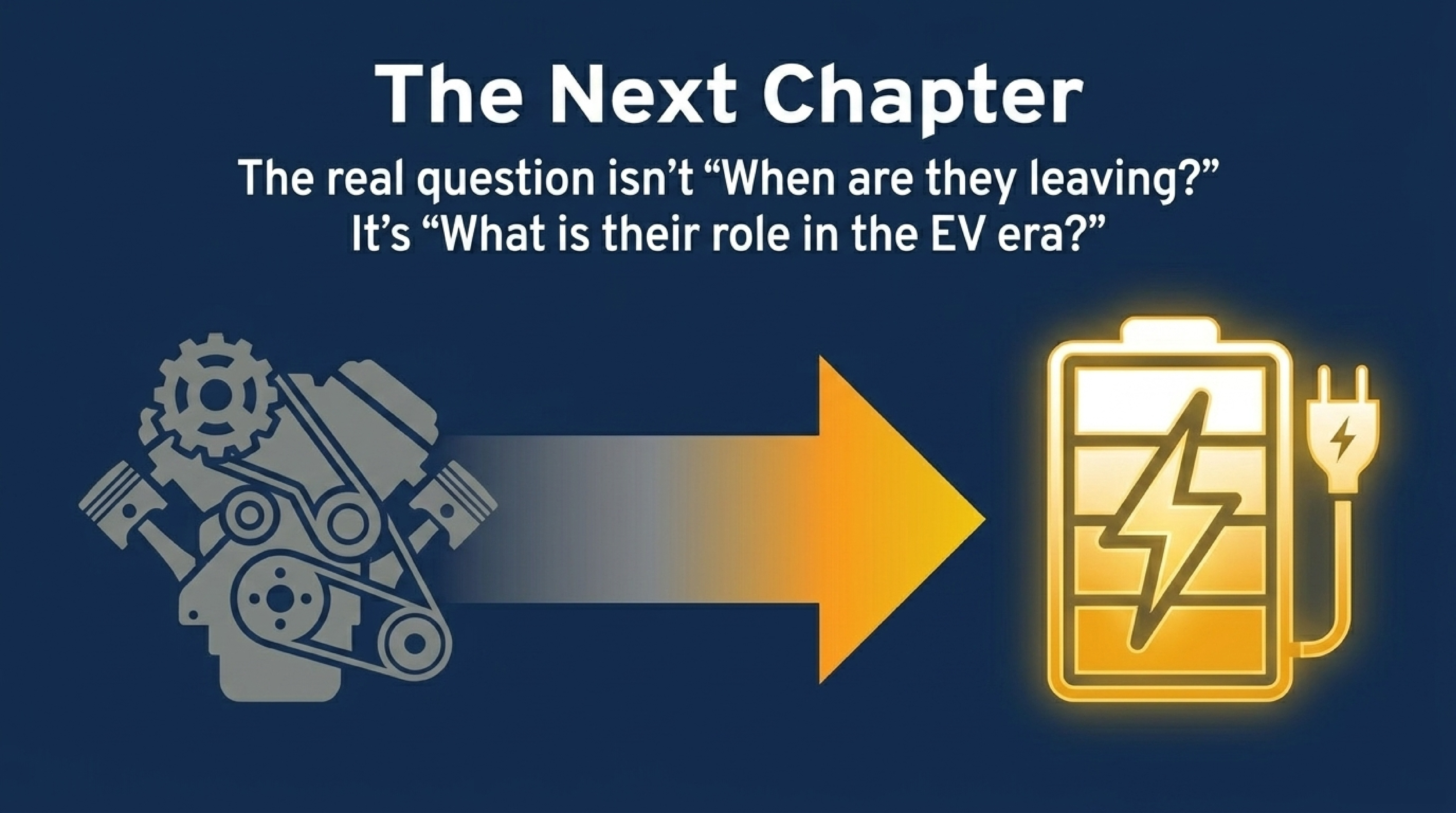
For consumers too, there's no reason to be swept up in vague anxiety. It's time to take off the glasses of distrust and evaluate the quality of new vehicles rolling out of freshly upgraded factories on objective merits. As the massive investment makes clear, GM Korea is still right here — and fully revved up to keep running. Rather than unfounded suspicion, perhaps a healthy and encouraging eye on what they do next is the right posture to take.

Frequently Asked Questions
Q. What specifically is GM Korea's $600 million investment being used for?
A. GM Korea has invested approximately $600 million (880 billion KRW) to modernize facilities at the Changwon and Bupyeong plants and enhance competitiveness in producing the next-generation global vehicle (CUV).
- Introduction of state-of-the-art automation: The latest robotics and smart factory technologies have been applied for precision welding and assembly operations.
- Maximized production efficiency: Defect rates have been reduced and production speeds increased, building a stable foundation to meet global market demand reliably.
Q. Has GM ever actually closed a factory in Korea before?
A. Yes — the 2018 Gunsan plant closure is the pivotal event.
In line with global GM's profitability-first restructuring strategy at the time, the Gunsan plant was shut down, delivering a severe blow to the local economy and employment. The incident left a deep scar on the public and the market — and remains the fundamental reason why even minor moves by GM Korea continue to trigger withdrawal speculation to this day.
Q. What did GM executives say about the withdrawal rumors at the April 28 briefing?
A. At the April 28 briefing, GM executives directly refuted the circulating withdrawal rumors, stating firmly: "Investment is commitment, and Korea is our long-term partner."
They argued that withdrawing immediately after a massive capital injection makes no business sense whatsoever, and expressed their strong determination to break the vicious cycle in which unfounded rumors undermine employee morale and erode consumer trust.
Q. What does the Korean market mean to global GM?
A. For global GM, the Korean market is far more than a domestic sales outlet — its primary significance is as a key export hub targeting global markets.
The Korean operation functions as a dependable cash cow — producing highly profitable next-generation global vehicles (CUVs and compact SUVs) for distribution worldwide. As the industry undergoes its electric vehicle (EV) transition, the Korean plant is expected to take on a significant new role as a key production hub in that future landscape as well.
References
GM Korea: Even After '$600 Million Investment,' Union Says 'We're Still Anxious' — The Fact
https://news.tf.co.kr/read/economy/2308903.htm
GM Korea Dismisses Market Exit Rumors — 'Korea Will Become a Global Production Hub Through Continued Investment' — Motor Magazine
https://www.motormag.co.kr/news/articleView.html?idxno=21459
[Field Report] "GM's Mother Factory Is Changwon — We Will Put the Exit Rumors to Rest"
https://www.asiae.co.kr/article/2026042919140451376
GM Brings 880 Billion Won Investment Package to Korea
https://www.segye.com/newsView/20260325519520
GM Invests 900 Billion Won in Korea — Ends Exit Rumors, Cements Position as Compact SUV Hub
https://biz.chosun.com/industry/car/2026/03/25/BYCNM2NU7VF6PAIKWVPVR6A4GA/
GM Korea, GM Korea withdrawal rumor, GM Korea investment, General Motors Korea, Chevrolet Korea, GM Changwon plant, GM Bupyeong plant, GM Korea future, Korea auto industry, CUV production, global automaker Korea, Gunsan plant closure 2018, Korea EV production, GM Korea exit