Why Samsung Electronics Is Outsourcing Home Appliances: The Big Picture Behind Its Focus Strategy

Samsung's Surprise Announcement: "We Won't Be Making Everything Ourselves Anymore"
Imagine a legendary restaurant that has proudly cooked every dish from scratch for decades — then one day announces: "Going forward, we won't be making the side dishes ourselves. We'll be sourcing them from a trusted supplier." That's essentially how the market reacted when Samsung Electronics unveiled its latest home appliance business restructuring. For a company that has always been the symbol of manufacturing — controlling and producing everything from components to finished products in-house — this was a genuinely seismic decision.
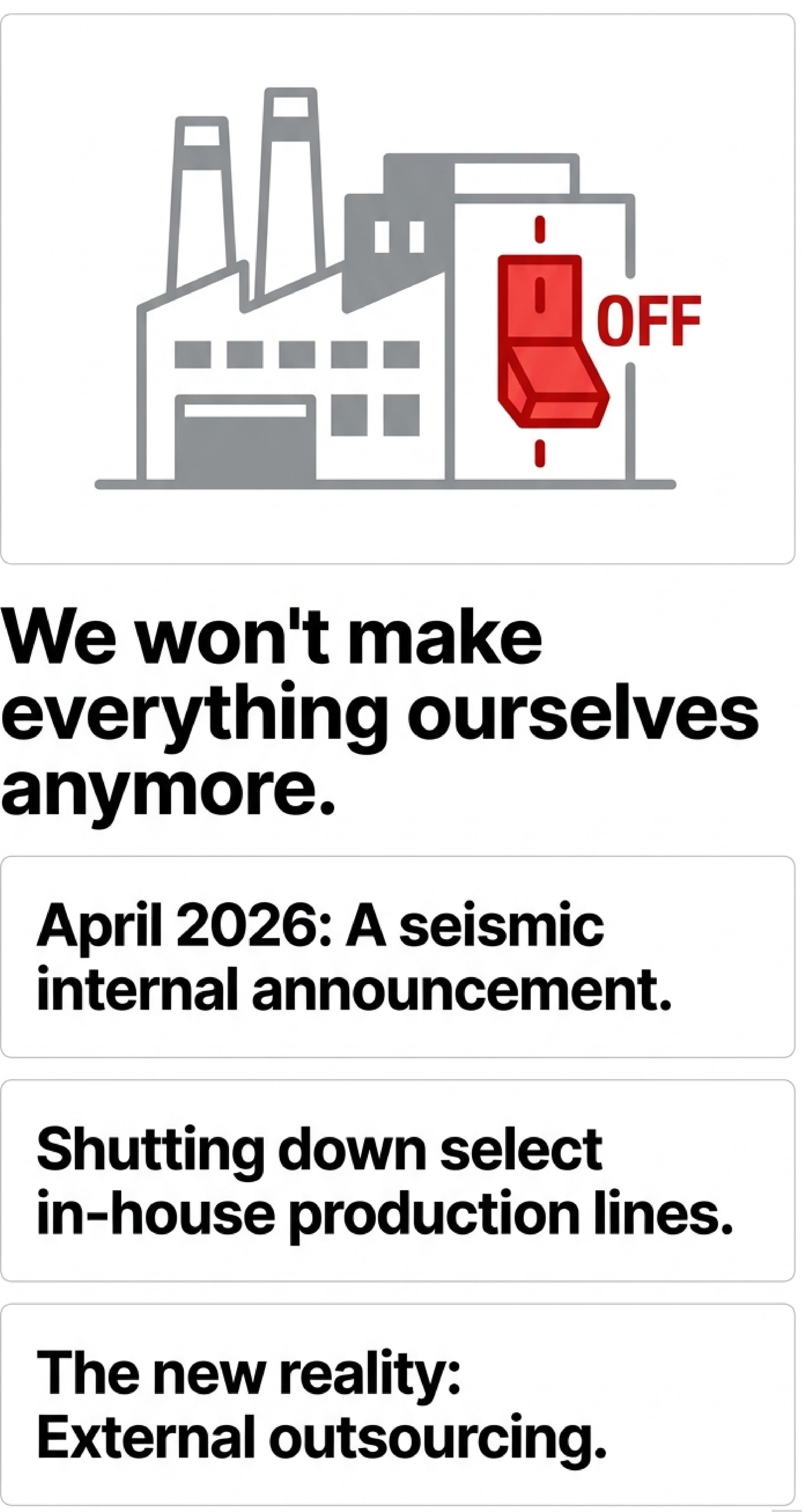
In April 2026, Samsung Electronics held an internal management briefing for employees and officially announced a sweeping restructuring plan for its home appliance business. The core of the announcement: Samsung will shut down its own production lines for certain appliances — including dishwashers and microwaves — and transition to outsourced manufacturing by external partners. For consumers who had always assumed that anything bearing the Samsung logo was made in a Samsung factory, this is a surprisingly unfamiliar and striking shift.
The most symbolically charged event in the announcement is the closure of Samsung's Malaysia factory. First opened in 1989, the Malaysia facility was a pivotal forward base that helped Samsung Electronics expand its home appliances into global markets — a storied location with deep historical significance. Samsung has decided to permanently shut down this factory, which has run without pause for more than 30 years. This goes far beyond trimming production volumes — it signals a powerful determination to fundamentally transform the company's DNA from the ground up.

Why has this titan of total vertical control suddenly decided to switch off the lights at a factory with decades of history? What looks like a sudden retreat on the surface conceals the brutal reality of the global appliance market. We need to look closely at the real forces that drove Samsung to make such a painful call.
Caught in a Sandwich: Chinese Competition and Soaring Costs
The real reason Samsung made this painful decision to shutter a long-running factory lies in what can only be described as a 'sandwich squeeze' in the global appliance market. From the outside, Samsung still looks like a glittering global #1 — but looking beneath the surface reveals a reality of being crushed from both above and below, barely able to breathe.
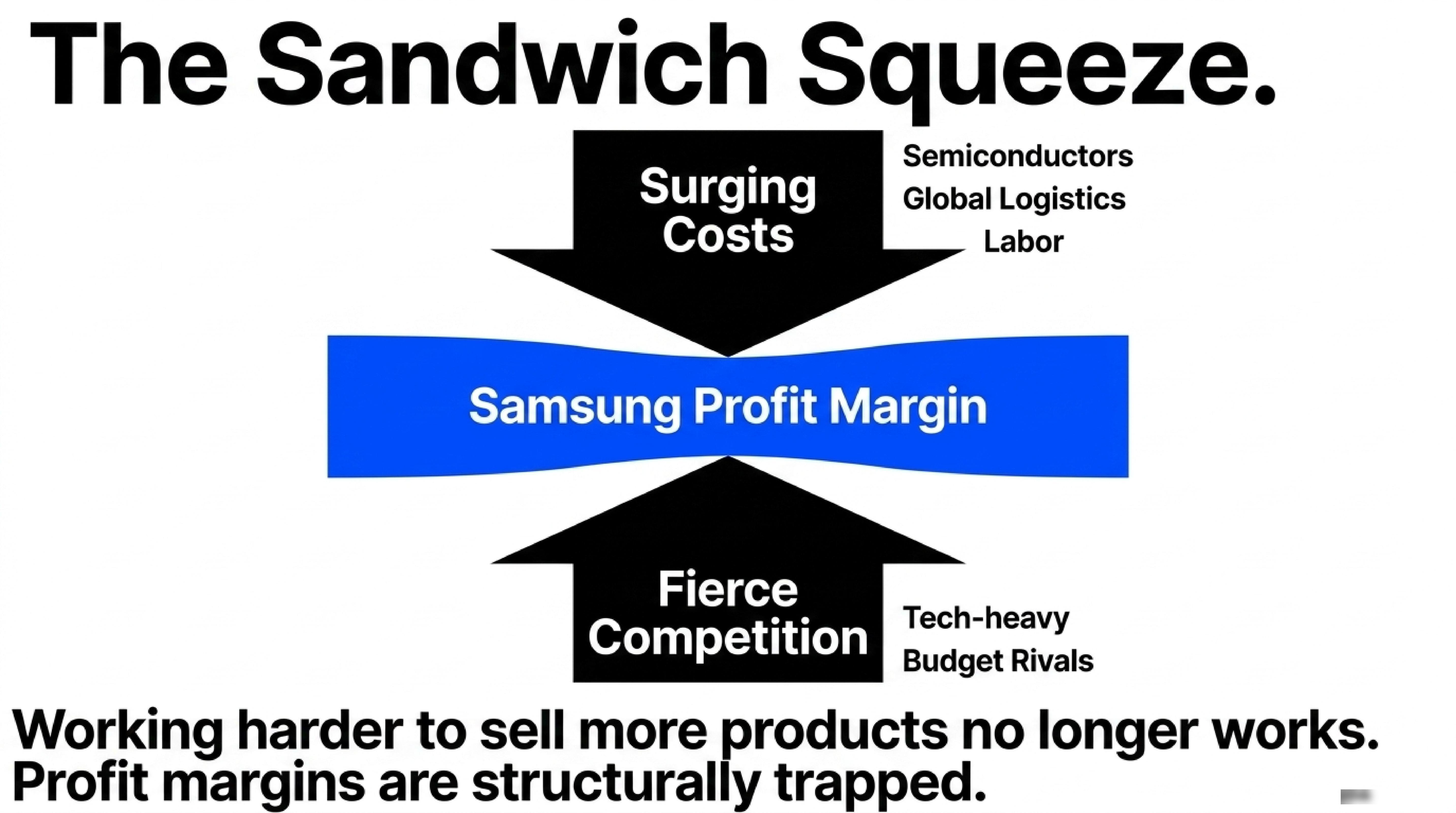
From below: the ferocious low-price assault from Chinese brands has pushed all the way up to Samsung's chin. Chinese appliances that once competed purely on price have now matched their pitch with genuine technology and polished design — rapidly eating into global market share. When competitors occupy store shelves with dramatically lower price tags, it becomes nearly impossible to survive on price alone while sticking to the old production model.
From above: surging cost pressures weigh down from the top. Component prices — including semiconductors, the lifeblood of smart appliances — keep rising relentlessly. Compounding this are ballooning global logistics costs and rising labor expenses. The result: you work hard to make and sell more products, but the profit you actually pocket keeps shrinking. No matter how much you scale up or grow sales volumes, there's nothing left — a structural ceiling that can't be broken through with brute force alone.
Caught in this double bind, the old approach of manufacturing everything in-house and absorbing all costs has simply become unviable. Keeping unprofitable production lines running just to preserve appearances is no better than pouring water into a leaking bucket. Without a fundamental structural overhaul of the manufacturing model, this is a survival game in which you can no longer afford to play by the old rules.

The structural crisis in the global appliance market is no abstract concept happening somewhere far away. Let's zoom in on the specific market where this crisis is playing out most nakedly.
Market Share Fallen to 3% — A Hard Lesson From China
When Samsung Electronics first entered the Chinese market in the 1990s, it arrived with a premium strategy and the bold ambition of becoming the local market's top brand. And for a long time, it succeeded — excellent quality and a premium image won over Chinese consumers, and Samsung rode that momentum for years. But the glory of those days is slowly fading under the relentless assault of local brands that have charged up at alarming speed.
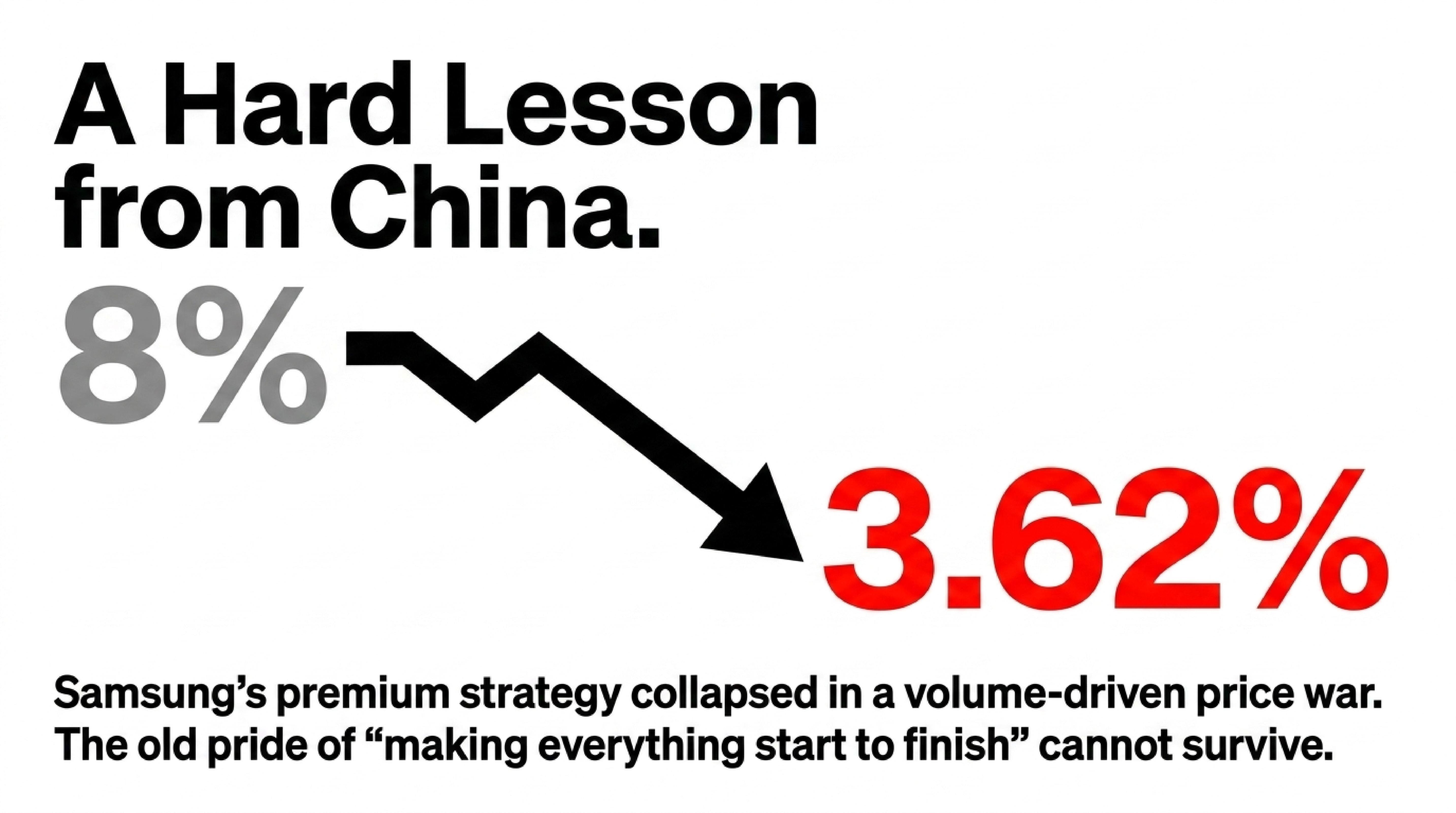
The atmosphere in Chinese appliance retail today is unforgiving. "Even if we stock them, they don't sell" — a growing number of stores have stopped displaying Samsung TVs entirely. The numbers make the reality even starker. According to market research firms, Samsung's share of the Chinese color TV market has recently fallen all the way to the low 3s (3.62%). Not long ago it was holding above 8% — in effect, Samsung's share has been cut in half.
With the situation this dire, international media have begun circulating reports that Samsung could wind down its appliance and TV sales operations in China before the end of the year — the so-called 'China exit' rumor. Samsung has distanced itself from confirming anything officially, but the mere existence of such speculation vividly illustrates the depth of the crisis. A market that was once a reliable profit engine and a land of great opportunity has become a painful liability.
The struggles in China have delivered a particularly bitter lesson to Samsung: the old manufacturing pride of 'we make everything ourselves, start to finish' can no longer sustain you. Rather than burning resources in a mutually destructive price war against local brands' volume-at-all-costs strategy, the moment has come to decisively shed low-margin markets and products.
Confronted with this harsh reality where its past formula for success no longer works, what are the specific survival cards Samsung has now played to escape the falling market share spiral? Let's look at Samsung's smart pivot strategy for breaking out of the crisis and preparing a new leap forward.
Outsource the Dishwasher, Own the Core: The 'Focus' Strategy
As mentioned, handing low-margin appliances to outside manufacturers is what business journalism refers to as OEM (Original Equipment Manufacturing) or ODM (Original Design Manufacturing). The terms can sound dry and technical — but a restaurant analogy makes them instantly clear.
OEM is like a famous restaurant handing its 'secret recipe' to a factory and saying "make it exactly like this" — then selling the finished product under its own brand label. ODM goes a step further: the entire process from menu development to cooking is handed to an outside specialist, and the final product simply goes out under the restaurant's name. In short: either you give them the recipe and they build it, or you hand over the entire development and production process entirely.

So why is Samsung choosing to rely on outside hands now? The core answer is securing cost-efficiency and operational efficiency. Products like microwaves and basic dishwashers have become globally commoditized — the technology is broadly accessible to everyone. In these categories, consumers prioritize reliable basic functionality at a reasonable price far more than cutting-edge innovation. In a market defined by fierce price competition, insisting on maintaining high-cost proprietary factories creates a structural ceiling: you can sell products all day long and still not make money.

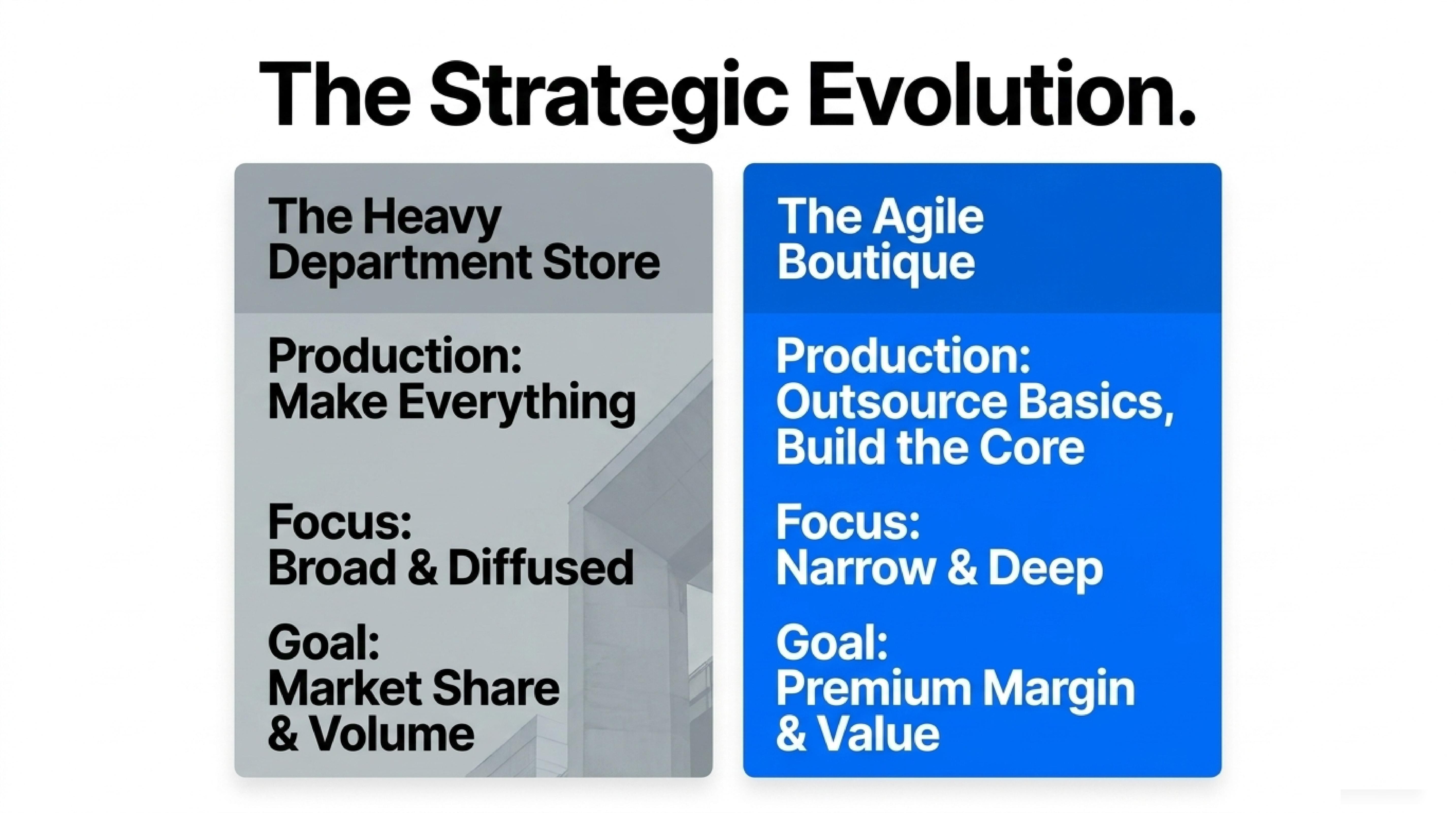
The outsourcing pivot is therefore not a white flag of surrender. It is the process of boldly discarding the heavy 'department store' model of the past — carrying every product category in-house, absorbing all costs. By outsourcing low-margin products to reduce costs, Samsung can shed unnecessary weight and concentrate its full capability on the high-margin core products that really matter — a lean, agile 'boutique' model replacing the old sprawling one. That is the smart strategic choice at the heart of this move.
Having shed the heavy load and trimmed the excess, Samsung is now ready to channel its preserved energy and capital into something fundamentally different — the core businesses that define its next chapter.
The 'Future' Samsung Actually Wants to Build: Premium AI Appliances and New Businesses
With freed-up resources and energy, Samsung's sights are now fixed firmly on the 'premium steaks.' The strategy is to fill the space vacated by low-margin products with premium AI appliances that demand overwhelming technological capability. The 'Bespoke AI Combo' — which shook up the market by combining washing and drying in one unit — is the flagship example. The goal is to go all-in on R&D for high-value-added AI appliances that think for themselves and adapt to the user — creating a gap that competitors can't easily replicate, rather than building appliances that merely help with chores.
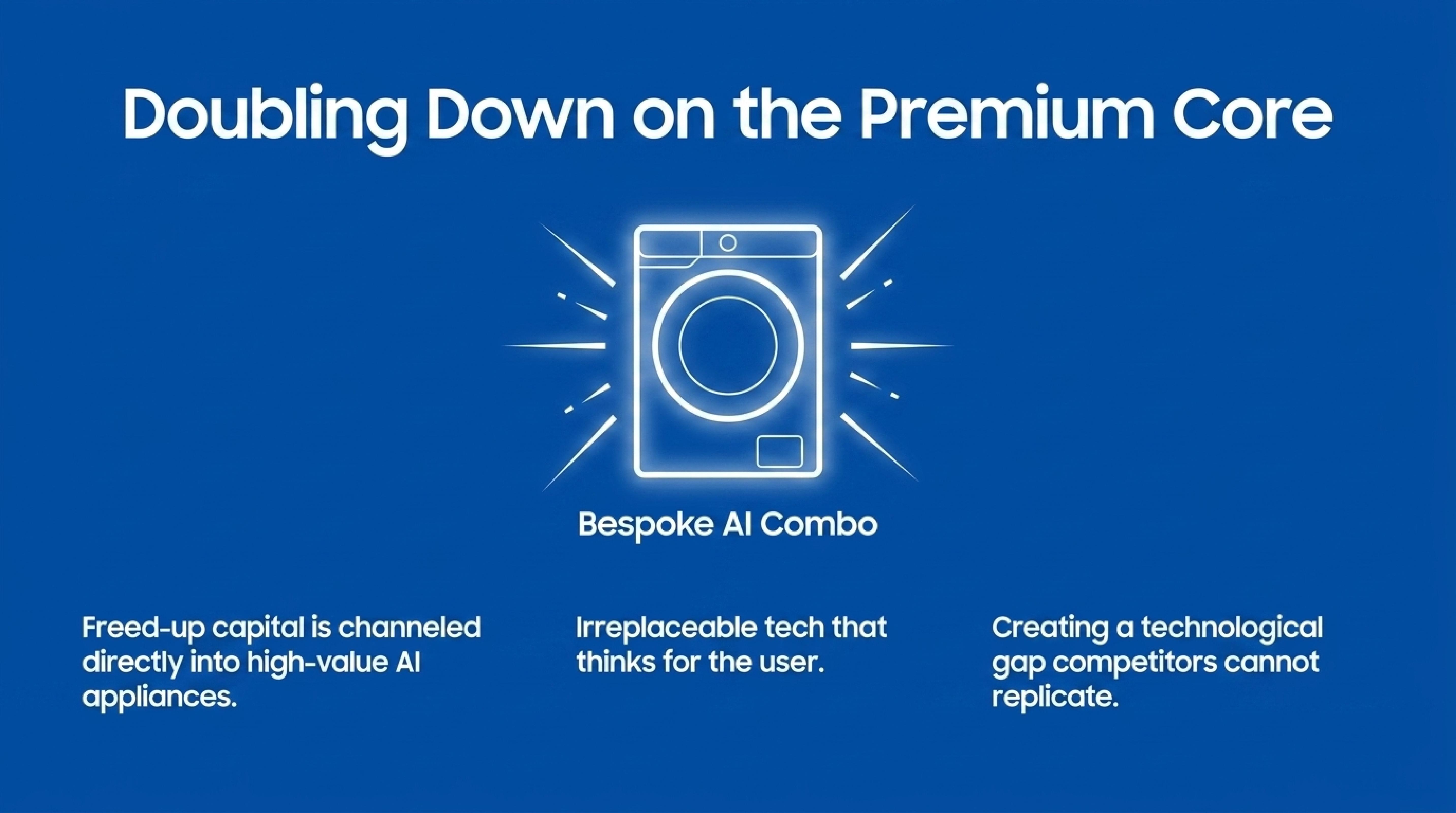
Samsung is also moving beyond the home to a much larger stage. A key new growth engine is the global HVAC (Heating, Ventilation, and Air Conditioning) business. HVAC — in simple terms — goes beyond household air conditioning to comprehensively manage the temperature and air quality of entire large buildings and commercial facilities. As global demand for eco-friendly, high-efficiency buildings explodes, this market is emerging as an enormous golden opportunity. Samsung is leveraging its accumulated HVAC technology expertise to stake its claim in this space and make it a new growth engine.

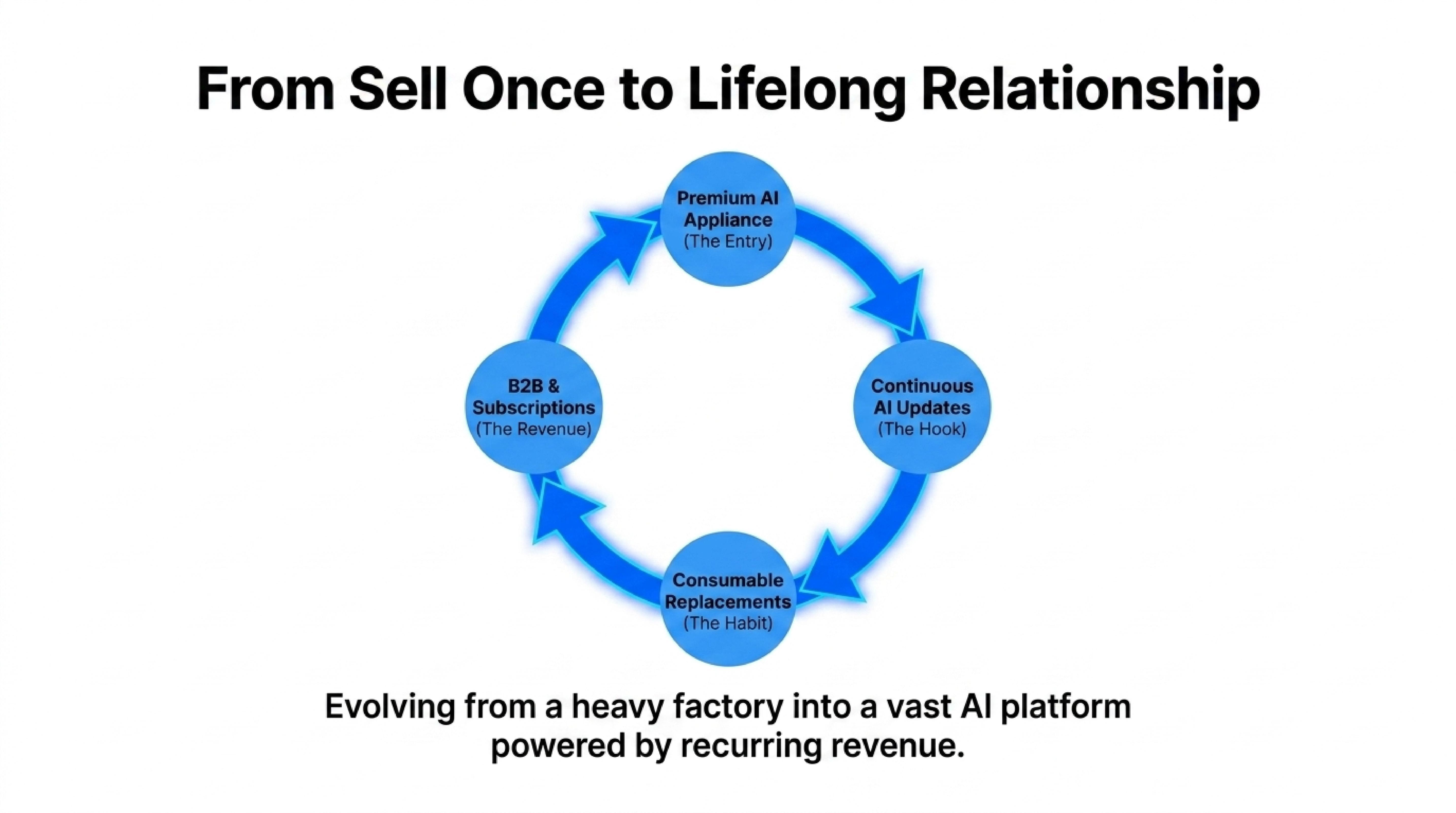
The revenue model itself is evolving to become more sophisticated. Rather than selling appliances once and calling it done, Samsung is aggressively pursuing the B2B (business-to-business) market for large-scale revenue — while simultaneously expanding 'subscription services' for consumers that generate steady recurring monthly income. This model delivers ongoing value — regularly replacing consumables, continuously upgrading appliance performance through AI updates — building a lifelong relationship with each customer.
Ultimately, Samsung's future lies not in being a factory that makes and sells large quantities of things, but in evolving into a vast platform — one that delivers AI solutions transforming everyday life, powered by stable, recurring revenue models. Excitement is building over just how profoundly these sharpened new tools will reshape our lives and the competitive landscape.
Not a Retreat — An Evolution: Why the New Samsung Appliances Are Worth Anticipating
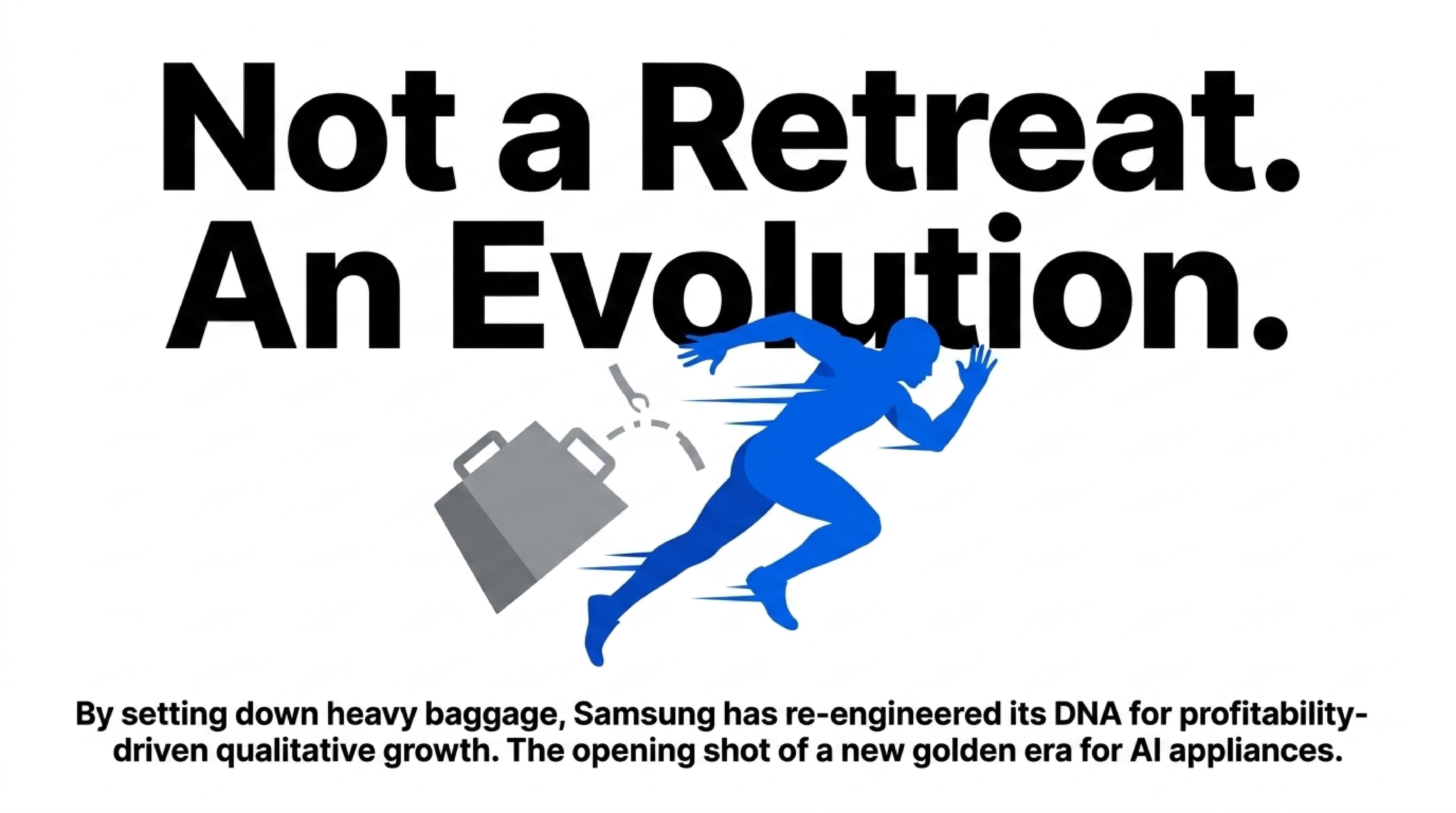
Samsung's appliance business restructuring is not a simple crisis-driven 'retreat.' It's closer to a smart evolution — setting down heavy baggage to run faster. The decision to outsource some products — breaking free from the compulsion to manufacture everything in-house — carries within it a powerful commitment to making the organization lighter and more agile in the face of market change.
In fact, Samsung isn't stopping at trimming production lines. The company is conducting a rigorous operational review of its Korean domestic sales division and ripping up its entire value chain — from manufacturing to sales — from the ground up. This reflects a firm resolve to break from the past strategy of chasing scale and size, and instead completely transform the company's DNA around 'profitability-driven qualitative growth.'
What does this mean for ordinary consumers? The changes are overwhelmingly positive. By concentrating its energy rather than spreading it thin, Samsung will deliver far smarter and more innovative AI appliances going forward. Commoditized standard appliances will serve everyday life at sensible price points, while premium products that genuinely elevate quality of life will be perfected with Samsung's unmatched technological power. A structure where each product tier does exactly what it's supposed to — and does it better — is now taking shape.
Ultimately, this bone-deep focus and discipline is the opening shot of a new golden era for Samsung appliances. Having boldly discarded the old and heavy to pivot nimbly toward the future, it's easy to feel genuine anticipation for what amazing innovations Samsung will bring to our daily lives next.
Frequently Asked Questions
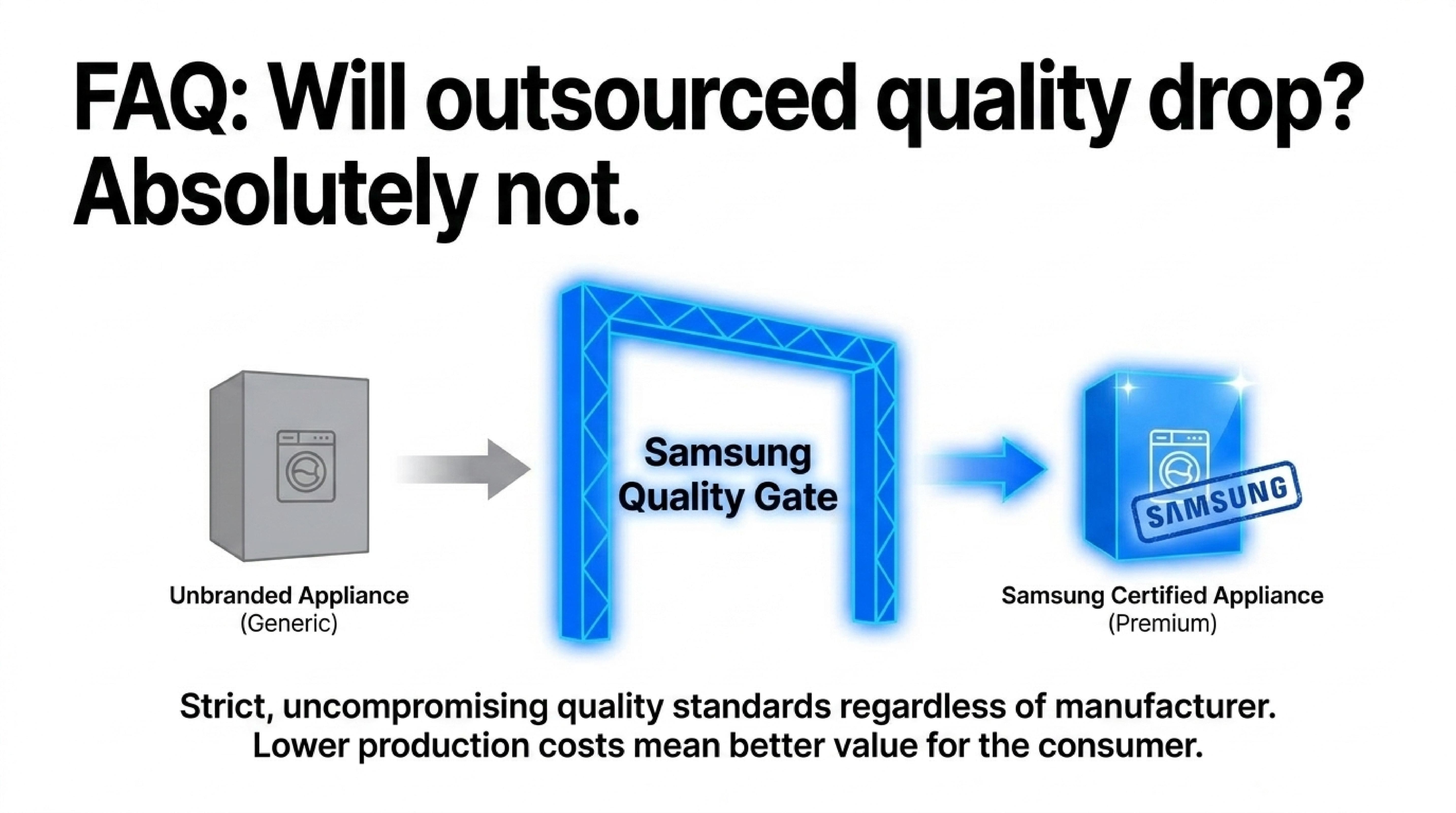
Q. Will quality drop if dishwashers and microwaves are outsourced?
A. Switching to outsourced production (OEM/ODM) does not mean quality will decline.
Standard appliances like dishwashers and microwaves have already reached technological parity globally. Samsung either supplies its own 'secret recipe' directly (OEM), or — regardless of who manufactures it — only products that pass Samsung's strict quality standards receive the Samsung brand label before reaching consumers. In fact, reducing production costs can enable Samsung to pass savings on to consumers in the form of better value for money.

Q. Is Samsung completely pulling out of China?
A. Reports of a potential 'China exit' — winding down appliance and TV sales operations in China — are circulating, but Samsung has not officially confirmed a full withdrawal.
However, with local market share falling into the low 3% range, Samsung is aggressively shedding low-profitability finished goods sales. At the same time, local manufacturing facilities are being repurposed as export hubs for neighboring markets — a major restructuring of the business model that redirects resources toward premium AI appliances and high-value-added new businesses.
Q. How is the HVAC business different from a regular air conditioner?
A. While a standard air conditioner primarily focuses on cooling a home or small space, HVAC (Heating, Ventilation, and Air Conditioning) is a system that comprehensively manages the temperature and air quality of entire large buildings and commercial facilities.
HVAC encompasses all three functions — heating, ventilation, and air conditioning — covering everything from maintaining comfortable temperatures in winter to managing indoor air quality year-round. As global demand for eco-friendly, high-efficiency buildings surges, HVAC is drawing attention as a core future growth engine for Samsung — one that generates ongoing maintenance revenue far beyond a one-time appliance sale.
References
Samsung Electronics Restructures Appliance Business — Some Low-Margin Products to Be Outsourced
https://n.news.naver.com/article/001/0016047624
Samsung Electronics China Exit Reports
https://n.news.naver.com/article/421/0008917032
Samsung Closes Malaysia Factory — Focuses on Premium AI Appliances
https://n.news.naver.com/article/009/0005672820
"Nobody's Buying Them" — Samsung TV Disappears from Chinese Store Shelves
https://n.news.naver.com/article/015/0005280613
Samsung Electronics Exits Low-Profitability Businesses Including Dishwashers and Microwaves — Economy Tribune
https://www.economytribune.co.kr/news/articleView.html?idxno=3902446
Samsung Electronics Halts Low-Margin Appliance Production, Closes Malaysia Factory — Shifting to Profitability-Driven Growth
https://www.livebiz.today/news/articleView.html?idxno=201841
Samsung Electronics Appliance Structural Innovation — 'Low-Margin Products' to Be Outsourced
https://www.donga.com/news/Economy/article/all/20260428/133827432/1
Samsung Electronics, Samsung home appliances, appliance outsourcing, Samsung OEM ODM, Malaysia factory closure, Samsung China market, Samsung Bespoke AI, HVAC business, appliance restructuring 2026, Chinese appliance competition, Samsung focus strategy, premium AI appliances, Samsung subscription service, manufacturing innovation