Vietnam's $130B Energy Market Opens Up! The Korea-Vietnam Power Alliance and the PDP8 Strategy Explained

A $130 Billion Jackpot? The Hugely Welcome News From Vietnam
On April 22, 2026, alongside news of South Korea's presidential state visit to Vietnam, a genuinely exciting development arrived for the Korean economy. South Korea and Vietnam have forged a firm Energy Alliance, opening a new era of bilateral cooperation. The two nations have set an ambitious goal of reaching $150 billion in bilateral trade by 2030, pledging to work together across wide-ranging industrial sectors including nuclear energy and infrastructure.
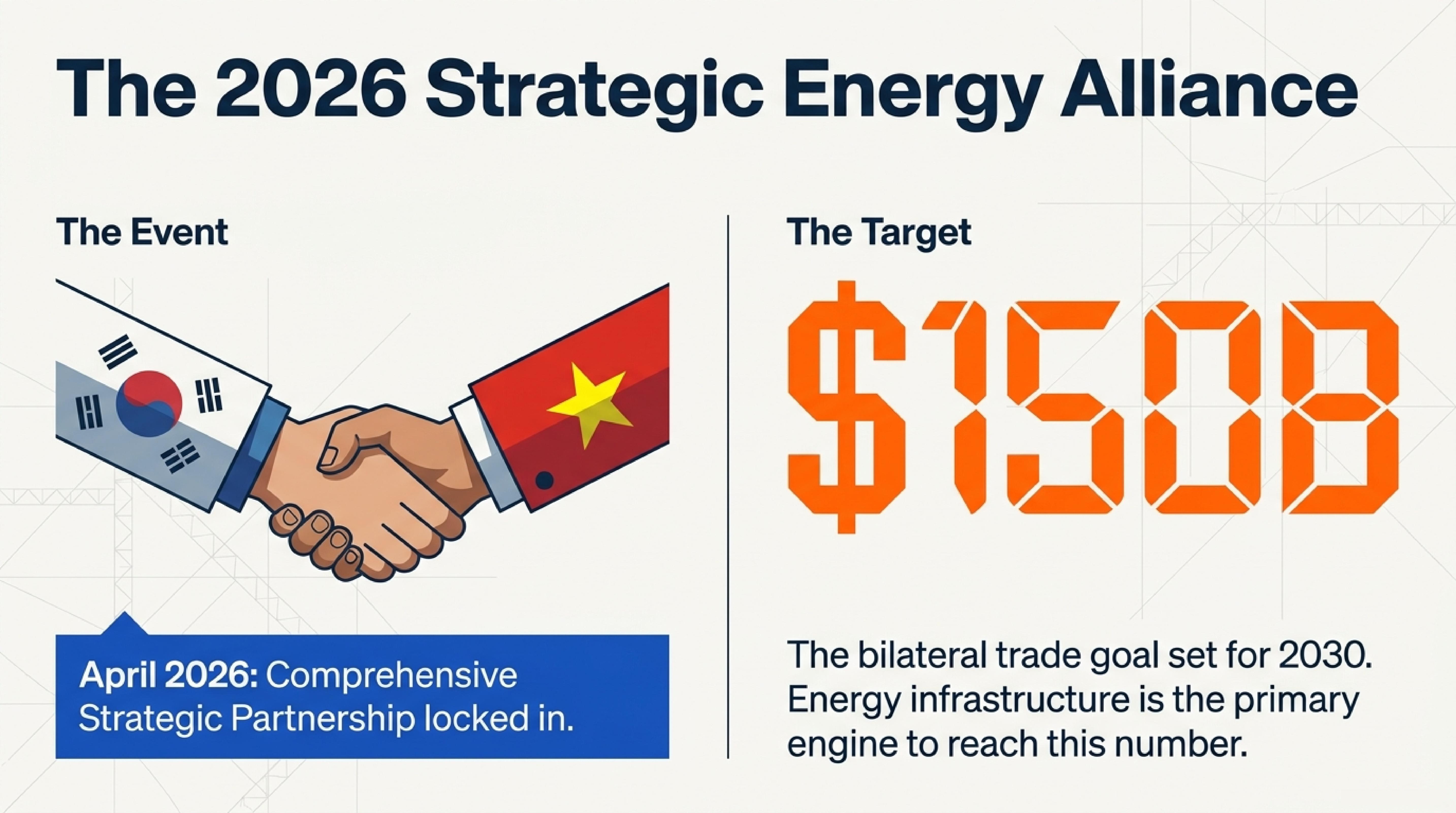
The headline story to focus on is the approximately $130 billion power market that Vietnam has thrown wide open. ~180 trillion KRW is a figure almost too large to comprehend — but it represents far more than an investment number. For Korean energy companies, it is an unprecedented launchpad for growth and a massive new export engine. In the context of a sluggish global economy, the opening of a market this large and this certain is extraordinary good news in itself.

For Korean companies that have spent years honing world-class technical capabilities and construction expertise, Vietnam's enormous energy infrastructure market is nothing short of a land of opportunity. From large-scale power plant construction to expanding transmission networks, a pipeline of substantial projects is waiting — a perfect stage for Korean firms to showcase everything they've got.
But why exactly is Vietnam pouring such an astronomical amount of money into completely overhauling its national power grid? The answer lies hidden inside the bold blueprint announced by the Vietnamese government. Let's work through what Vietnam's grand plan actually looks like.
Vietnam's Master Plan: What Is the PDP8 Strategy?
Vietnam has been growing at a steep 6–7% annually, but chronic power outages and persistent electricity shortages have consistently held that growth back. The Vietnamese government's ambitious blueprint to fundamentally solve this problem is called the '8th National Power Development Plan' — known by its shorthand, PDP8. Simply put, it is Vietnam's national energy master plan — a detailed roadmap specifying how the country will generate electricity and distribute it across the nation going forward.

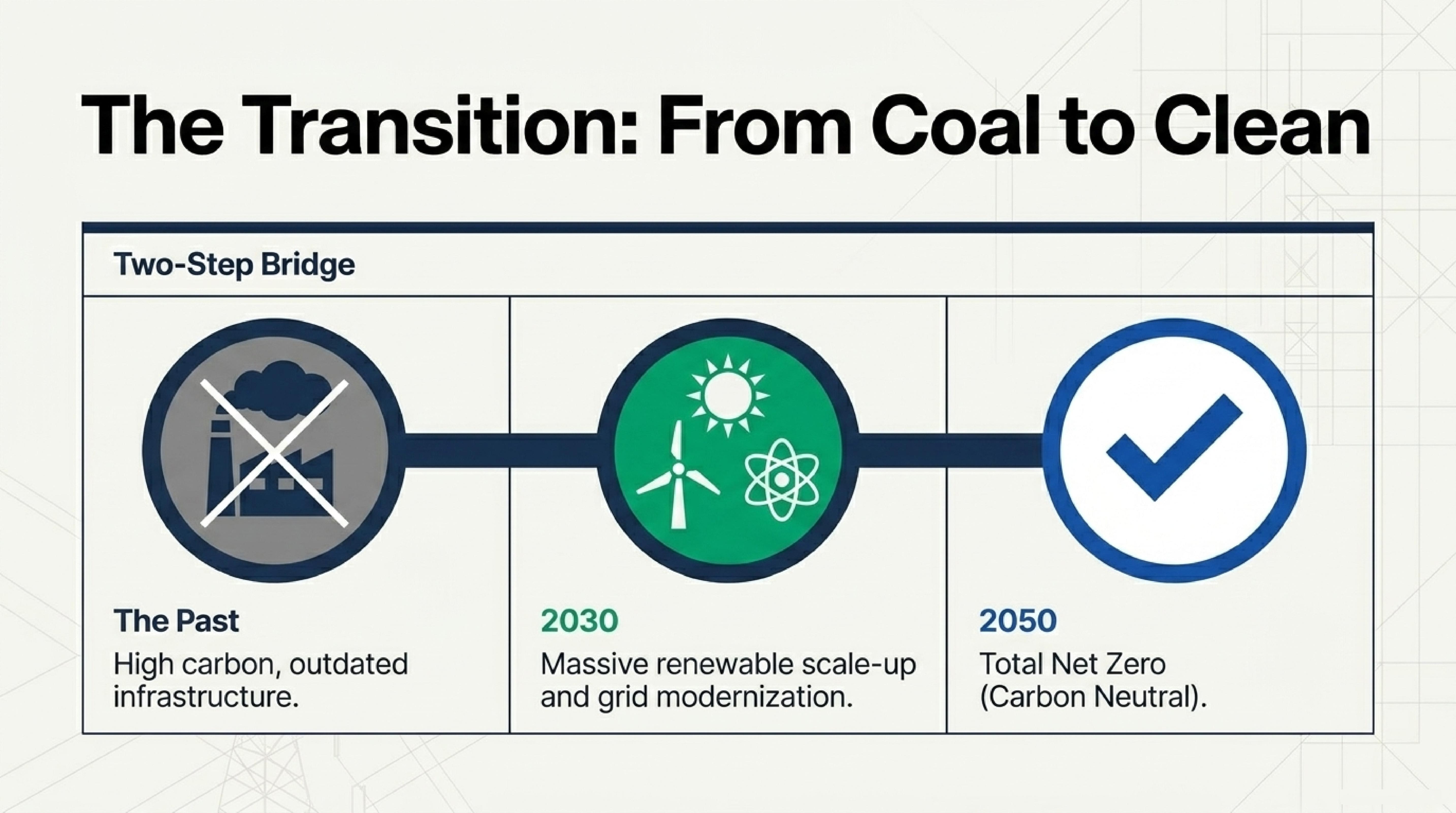
The overarching direction of this master plan is a fundamental energy transition. Coal-fired power has been the workhorse of Vietnam's industrial economy — but that is changing. The core of PDP8 is gradually and substantially reducing the share of coal power, and filling that gap with clean renewable energy sources like solar and offshore wind, as well as nuclear power. Beyond simply generating more electricity, Vietnam has set firm targets to significantly increase the share of renewable energy by 2030 and achieve net-zero carbon neutrality by 2050.

Of course, changes of this magnitude require massive investment. A roadmap is already in motion to replace aging national transmission and distribution infrastructure with modern systems, and to build new power plants that dramatically expand Vietnam's energy capacity. This large-scale infrastructure investment program, running through 2030, reflects Vietnam's firm determination to simultaneously transition its entire national energy supply to clean sources while meeting the explosively growing industrial electricity demand.
Now that we understand Vietnam's grand energy master plan, the next question is: of all the countries it could partner with, why is Vietnam choosing South Korea?
Why Partner with South Korea Out of All the Options?
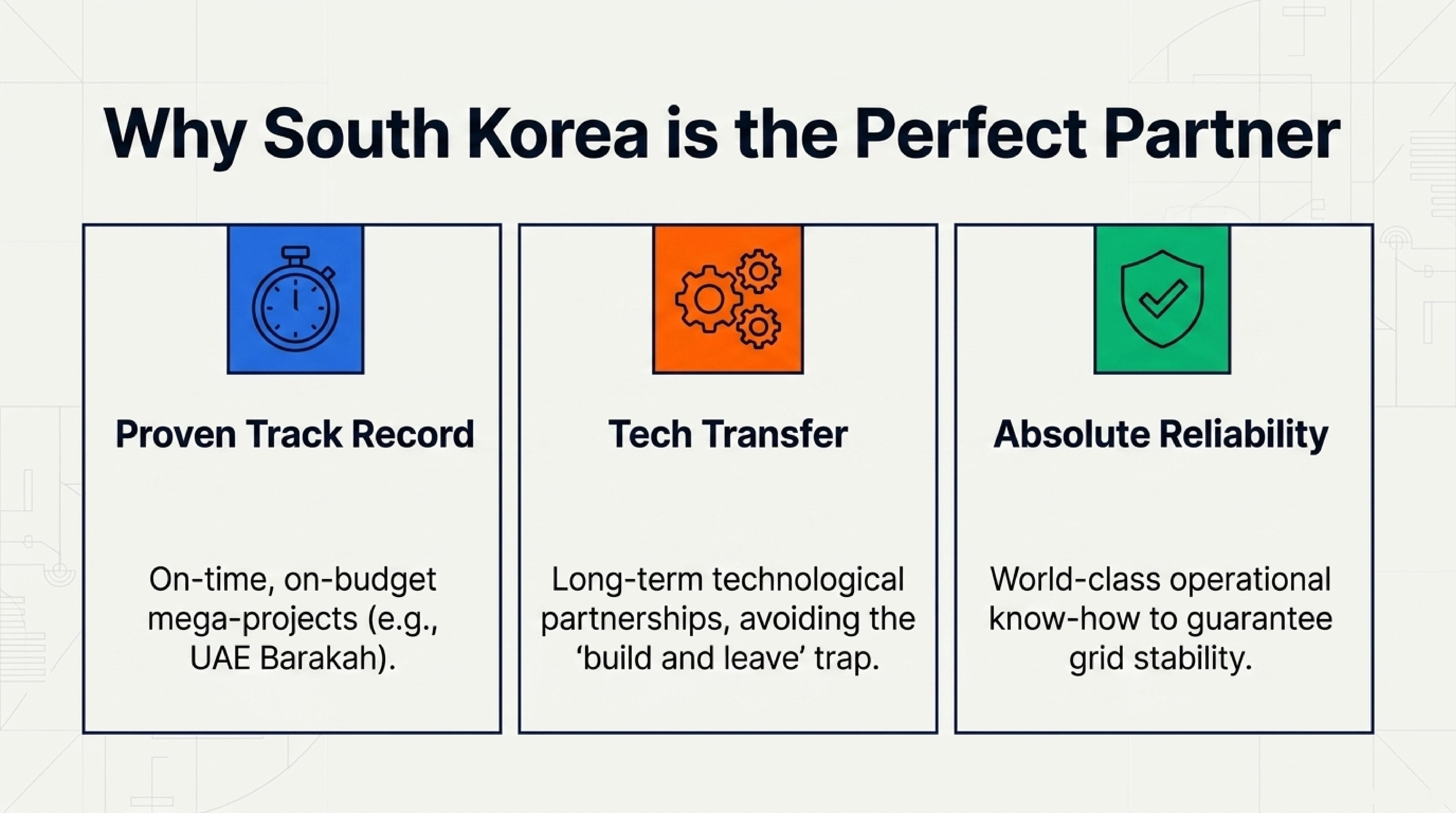
The biggest reason Vietnam has chosen South Korea over many other advanced nations is Korea's already-proven, world-class infrastructure construction and operational expertise. Large-scale energy projects — power plants and transmission grids — are fundamentally about reliability and trust above all else. Korean companies have a solid track record of successfully delivering world-class power facilities on time and within budget, across some of the most challenging environments on the planet. For a Vietnamese government urgently seeking to solve its electricity shortage, that track record is the most compelling card Korea holds.
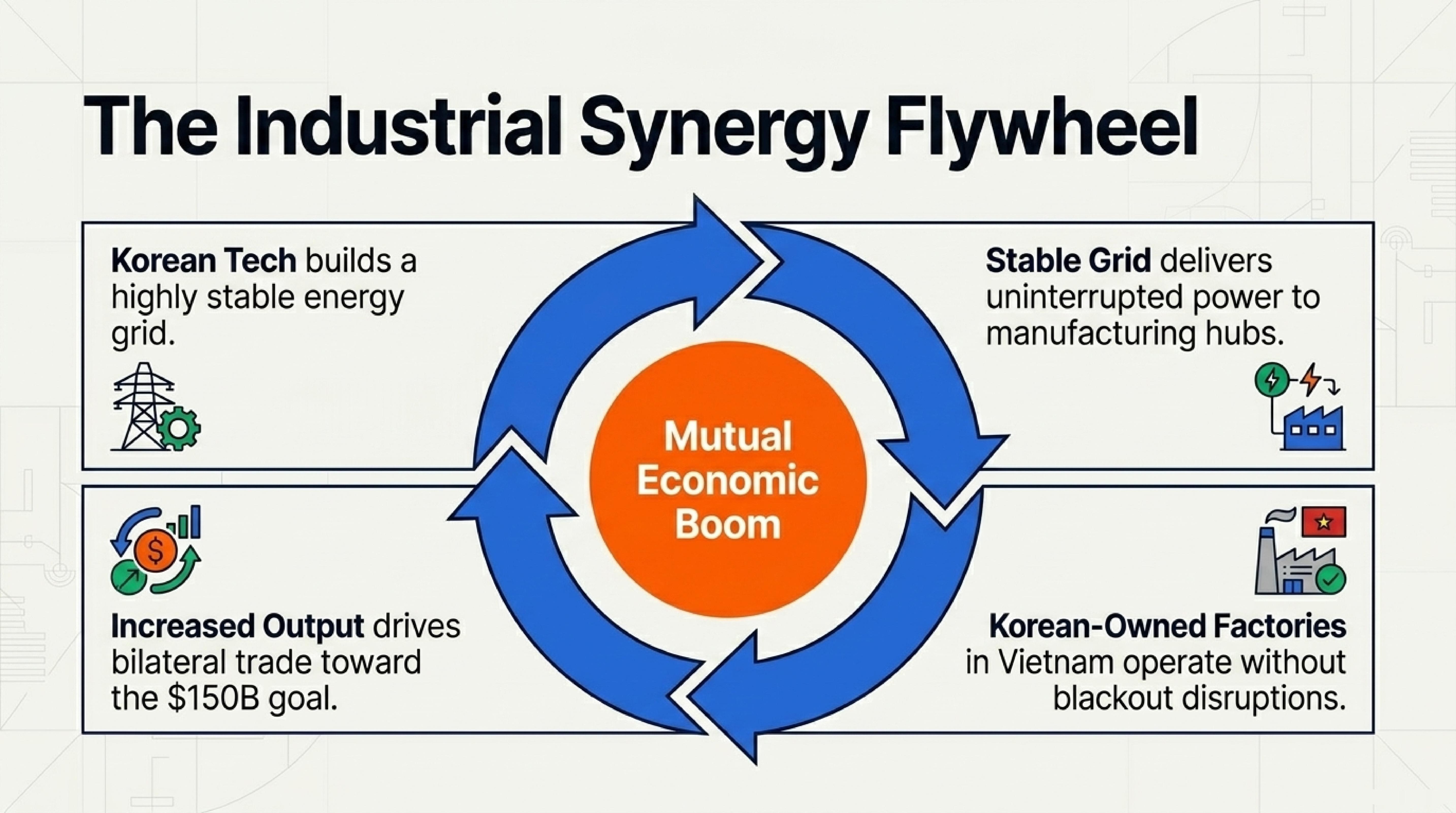
Equally important is the powerful synergy effect created by the many Korean manufacturing companies already operating in Vietnam. Vietnam is already one of Korea's key economic partners, and bilateral economic cooperation is expanding across the board to achieve the ambitious trade targets mentioned above. Korean advanced manufacturing hubs and countless factories are already running at full capacity across Vietnam — and they all require reliable, high-quality power to keep production running without interruption. This creates a perfect virtuous cycle: Korean energy companies build a stable power grid, Korean manufacturers use that power to produce goods, and Vietnam's economy benefits as a whole.
There's one more key differentiator: Korea doesn't just build facilities and walk away. Long-term technology transfer and knowledge sharing is a major part of what Korea brings to the table. For Vietnam, this means not just gaining new infrastructure, but also elevating its own domestic energy technology capabilities — making it a genuine mutual-benefit partnership in the truest sense.
Now that we've seen Korea's formidable technical credentials and partnership value, let's look at the area generating the most excitement: the nuclear power entry strategy.
Vietnam's Nuclear Program Is Back — and Korea's Stage Is Set
Vietnam previously suspended its nuclear power development plans, citing safety concerns. But the calculus has changed dramatically — severe heatwaves and droughts have hit hydropower output hard, causing factory shutdowns and painful electricity crises. To handle surging power demand and meet carbon neutrality goals simultaneously, the Vietnamese government has revived the nuclear option and is accelerating its restart.

In this newly reopened Vietnamese nuclear market, Korean nuclear technology stands out as an exceptionally competitive option. Several nuclear-capable nations are expected to compete fiercely for contracts — but the global market is paying close attention to Korea's unmatched construction capability and cost-effectiveness. As proven at the Barakah Nuclear Power Plant in the UAE and elsewhere, Korea's ability to safely complete nuclear facilities on budget and on schedule is in a class of its own. Add the nuclear development and financial cooperation frameworks established at this summit, and Korea has positioned itself as the most credible and trustworthy partner in the field.
One area deserving particular attention as a future growth driver is Small Modular Reactors (SMRs). Vietnam is reportedly giving active consideration to adopting SMR technology as a way to address the drawbacks of conventional large-scale nuclear plants while improving economic viability. Korean companies have already earned global recognition for their SMR capabilities — they are commissioned to manufacture core SMR components for leading global SMR developers. Using this energy alliance as a springboard to proactively propose SMR solutions to Vietnam and build tailored cooperation frameworks could serve as an excellent beachhead for capturing the entire Southeast Asian nuclear market.
We've examined the enormous impact nuclear energy will have on the national economy. But nuclear isn't the only story — clean energy and energy equipment markets represent equally significant opportunities that shouldn't be overlooked.
From Solar to Energy Equipment — Korea Is Ready to Sweep the Market
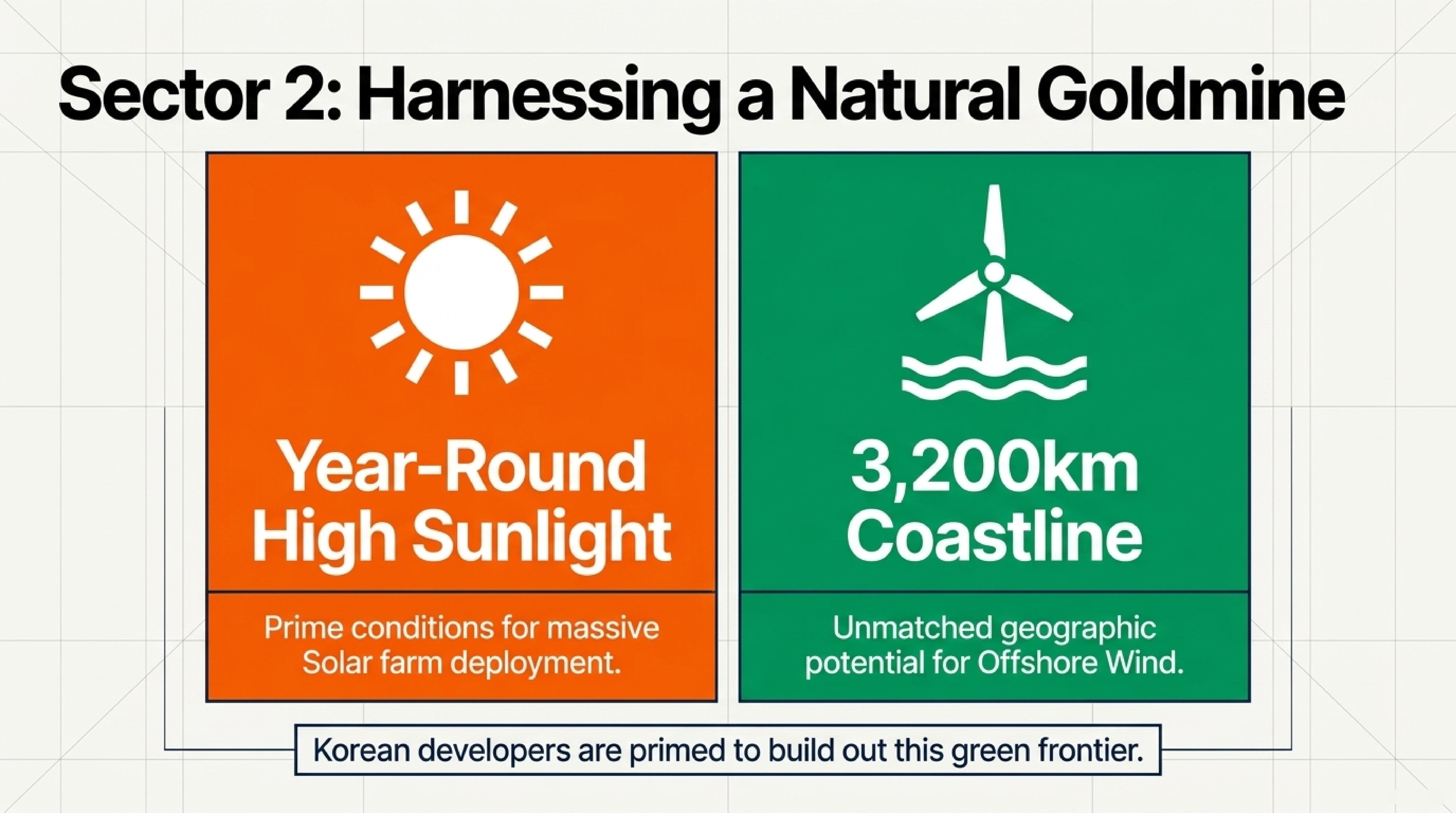
Vietnam boasts a coastline stretching over 3,200 kilometers and abundant year-round solar irradiation. These exceptional natural conditions give the country enormous untapped potential in offshore wind and solar energy. This vast clean energy market is another key arena where Korean companies are fully prepared to compete.
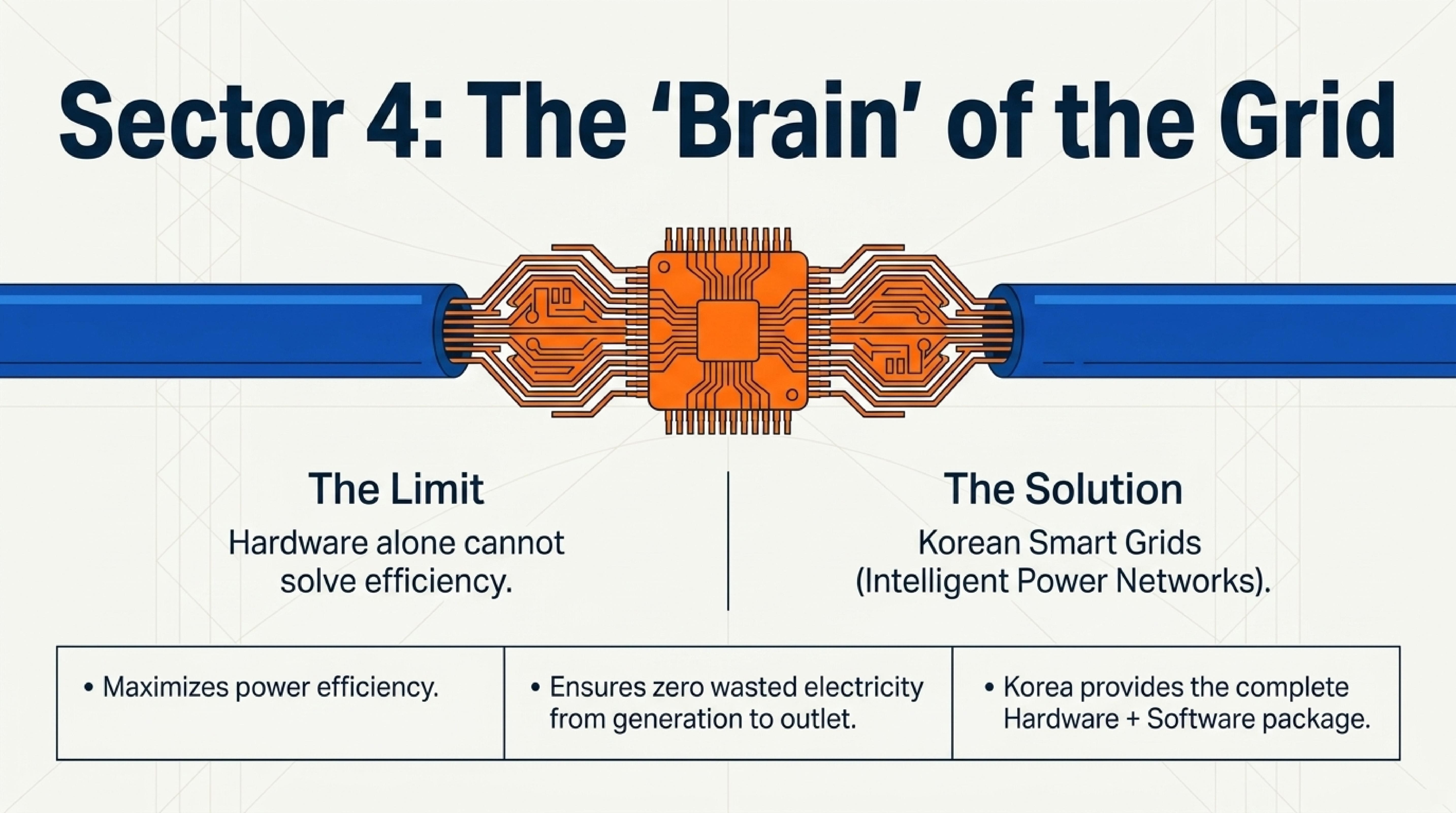
Building the power plants is only half the challenge. Equally important is laying a dense, reliable transmission and distribution network to safely deliver generated electricity to where it's needed. Vietnam's grid infrastructure is currently woefully inadequate for its rapidly growing power demand. As grid modernization accelerates to address this, demand for Korean-made energy equipment — transformers, cables, and related hardware — is exploding. This is the perfect moment for Korea's equipment makers to demonstrate the quality and delivery capabilities they've spent years building.
And the opportunity extends even further. Beyond laying physical cables, Smart Grid technology exports — maximizing power efficiency with minimal waste — also look very promising. Korea's advanced grid technology, spanning generation, transmission, and distribution, will breathe new life into Vietnam's aging infrastructure. The ability to deliver energy infrastructure as a full package — from hardware to software — is Korea's most powerful competitive advantage.
From large-scale power plant construction to building the transmission and distribution networks and smart grids that will serve as the circulatory system of an entire nation — let's close by imagining the bright future for Korean companies operating across all of these fronts.

Korea-Vietnam Power Cooperation: A Warm Tailwind for the Korean Economy
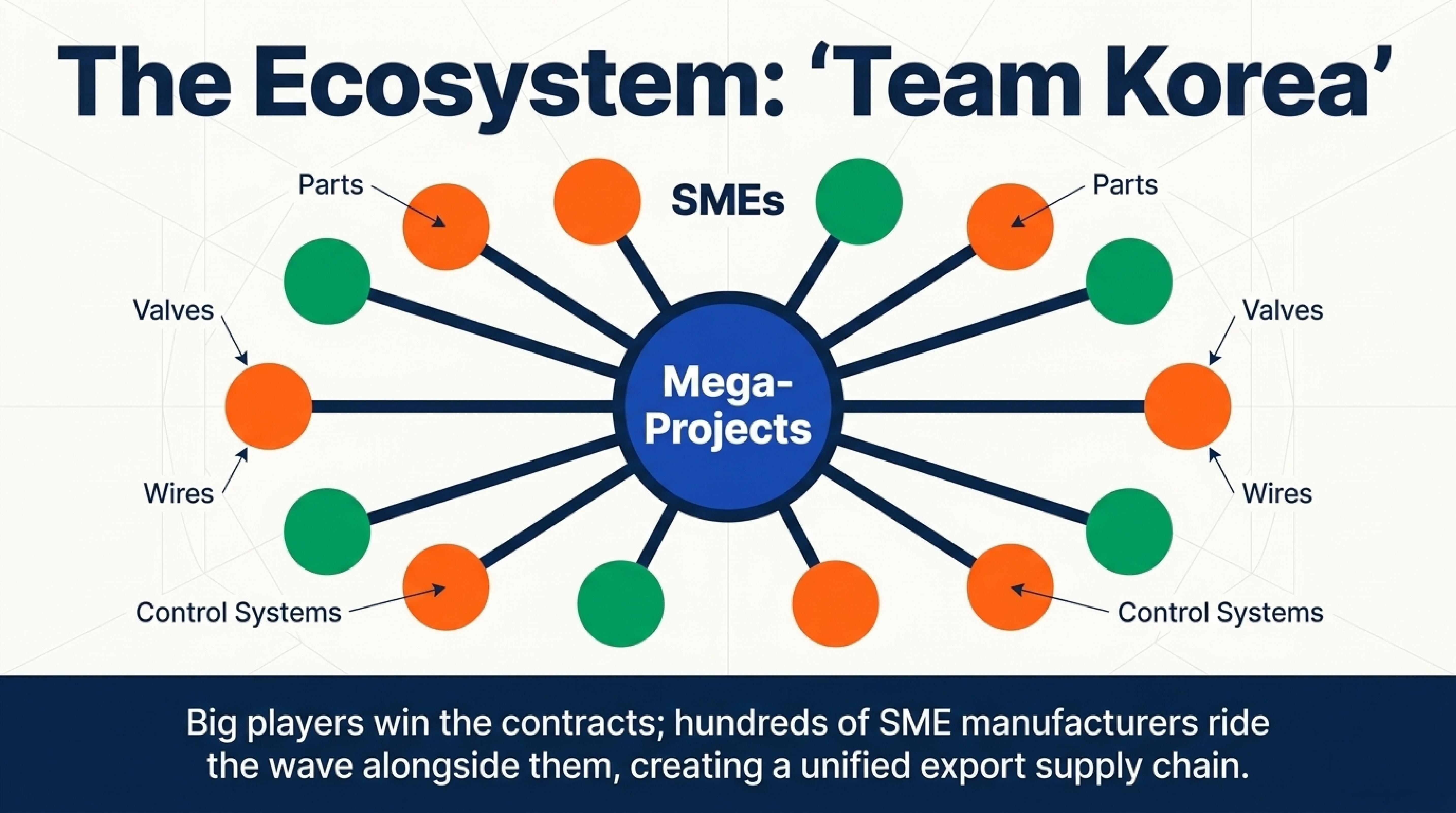
This power grid cooperation with Vietnam is not simply a feast for a handful of large corporations. When major power plant construction and infrastructure contracts are awarded, a broad ecosystem of smaller component and equipment suppliers will follow them into the Vietnamese market. From generator parts to power cables and control systems, the dense supply chain of Korean SMEs stands to gain enormous export opportunities. The two governments have indeed pledged comprehensive economic cooperation covering nuclear energy and infrastructure as part of the broader trade goals outlined above. The prospect of large companies and SMEs operating as a single team — generating concrete co-investment synergies that energize Korea's industrial ecosystem as a whole — is genuinely exciting.
Beyond that, this market entry carries the broader strategic significance of building a Southeast Asian energy export hub that continues the legacy of Korea's Middle East construction boom. Rapidly growing Southeast Asian nations share similar challenges — electricity shortfalls and the need to transition to clean energy. If Korean companies can build a successful track record in the Vietnamese market, it becomes a powerful lever for expanding into neighboring ASEAN countries. Just as Korea once broke through the sandstorms of the Middle East to lay the foundations of its economic growth, the winds of Southeast Asia are now creating a new launchpad for Korea's energy industry to lead the global market.
Korean energy companies — recognized globally for their technology and operational expertise — are standing at the beginning of an entirely new chapter. Here's to watching them light up Vietnam, and send a warm tailwind back through the Korean economy. The stage is set for Korean energy technology to make its mark across all of Southeast Asia.

Frequently Asked Questions
Q. What is the timeline for Vietnam's PDP8 strategy?
A. Vietnam's 8th National Power Development Plan (PDP8) primarily covers a massive power infrastructure expansion and energy transition roadmap running through 2030, designed to respond to rapidly growing electricity demand.
The master plan progressively reduces the share of coal-fired power while substantially expanding renewable energy and nuclear capacity, with the long-term goal of achieving net-zero carbon neutrality by 2050.
Q. Beyond nuclear, is Korea also well-positioned for renewable energy projects like offshore wind?
A. Yes — Korean companies are very well positioned in renewable energy including offshore wind and solar, not just in nuclear.
Vietnam's coastline of over 3,200km and abundant solar resources give it enormous clean energy potential. Korea brings globally proven power plant construction and infrastructure operations know-how, along with long-term technology transfer and partnership-building strengths — making it a formidable competitor in the renewable energy market as well.
Q. For investors, which energy equipment sectors are worth watching?
A. Investors should pay close attention to the hardware and next-generation grid equipment sectors that are essential for Vietnam's power infrastructure expansion.
- Essential hardware: Companies involved in transformers and power cables, where explosive demand is anticipated from the replacement of aging transmission grids and construction of new power plants
- Next-generation grid: Companies with Smart Grid (intelligent power network) technology for maximizing power efficiency with minimal waste
- Future growth driver: Companies involved in contract manufacturing of core components for Small Modular Reactors (SMRs), which address the shortcomings of conventional large-scale nuclear plants
The growth potential of small and mid-size equipment suppliers that will enter the Vietnamese market alongside major conglomerate infrastructure contract wins is being rated very highly across the board.

References
President Lee's Vietnam Visit: "$150B Trade Target by 2030 — Nuclear and Infrastructure Cooperation to Strengthen"
https://www.newsis.com/view/NISX20260421_0003599996
Korea and Vietnam Adopt Joint Declaration — Comprehensive Cooperation Expansion in Security, Economy, and Future Industries
https://biz.chosun.com/policy/politics/president_office/2025/08/11/CW3NFBONWVCQNB37UJPXHWCZ5U/
"Korea-Vietnam Trade to Reach $150 Billion Within 5 Years" — Maeil Business News