Puffer Jackets and Masks in April? Korea's Worst Yellow Dust Storm and Freak Cold Snap — Complete Survival Guide

Puffer Jackets and Masks in April? Here's What's Happening Outside
Late April. Cherry blossoms have peaked, and everyone was expecting warm weekend outings — then a sudden weather disaster struck. Just days ago, people were stepping out in light layers in near-summer warmth. Now, almost overnight, heavy winter coats and N95-grade masks are back in rotation. The Korean Peninsula is simultaneously battling two uninvited guests: the worst yellow dust storm of the spring season and a completely unseasonable cold snap.

The most immediately visible change is a sky that has turned from its usual pale grey to a deep, reddish-brown haze. Air quality alerts have been issued across the country as conditions deteriorate rapidly. The thick blanket of desert sand has made even a brief walk outside — let alone spring outdoor activities — feel genuinely risky.
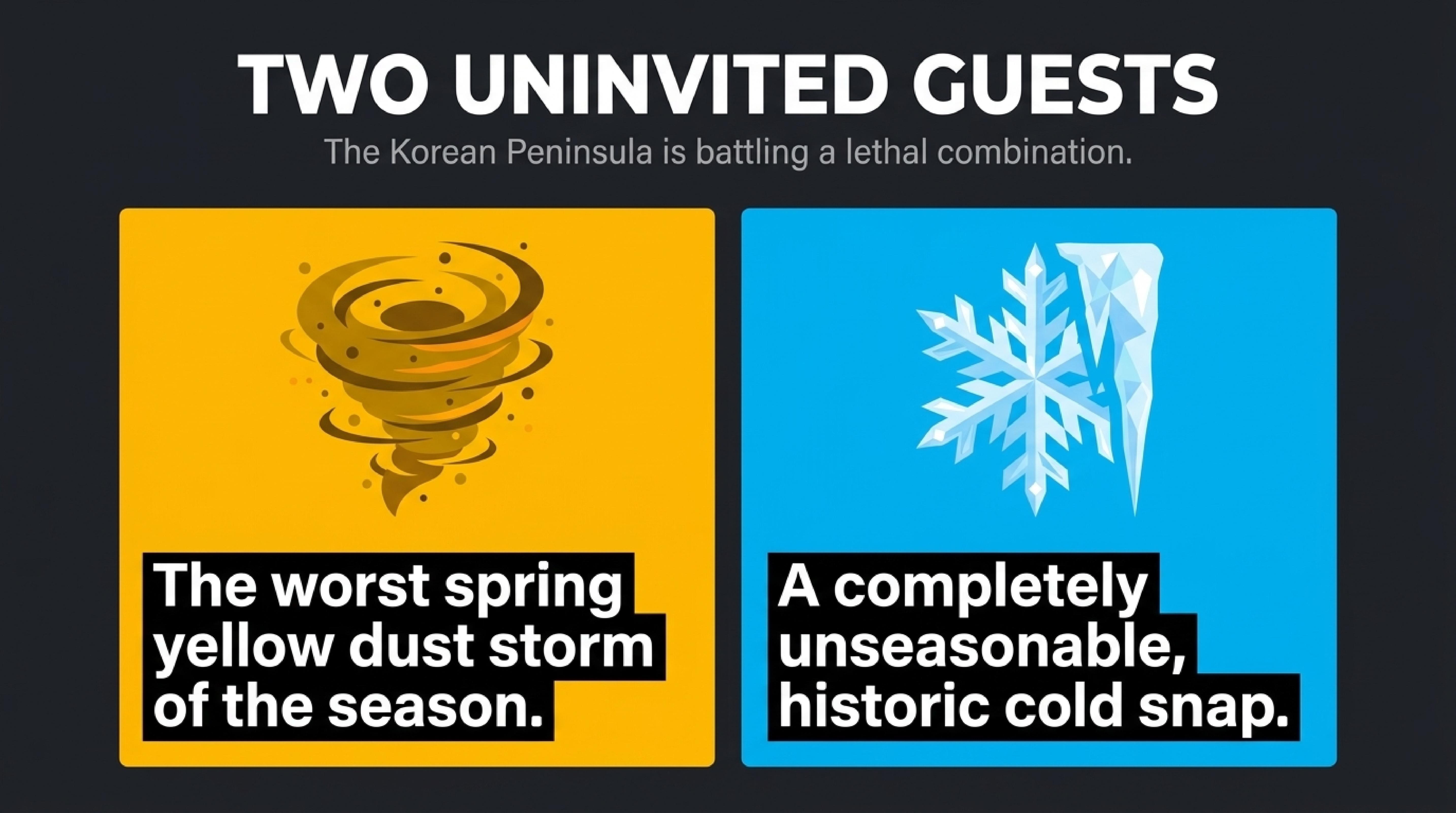
Adding insult to injury, a sharp temperature plunge is compounding the discomfort further. A powerful surge of cold air from the northwest has sent temperatures tumbling. Instead of the gentle spring breeze everyone expected, a biting, knife-edged wind has arrived — delivering cold that feels absurd for late April. After days of near-summer warmth, this whiplash has left many people genuinely baffled.
Polluted air and bitter cold hitting at the same time is not just an inconvenience — it's a direct and serious threat to everyday health. Let's dig into the facts: exactly where is this massive sand storm coming from, and what is yellow dust anyway?
The Red Sand Storm: Fact-Checking This Spring's Worst Yellow Dust Event
On April 18, a massive cloud of sand and dust originating in the Gobi Desert and Inner Mongolian Plateau was carried by westerly winds and landed on the Korean Peninsula. This yellow dust event — known in Korean as "hwangsa" (황사) — is not ordinary airborne soil. It's an overwhelming, sky-darkening mass of fine desert particles.

The numbers alone tell the story of just how serious this is. Here are the key records from this worst-of-spring yellow dust event:
- PM10 advisory issued across Seoul: As of 9 PM on April 20, PM10 (coarse particulate matter) concentrations in Seoul spiked to 191 μg/m³ — three to four times the normal level. Hourly average concentrations sustained above 150 μg/m³ for more than two consecutive hours, triggering an immediate air quality advisory.
- Yellow dust crisis alert — "Caution" level activated: With daily average PM10 concentrations projected to exceed 150 μg/m³, the Ministry of Environment issued a nationwide crisis alert at 5 PM on April 20, covering 10 regions including Gyeonggi Province and Incheon.
- PM2.5 fine particles also elevated: Beyond the larger sand particles, ultra-fine particulate matter (PM2.5) — small enough to penetrate deep into the respiratory tract — is also registering at "Bad" levels (36–75 μg/m³) across Gyeonggi and Incheon.
As a result, Tuesday, April 21 is forecast to see "Very Bad" air quality across most of the country. Before going outside, make sure to check two things:
- Current PM10 and PM2.5 readings for your area
- Whether a yellow dust crisis alert or advisory is in effect in your region
The thought of breathing this air is alarming enough on its own. But as if that weren't enough, temperatures are now crashing too — and a second unwelcome guest is waiting.
First Time Since 2005? A Late April Cold Wave Warning — A Historic Record
Before the shock of the sand storm even had time to settle, a freak cold snap has gripped the country. The Korea Meteorological Administration issued "cold wave advisories" across inland regions on the night of April 20.

Under the current cold wave warning system — which was revised in 2005 — this marks the latest-ever cold wave advisory issued in late April, breaking the previous record set on April 13, 2021. It's a genuinely extraordinary meteorological event.
The core of this cold snap is a brutally cold morning combined with an extreme temperature swing throughout the day. A powerful surge of cold air from the northwest is expected to send morning lows plunging to 2–11°C (36–52°F) on April 21 — a drop of 5–10°C from the previous day. In northern Gyeonggi Province and inland Gangwon,
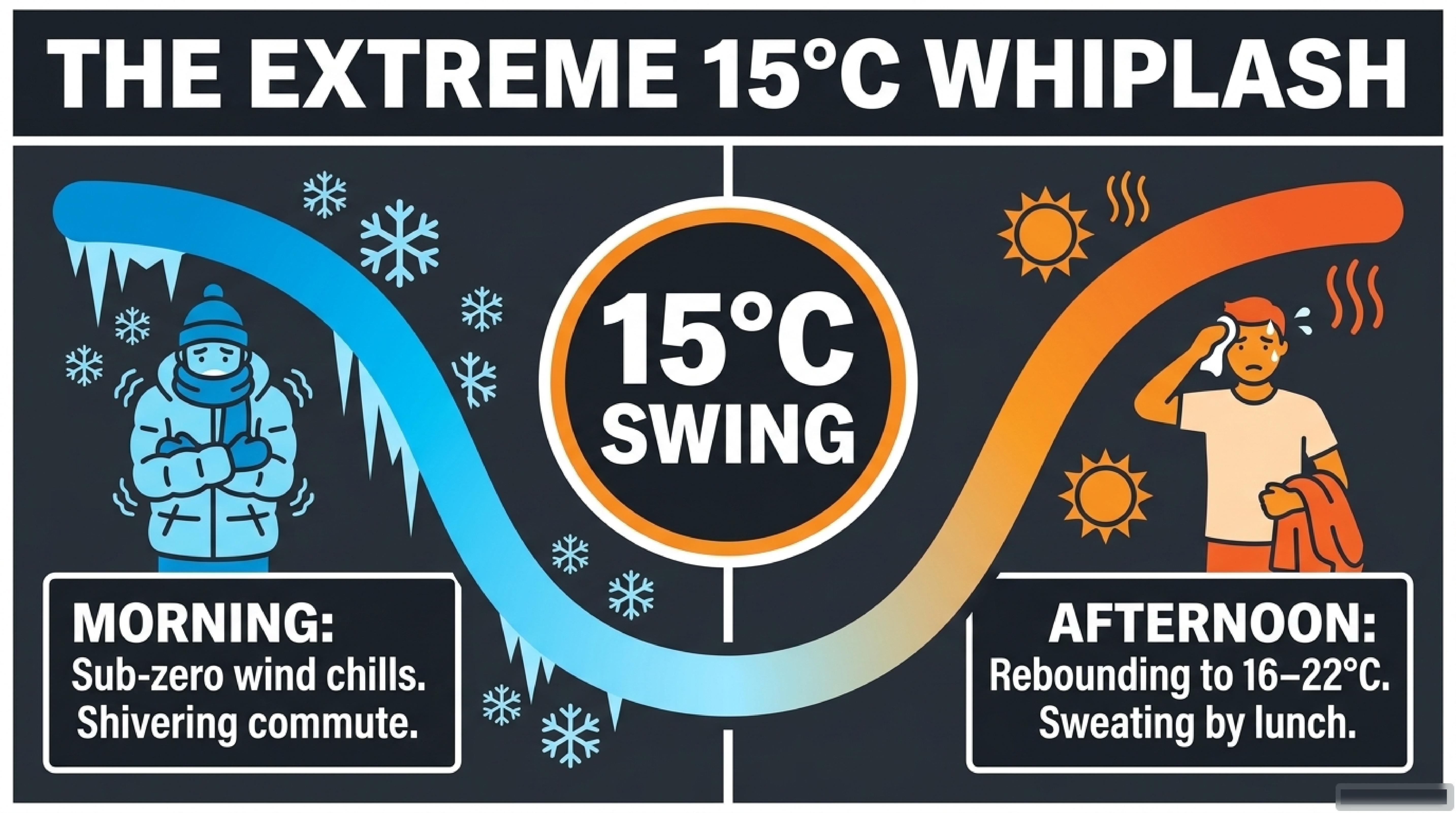
temperatures could fall as low as 1–2°C (34–36°F). With strong winds added to the mix, the wind chill could push into sub-zero territory (-1°C / 30°F) — meaning a proper winter coat is still essential, even in late April.
- Morning low temperatures: 2–11°C (36–52°F) — down 5–10°C from the previous day
- Afternoon high temperatures: 16–22°C (61–72°F) — recovering to seasonal norms
- Wind chill: Some mountainous areas such as Gangwon highlands could feel below freezing despite afternoon recovery
However, once the sun is up and the afternoon arrives, the situation reverses sharply. Temperatures are expected to climb rapidly, with daytime highs reaching 16–22°C (61–72°F). That's a daily temperature swing of around 15°C (27°F) — an extreme diurnal range that will leave people shivering in the morning and stripping off layers by lunchtime.
This historically late spring cold snap is already enough to disrupt daily life on its own. But the real danger is that this bitter cold is arriving simultaneously with the worst yellow dust of the season. Cold air carrying high-concentration fine particles is a lethally dangerous combination for human health — far more than either hazard alone.
Breathing Dust While Freezing — The Double Punch Your Body Is Taking
When the worst yellow dust of the season and an unprecedented cold snap hit at exactly the same time, your body faces what can only be described as a double punch.

The respiratory system takes the first direct hit. When temperatures plunge sharply, cold air entering the lungs causes the bronchial tubes to constrict and the mucous membranes lining the airways to dry out rapidly. A drying mucous membrane means your body's first line of defense has been compromised. The moist lining that would normally trap and filter airborne contaminants loses its effectiveness. And of course, this happens to coincide with some of the densest yellow dust and fine particulate concentrations of the year. With the defensive barrier weakened, ultra-fine particles (PM2.5) can penetrate deep into the airways unchecked — dramatically increasing the risk of coughing, phlegm buildup, and serious respiratory illness.

The even greater concern is cardiovascular health. A sudden temperature drop and a wide diurnal temperature range stimulate the sympathetic nervous system, causing blood vessels to constrict and blood pressure to spike. Blood becomes more viscous and prone to clot formation. When fine particulate matter is added to this mix, the situation becomes more serious still: PM2.5 particles that penetrate the bloodstream through the respiratory tract trigger systemic inflammatory responses and damage arterial walls. Medical professionals strongly warn that wide temperature swings combined with high-concentration fine particle exposure significantly raise the risk of life-threatening cardiovascular events such as heart attack and stroke.
This is not a situation to brush off with a "bit cold and dusty today." Cold air is essentially holding the door open for toxic fine particles to rush in. Protecting both your respiratory system and your cardiovascular health right now demands more vigilance than usual.
How to Protect Yourself Against Both — Your Action Plan
Defending against both fine particulate matter attacking your airways and a cold snap undermining your immune system requires a more strategic approach than usual. Here are the key protective steps to put into practice right now.
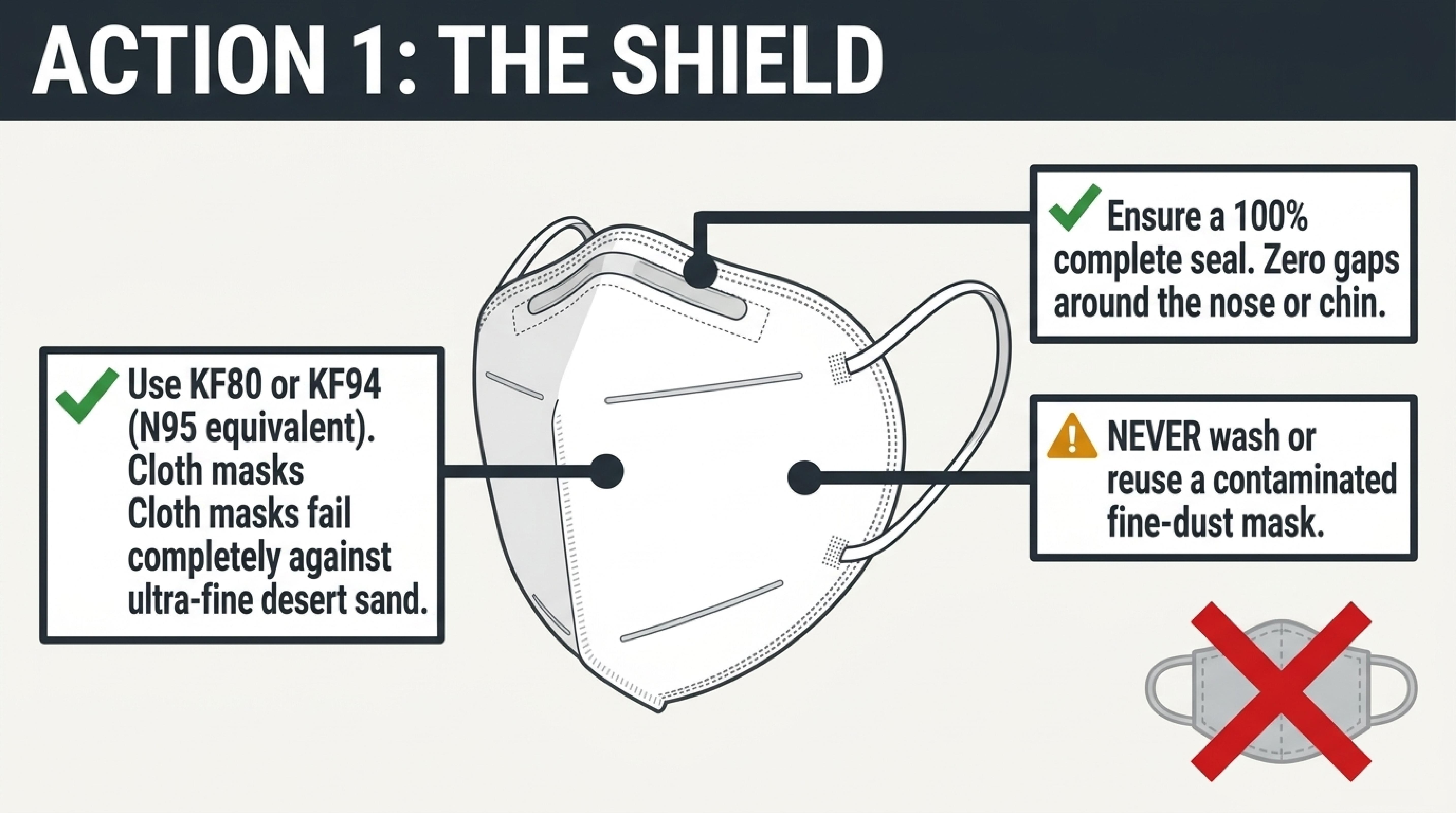
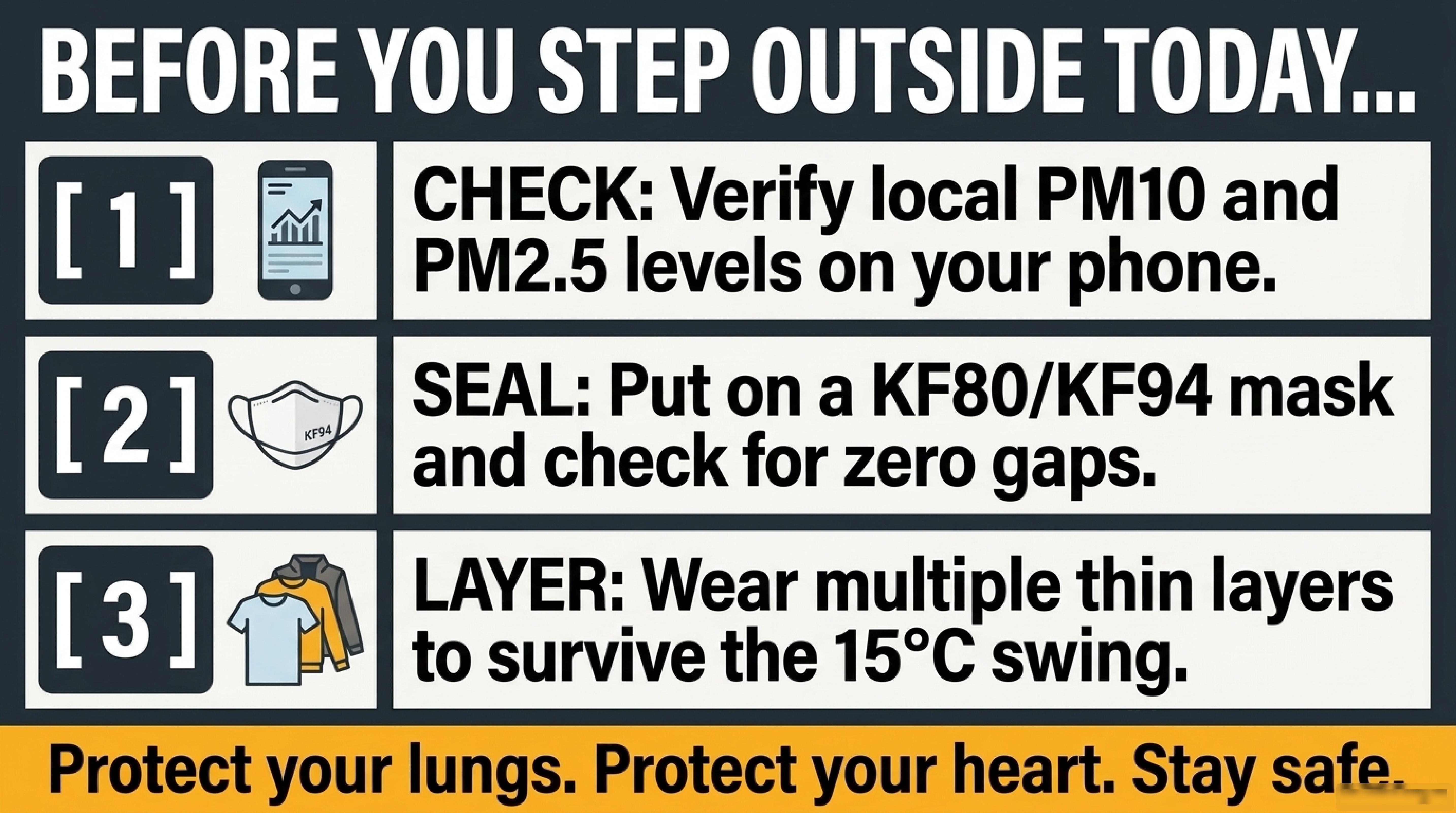
First: Wear a certified fine-dust mask — this is non-negotiable, not optional. PM2.5 concentrations — the ultra-fine particles that penetrate deepest into the respiratory system — are registering at "Bad" levels, particularly across the Seoul metro area, Gyeonggi Province, and Incheon. An ordinary cloth or winter face covering can keep out cold air, but it has very limited effectiveness against fine desert particles. Use a mask rated KF80 or KF94 (Korean equivalents of N95/FFP2 standard) and ensure it forms a complete seal around your nose and mouth with no gaps. Wash and reuse of contaminated masks is not recommended.
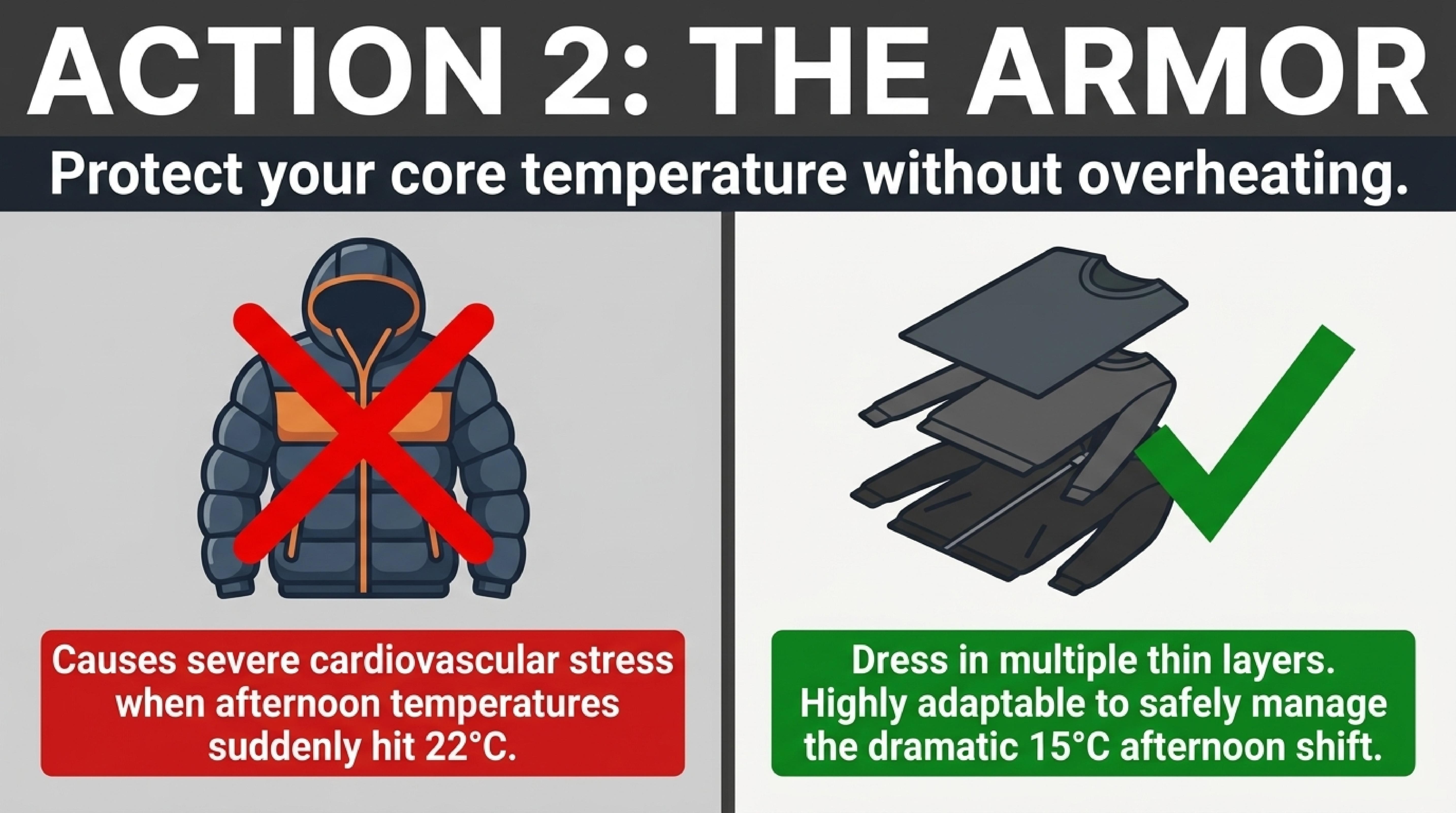
Second: Layer up to protect your core temperature. The temperature swing today will be extreme. Rather than relying on one heavy outer layer, dress in multiple thin layers that are easy to add or remove throughout the day. This flexible approach lets you adapt to the dramatic morning-to-afternoon temperature shift while reducing the cardiovascular stress that sudden exposure to cold causes.
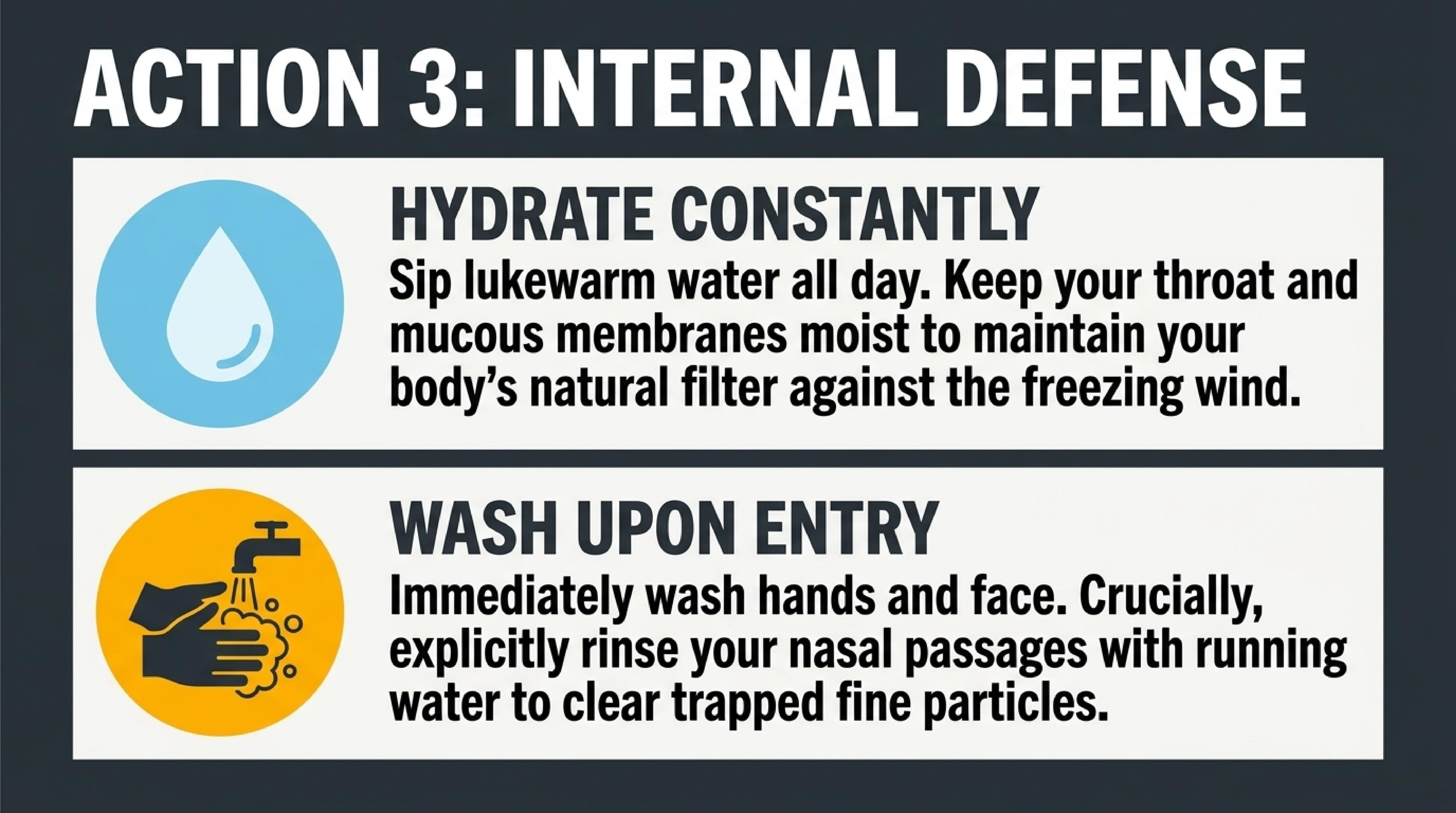
Third: Stay hydrated and maintain thorough hygiene to keep your body's natural defenses intact. Cold, polluted air dries out the mucous membranes in your airways — which, as we've seen, lets harmful particles in more easily. Sip lukewarm water regularly throughout the day to keep your throat moist and help flush out toxins. After returning indoors, wash not just your hands and feet, but also your face and nasal passages thoroughly with running water to remove any residual fine particle contamination.
Frequently Asked Questions
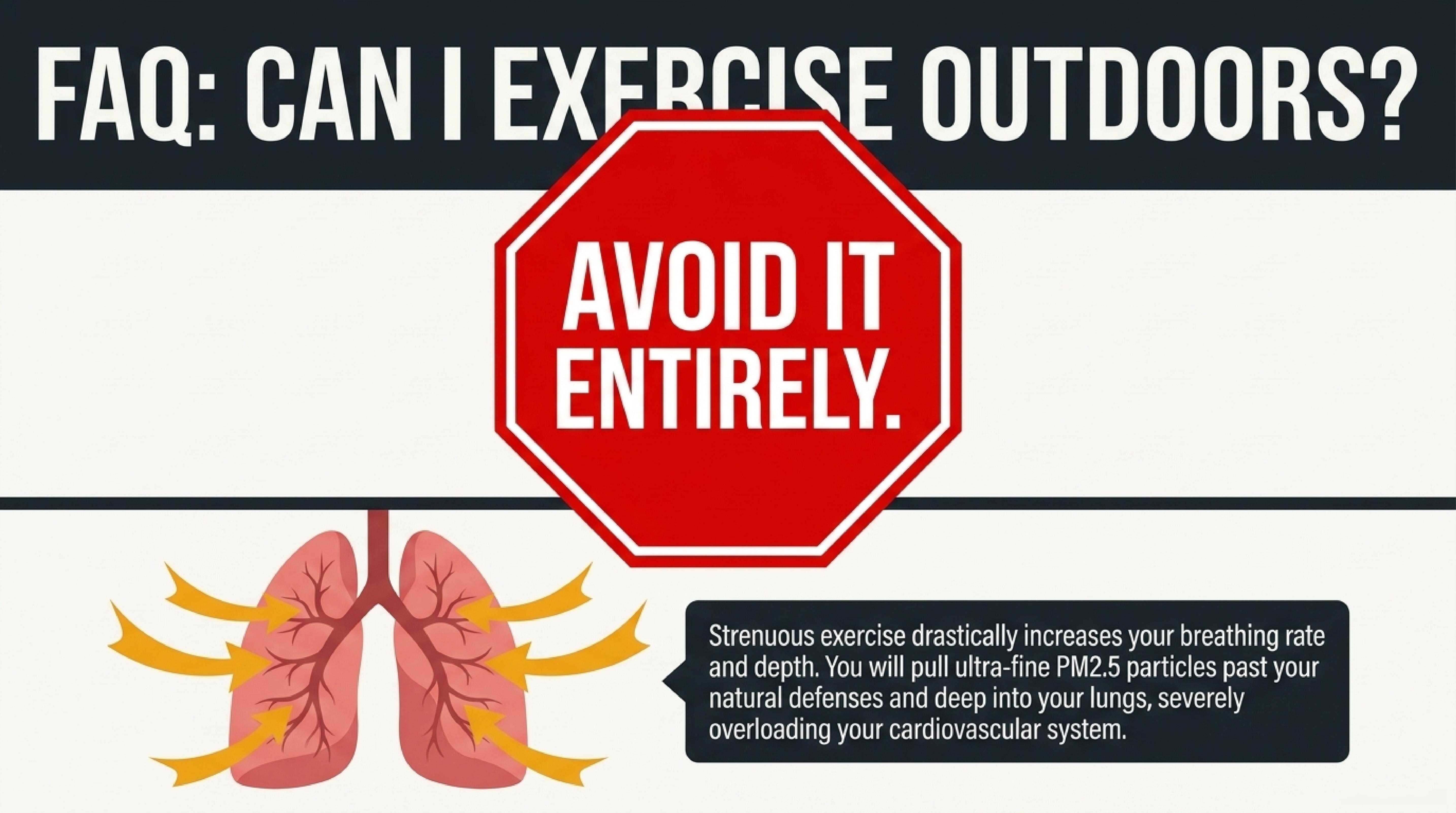
Q. Is it safe to exercise outdoors when a yellow dust "Caution" alert is in effect?
A. It is best to avoid outdoor exercise entirely.
A yellow dust "Caution" alert is triggered when daily average PM10 concentrations are forecast to exceed 150 μg/m³. This event also carries elevated PM2.5 fine particles — the type small enough to bypass the body's natural filters and reach deep into the lungs. Strenuous outdoor exercise dramatically increases breathing rate and depth, significantly raising the amount of particulate matter inhaled and placing a serious burden on both the respiratory and cardiovascular systems. If you absolutely must go outside, wear a tightly fitted KF80 or KF94 mask.

Q. When air quality is "Very Bad," should I keep all windows closed and skip ventilation entirely?
A. No — brief ventilation is still necessary.
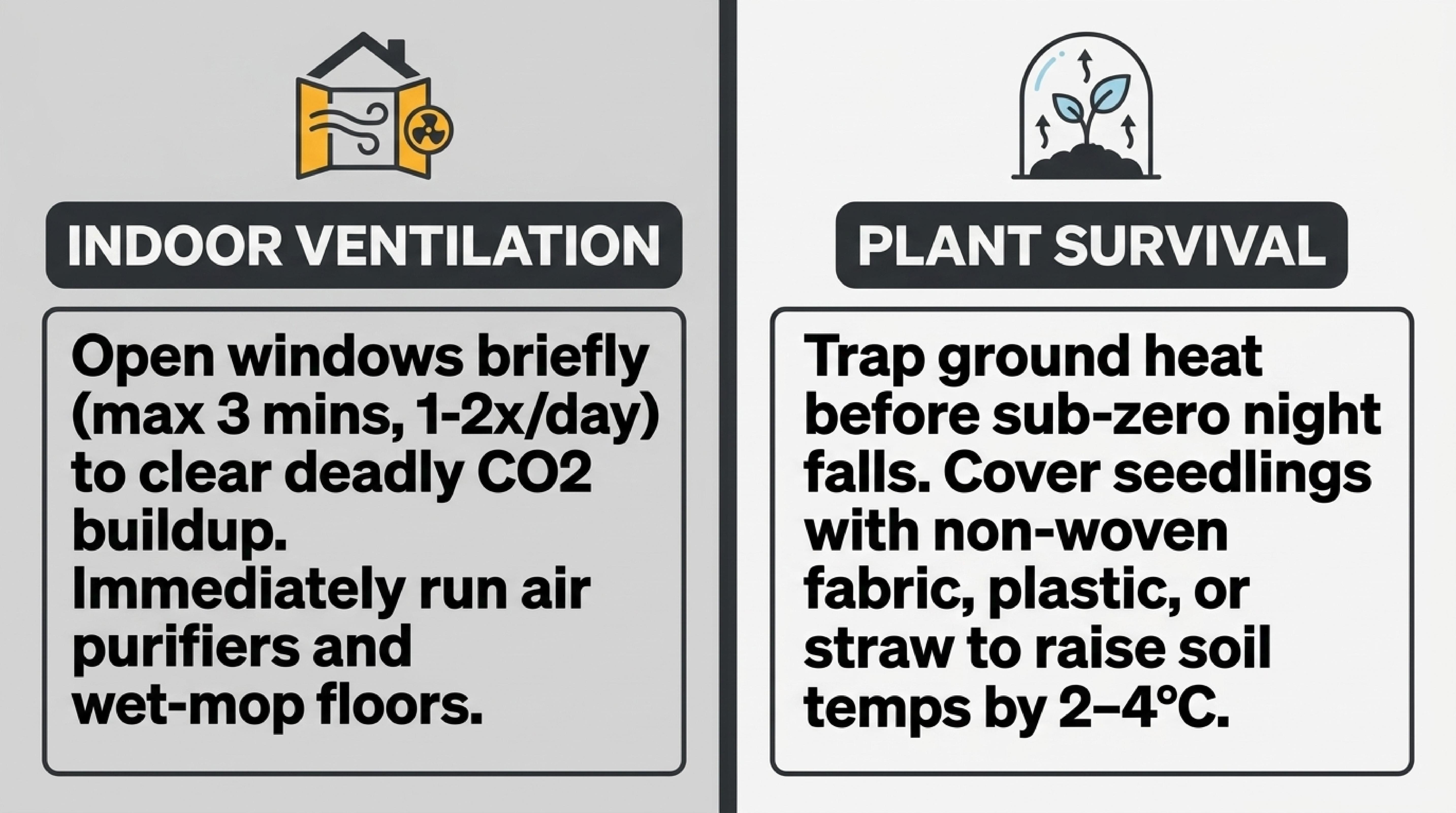
Even on "Very Bad" air quality days, keeping all windows permanently sealed allows indoor pollutants — such as CO₂ and radon — to accumulate to harmful levels. The recommendation is to ventilate briefly 1–2 times per day, for no more than 3 minutes each time, ideally when outdoor air movement is stagnant rather than during peak dust periods.
- Immediately after ventilating, run your air purifier to clean the indoor air.
- Fine particles that have settled on the floor can be removed by lightly misting the floor with water and then wiping it with a damp mop.
Q. What is the difference between yellow dust (hwangsa) and PM2.5 fine particles?
A. They differ significantly in origin and particle size.
- Yellow dust (hwangsa): A naturally occurring phenomenon — sand and soil particles carried by strong winds from arid regions such as the Gobi Desert and Inner Mongolian Plateau. This is East Asia's version of a Saharan dust event.
- PM2.5 fine particles: Human-made chemical pollutants generated by vehicle exhaust, fossil fuel combustion, and industrial activity.
PM2.5 particles are far more dangerous because their tiny size allows them to bypass the mucous membrane filters in the upper respiratory tract entirely and enter directly into the bloodstream — significantly elevating the risk of cardiovascular disease and other systemic health conditions.
Q. How can I protect garden or balcony crops from frost damage during a sudden April cold snap?
A. The key is retaining ground heat using insulating covers.
Sub-zero temperatures in late April can cause devastating frost damage to recently sprouted seedlings. Before temperatures drop, cover your plants with non-woven fabric, plastic sheeting, straw, or other insulating materials to raise ground temperature by 2–4°C (4–7°F) and prevent frost injury.
Additionally, install windbreaks around the planting area to prevent cold air from reaching plants directly, and ensure drainage channels are clear to keep soil moisture at appropriate levels without freezing.
References
Worst Yellow Dust of the Spring Season Hits Seoul
https://v.daum.net/v/20260420213333796
Red Yellow Dust to Hit Korea Tomorrow — Fine Particle Alert
https://v.daum.net/v/20260420144109599
Yellow Dust and Fine Particles: A Powerful Spring Threat to Respiratory Health
https://www.koreahealthlog.com/news/articleView.html?idxno=51044
TextBrush 텍스트브러시 | AI 텍스트 편집기
텍스트브러시는 드래그로 서식을 입히는 AI 텍스트 편집기입니다.
www.textbrush.app